What Are the 2026 Best Energy Storage Capacitor Types?
Choosing the best Energy Storage Capacitor in 2026 requires more than comparing capacitance values. Engineers must examine voltage stability, leakage current, cycle life, temperature tolerance, power density, and total system cost. A capacitor that performs well in a laboratory may disappoint beside a photovoltaic inverter or regenerative braking system.
The International Energy Agency reported that global battery storage additions reached about 42 GW in 2023, nearly doubling from the previous year. This expansion increases demand for fast-response components that can absorb short power surges. The U.S. Department of Energy’s Energy Storage Grand Challenge also identifies scalable, reliable storage technologies as a strategic priority. These reports do not make capacitors a universal replacement for batteries. They show why hybrid systems deserve closer attention.
Dr. John M. Miller, a recognized ultracapacitor researcher and author, has described ultracapacitors as “power devices, not energy devices.” That distinction matters. Electric double-layer capacitors deliver rapid bursts, while hybrid capacitors improve energy density through battery-like materials. Film capacitors offer excellent pulse performance and long service life, but their storage capacity is usually smaller. Ceramic capacitors provide low inductance and fast response, although voltage and capacitance limits can restrict larger applications.
There is no single winner. Real installations reveal trade-offs.
This guide compares the leading Energy Storage Capacitor types for 2026, using published industry research, manufacturer specifications, and practical application requirements. Some figures vary across test conditions, and that weakness deserves attention. Temperature, aging, packaging, and control electronics can change the final result more than a headline specification.
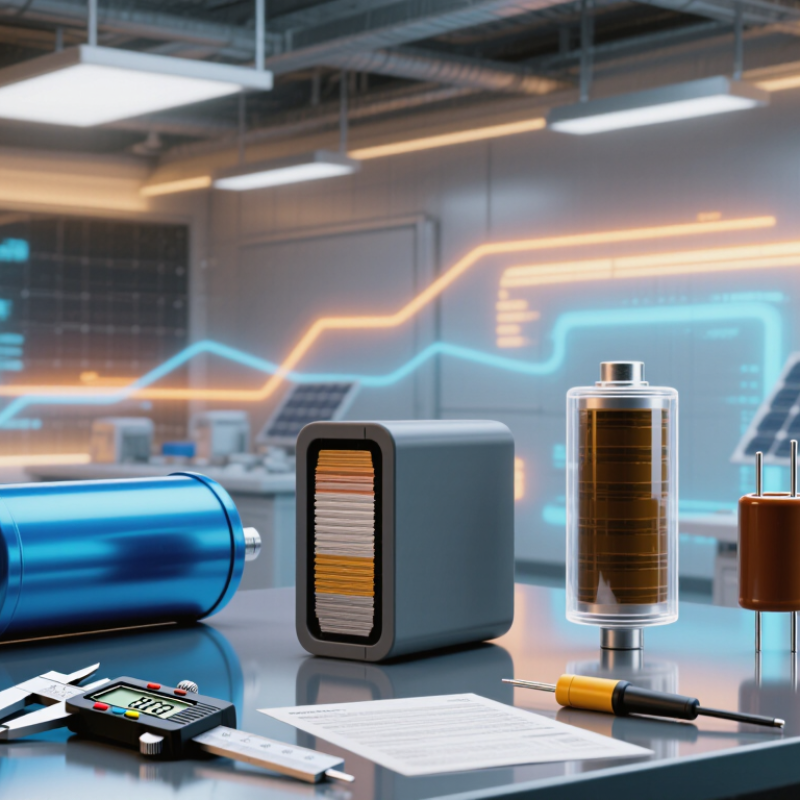
Energy Storage Capacitors: Definition, Functions, and Core Principles
What Are the 2026 Best Energy Storage Capacitor Types?
Energy storage capacitors store electrical energy in an electric field. Unlike batteries, they release power almost instantly. Their core relationship is E = ½CV², where capacitance and voltage determine stored energy. A dielectric separates conductive plates and limits current flow. Electrolytic capacitors offer high capacitance for power smoothing and DC-link duties. Film capacitors provide low losses, strong pulse handling, and stable performance. Ceramic capacitors respond quickly, but their energy capacity remains limited.
Supercapacitors use porous electrodes and ion movement at an electrochemical interface. They deliver high power and extremely long cycle life, though their voltage falls during discharge. Hybrid capacitors improve energy density, but control requirements become more complicated. The International Energy Agency reported that global battery storage additions reached about 42 GW in 2023. It also estimated that total energy storage capacity must expand sixfold by 2030. This growth increases demand for reliable capacitor banks, inverters, and thermal management. Still, storage targets do not make one capacitor type universally best.
Tips: Match the capacitor to the waveform, voltage, ripple current, temperature, and service life. Check equivalent series resistance, leakage current, and insulation aging. Film types suit high-frequency converters. Electrolytic types suit compact bulk filtering. Supercapacitors fit short, repeated power bursts. A practical design should test real load profiles, not only datasheet values. Laboratory results can look excellent, yet field temperature may expose weaknesses.
Key Types of Energy Storage Capacitors in 2026
What Are the 2026 Best Energy Storage Capacitor Types?
Energy storage capacitors now serve fast-response systems, renewable grids, vehicles, and industrial controls. The International Energy Agency reported that global battery storage additions reached about 42 GW in 2023, rising roughly 130% year on year. This growth increases demand for capacitors that manage rapid power changes.
Electric double-layer capacitors, or EDLCs, remain strong for short bursts. They offer very high cycle life and quick charging, but their energy density is limited.
Pseudocapacitors add faradaic reactions, improving energy storage while preserving strong power performance. Their durability can vary with electrode materials and operating temperature.
Hybrid lithium-ion capacitors combine a battery-type electrode with a capacitive electrode. They usually provide higher energy density than EDLCs, although control systems become more important.
Film capacitors fit different needs. They deliver stable pulse power, low losses, and strong thermal performance in power electronics.
Electrolytic capacitors provide high capacitance at low cost, yet their lifespan may decline under heat and ripple current.
The U.S. Department of Energy’s Energy Storage Grand Challenge identifies cost, safety, lifetime, and supply resilience as major storage priorities. Those priorities also expose a common mistake: choosing by capacitance alone.
Real projects need measured ripple current, leakage, voltage balance, and cooling data. I would not call one type universally best.
The boundary between capacitor and battery technologies is also becoming less clear. That uncertainty deserves more testing.
Comparing Capacitance, Voltage, Lifespan, Safety, and Cost
In 2026, energy-storage capacitors should be judged by application, not impressive headline numbers. The main choices are EDLC supercapacitors, lithium-ion capacitors, hybrid capacitors, and film capacitors. Each balances capacitance, voltage, lifespan, safety, and cost differently. EDLC cells provide very high capacitance and rapid charging. However, their typical cell voltage remains near 2.7 volts. That means series balancing and voltage monitoring are essential. They can survive millions of cycles, but leakage current reduces standby efficiency.
Lithium-ion capacitors usually offer higher operating voltage and greater energy density than EDLC designs. They need tighter protection against overvoltage, heat, and uneven aging. Their cycle life can be excellent, but usually falls below conventional EDLC performance. Hybrid capacitors improve energy storage, although their chemistry makes safety assessment less straightforward. Film capacitors deliver strong voltage endurance, low losses, and long service life. Their capacitance is much lower, and large energy banks become physically expensive. Ceramic capacitors handle high frequencies well, but rarely suit bulk energy storage.
Cost comparisons should include balancing circuits, cooling, enclosure, testing, and replacement labor. A cheaper cell can become expensive after integration. In field evaluations, temperature rise and voltage drift often matter more than catalog capacitance. Measure both usable energy and pulse power. Safety also depends on fault protection, spacing, pressure control, and certified installation practices. An initial preference for maximum capacitance can mislead, because leakage and maintenance may dominate long-term performance. Real load data remains necessary, since laboratory cycles rarely mirror dusty, hot equipment rooms.
Selecting the Best Capacitor Type for Different Energy Applications
What Are the 2026 Best Energy Storage Capacitor Types?
Selecting the Best Capacitor Type for Different Energy Applications
Choosing an energy storage capacitor starts with the application, not the product label. A design engineer should measure voltage, pulse duration, current demand, temperature, and available space. Energy density matters, but power delivery and service life often matter more.
Electric double-layer capacitors suit regenerative braking, emergency backup, and short power bursts. They charge quickly and withstand many cycles, although their voltage changes significantly during discharge. Hybrid lithium-ion capacitors provide higher energy density and steadier voltage. They can support compact backup systems, industrial controls, and renewable power smoothing. However, their balancing circuit and thermal limits require careful verification.
Traditional electrolytic capacitors remain useful for ripple filtering and brief hold-up functions. They are practical, but heat can shorten their operating life. Film capacitors offer low losses, strong pulse handling, and stable performance in power conversion equipment. Their larger physical size may challenge compact designs.
A reliable selection process compares equivalent series resistance, leakage current, insulation strength, and expected cycle count. Testing should include cold starts, maximum load pulses, and repeated temperature changes. Small details matter.
No choice is perfect.
Engineers sometimes overvalue energy density and overlook maintenance access or voltage balancing. That mistake is easy to make. A capacitor bank should also include monitoring, protective isolation, and realistic derating. Laboratory results may look excellent, yet field wiring, dust, vibration, and uneven aging can change the outcome.
What Are the 2026 Best Energy Storage Capacitor Types?
Selecting the best capacitor type depends on the balance between energy density, power density, and cycle life. The chart shows representative engineering values for common capacitor technologies; actual performance varies with voltage, temperature, construction, and operating conditions.
EDLCs are well suited to regenerative braking and short-duration backup because of their very long cycle life and high power density. Pseudocapacitors and lithium-ion capacitors provide a stronger balance between energy and power. Film pulse capacitors are preferred for extremely fast discharge, while electrolytic capacitors are commonly used for economical short-term DC-link filtering rather than long-duration energy storage.
Representative values: energy density in Wh/kg, power density in kW/kg, and service life in charge-discharge cycles. Values are indicative technology-level figures, not product specifications.