China Best Robotic Welding Cell Innovations and Applications in Industry?
The landscape of industrial manufacturing is rapidly evolving, driven by technological advancements. Among these innovations, the robotic welding cell stands out. This technology has reshaped how companies approach welding tasks. With precision and efficiency, robotic welding systems deliver consistent results that manual processes often cannot match.
In China, the adoption of robotic welding cells has gained momentum across various sectors. Industries ranging from automotive to aerospace are harnessing this technology. The ability to integrate artificial intelligence and machine learning further enhances productivity. Companies are experiencing reduced operational costs and improved safety.
However, the journey is not without challenges. Implementing robotic welding cells requires significant investment and a skilled workforce. Organizations must navigate the complexities of automation while ensuring quality control. As technology continues to advance, there is an ongoing need for reflection on best practices. Adapting to these innovations is crucial for maintaining competitive advantage in today's market.
Overview of Robotic Welding Technology in China
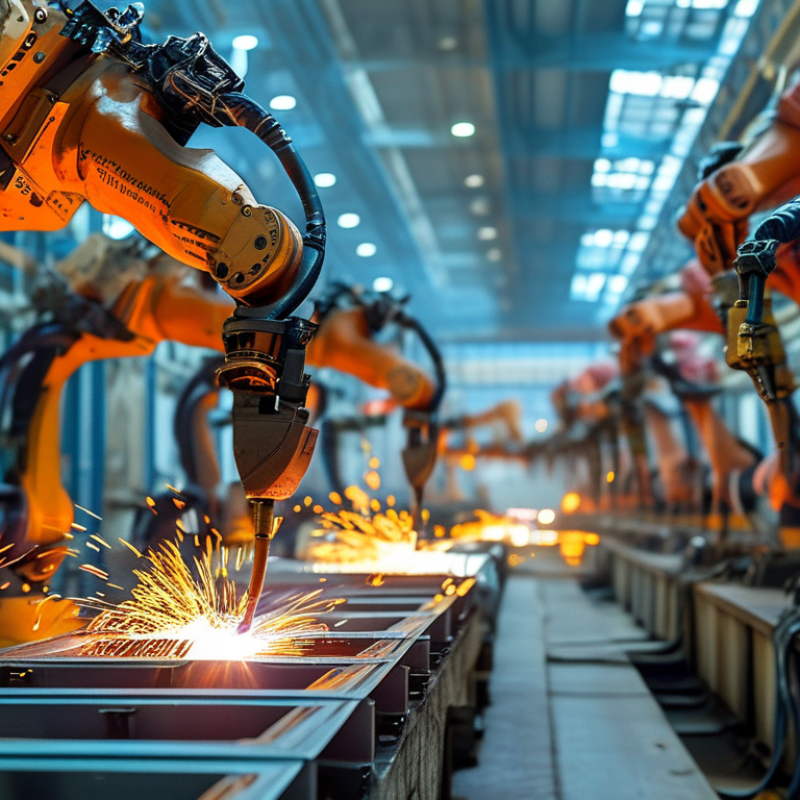
Robotic welding technology in China has rapidly advanced in recent years. The technology focuses on precision and efficiency, making it ideal for various manufacturing sectors. Factories now employ these systems for tasks that require repeatability in welding, which enhances product quality. Automating this process reduces human error and minimizes operational costs.
Recent innovations have introduced AI-driven robots that adapt to different materials and welding techniques. This flexibility allows industries to use robotic welding in automotive and construction sectors, among others. However, there are challenges. These systems require a significant initial investment, and some manufacturers face a learning curve transitioning to automation.
Integration of robotic welding can also raise questions about workforce displacement. As robots take over routine tasks, there’s a growing need for skilled technicians who can maintain and program these systems. This shift highlights the necessity for ongoing training and education in the industry. Balancing technology with human skill is crucial for future success.
Key Innovations in Robotic Welding Cells
In recent years, robotic welding cells in China have undergone significant innovations, transforming how industries approach manufacturing. The integration of AI technology has notably enhanced the precision and adaptive capabilities of robotic welding systems.
According to a report by IMARC Group, the global robotic welding market is projected to reach $7.1 billion by 2027, indicating a robust growth trend. This growth is driven by advancements that improve productivity and reduce operational costs.
Another key innovation is the development of modular robotic welding systems. These systems allow manufacturers to customize their setups easily, adapting to various project requirements. Furthermore, data analytics applied in these cells enables real-time monitoring and decision-making, significantly improving quality control. A 2021 study indicated that integrating smart technologies could reduce weld defects by over 40%, showcasing the potential for enhanced operational efficiency.
Tip: Companies should invest in training for their operators on these new technologies. Understanding the nuances of automated systems can lead to better outcomes and increased safety in the workplace. It's also crucial to regularly assess their effectiveness and remain open to continuous improvement. Adopting robotic welding cells is a significant step, but ongoing evaluation is essential for long-term success.
Applications of Robotic Welding in Various Industries
Robotic welding has transformed various industries, enhancing production efficiency and quality. In manufacturing, robots excel in performing repetitive tasks. They provide precision that humans cannot match. For example, aeronautics and automotive sectors rely heavily on robotic welding. These applications require high accuracy and reliability. Robotic systems operate continuously, minimizing downtime and maximizing output.
In construction, robotic welding is gaining traction. Innovations allow robots to perform complex welds in challenging environments. These systems reduce safety risks for human workers. Additionally, the adaptability of robotic welders in different settings is impressive. They can be reprogrammed for diverse projects, showcasing their versatility.
While robotic welding offers significant benefits, challenges remain. Integration into existing workflows can be difficult. Training staff to work alongside robots requires time and resources. Moreover, initial investments can be substantial. Companies must weigh long-term gains against upfront costs. However, as technology advances, these hurdles will likely diminish, paving the way for broader adoption.
Benefits of Using Robotic Welding Solutions
Robotic welding solutions have become increasingly popular across various industries. One significant advantage is their efficiency. According to market reports, automated welding systems can operate at speeds up to 10 times faster than manual welding. This boost in speed not only enhances productivity but also reduces labor costs significantly.
Another benefit is the improved quality of welds. Robots consistently deliver high precision. This leads to fewer defects in production. Studies show that robotic welding decreases variance in weld quality by up to 30%. Such consistency ensures reliability in manufacturing processes, which is crucial in sectors like automotive and aerospace.
Despite these advantages, challenges remain. Initial investment costs can be high, and integration into existing systems may encounter hurdles. Training staff to manage and maintain these systems can be demanding. Industries must weigh these factors before committing to robotic welding, as each facility's needs and context differ. Nonetheless, the potential for innovation and increased efficiency renders robotic welding a valuable consideration for future growth.
China Best Robotic Welding Cell Innovations and Applications in Industry
This chart illustrates the benefits of using robotic welding solutions across different sectors in China. The data represents the percentage of companies experiencing improvements in efficiency, quality, safety, and cost reduction when implementing robotic welding technologies.
Future Trends and Developments in China's Welding Automation
China is rapidly evolving in welding automation. Companies are increasingly adopting robotic welding cells. These innovations boost productivity and enhance the quality of welds. The shift towards automation addresses labor shortages and rising manufacturing costs. It also minimizes human error, leading to consistent outputs.
Future trends indicate that advancements in artificial intelligence will play a crucial role. AI-driven systems can analyze welding parameters in real-time. This adaptation allows for adjustments on the fly, improving weld integrity. Another emerging trend is the integration of IoT in welding processes. Connectivity enables remote monitoring and predictive maintenance, reducing downtime.
However, challenges still exist. The initial investment in technology remains significant. Many businesses struggle with the transition from manual to automated processes. Training workers to operate these sophisticated machines is essential. A lack of skilled labor can hinder progress. Continuous improvement and adaptation will be necessary for success in this evolving landscape.
China Best Robotic Welding Cell Innovations and Applications in Industry
| Dimension |
Data Type |
Description |
Example Industry Application |
| Welding Speed |
Operational Efficiency |
Increased welding speed reduces cycle time and enhances productivity. |
Aerospace Components |
| Automation Level |
Technology Integration |
Full automation integrates robotic cells with AI for process optimization. |
Automotive Manufacturing |
| Laser Welding |
Welding Technique |
Advanced laser welding provides precision and minimizes thermal distortion. |
Electronics Assembly |
| Robotic Flexibility |
Adaptability |
Robotic cells can handle multiple welding tasks and adapt to different materials. |
Heavy Machinery |
| Cost Reduction |
Financial Metrics |
Implementation of robotic welding decreases labor costs and material waste. |
Shipbuilding |
| Safety Improvements |
Workplace Safety |
Robotics enhances safety by automating hazardous tasks in welding. |
Construction Equipment |
| Data Analytics |
Performance Measurement |
Utilization of data for monitoring and improving welding processes. |
Railway Manufacturing |