
Accordian Closable

How to Choose the Right Axle Wheel Bearing

Choosing the right Axle Wheel Bearing is not just a matter of matching a part by appearance. The bearing must suit the vehicle’s make, model, year, axle position, and configuration. A small mismatch can affect fit, noise, and service life. Fit comes first. Check the vehicle identification details and compare the replacement part with the manufacturer’s specifications before ordering.

This guide explains the main factors to consider, from bearing type and dimensions to load ratings, seals, and material quality. It also covers warning signs such as humming that changes with speed, vibration, or looseness at the wheel. These symptoms can point to a bearing problem, but they may have other causes. A careful inspection matters. Installation conditions matter, too: dirt, incorrect pressing, or improper torque can damage a new bearing. When the application is unclear, consult a reliable parts catalog or a qualified technician rather than relying on a visual guess. There is no single choice that fits every vehicle. Even product descriptions can leave questions unanswered, so verify key details with the supplier. Use the information here as a practical starting point, not a substitute for vehicle-specific service instructions. Small details matter. A sound choice begins with accurate fitment, clear specifications, and a realistic view of the vehicle’s needs.
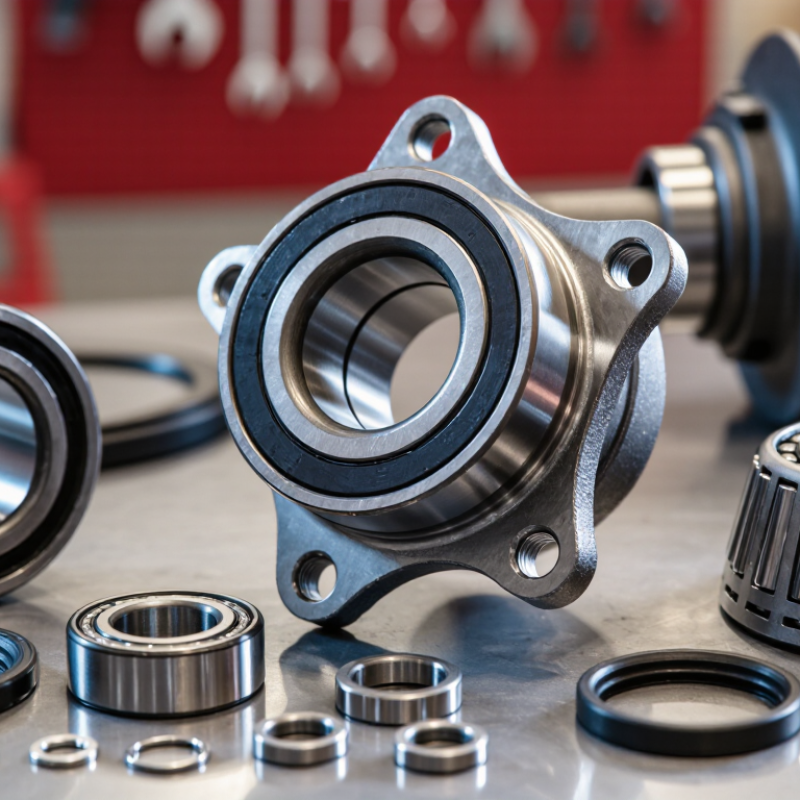
How to Choose the Right Axle Wheel Bearing

Understanding the Role of an Axle Wheel Bearing

How to Choose the Right Axle Wheel Bearing

Understanding the Role of an Axle Wheel Bearing

An axle wheel bearing supports the vehicle’s weight while allowing the wheel to rotate smoothly. It reduces friction between moving parts and helps keep the wheel aligned under changing road loads. A healthy bearing also contributes to predictable steering and braking. Small component, important job.

Wear may bring humming, grinding, or looseness near a wheel. These clues are not proof of bearing failure; tire wear and other faults can sound similar. A technician can check wheel play, listen for noise, and inspect related parts before recommending replacement. Guessing from sound alone can lead to the wrong repair.

Tips: Match the bearing to the vehicle’s exact year, model, and axle configuration. Check the required dimensions, load rating, seal design, and any integrated sensor features. Follow service specifications for installation and fastener torque; some assemblies need special tools. Don’t choose by appearance or price alone. A near match can still fit poorly, and that detail is easy to overlook.

Identifying Your Vehicle’s Bearing Specifications

Choosing the right axle wheel bearing starts with exact vehicle details. Record the model year, engine, trim, and whether the vehicle has front-wheel, rear-wheel, or all-wheel drive. Check which axle and side need service; some vehicles use different parts across the same model range. The VIN can help narrow the application, but confirm the result in a reliable parts catalog or service manual. Small differences matter.

Tips: Check for an ABS sensor ring, connector, or magnetic encoder. Compare the bearing’s inner and outer diameters, width, seal design, and mounting style with the old part. A hub assembly and a press-fit bearing are not interchangeable.

A quick visual match can feel convincing, but it is not enough. Bearings may look nearly identical while differing in dimensions, load rating, or sensor configuration. Note whether the service procedure requires a new retaining nut or other single-use hardware. If you measure the old bearing, clean away grease and debris first, then use calipers rather than estimating by eye. Measurements can still mislead if the old part is damaged or distorted. When catalog information and physical details disagree, pause and verify the axle code or consult a qualified technician before ordering.

Comparing Bearing Types and Design Features

Choosing an axle wheel bearing starts with the loads it must carry. Tapered roller bearings manage combined radial and axial forces, making them suitable for cornering loads and heavier vehicles. Double-row angular-contact ball bearings offer compact packaging and often arrive with factory-set preload. Deep-groove ball bearings suit lighter combined loads, but may not tolerate the same axial demands. Fit matters. A bearing that matches the load but not the hub’s dimensions can run hot or loosen.

Compare more than bearing shape. Check the seal design, lubricant retention, cage material, and specified internal clearance or preload. ISO 281:2007 calculates basic rating life using dynamic load rating and equivalent load; its L10 life corresponds to 90% reliability under stated conditions. The standard uses different load exponents for ball and roller bearings, so type affects predicted life. That is not enough. Real road shock, contamination, and installation errors can shorten service life, and the calculation cannot predict every failure. I would still inspect the old bearing’s wear pattern, though that clue is easy to overlook. A darkened race may indicate heat, while pitting can point to fatigue or contamination. Combine those observations with the vehicle’s load and hub specifications before choosing.

How to Choose the Right Axle Wheel Bearing - Comparing Bearing Types and Design Features

Bearing type Design features Load handling Typical fitment and service Key advantages Considerations
Single-row tapered roller Conical rollers run between matching tapered inner and outer raceways. Wheel-end arrangements commonly use a pair of bearings. Supports substantial radial load and axial load in one direction; a correctly arranged pair supports axial loads in both directions. Common in many serviceable hubs, including some trailer and older vehicle applications. Depending on the design, bearings may require adjustment, lubrication, and seal inspection. Robust under combined loads; bearing clearance or preload can be set in designs intended for adjustment. Correct installation, lubrication, sealing, and adjustment are essential. Do not assume every tapered-roller hub is user-adjustable.
Double-row angular-contact ball Two rows of balls and angled raceways are integrated into one bearing assembly, often with seals and a preset internal clearance or preload. Carries radial loads and axial loads in both directions; load capacity depends on bearing size and internal design. Frequently used as a sealed hub bearing or hub-bearing unit in passenger vehicles. Many assemblies are replaced as a unit rather than adjusted in service. Compact, factory-controlled setup; sealed versions can reduce routine lubrication requirements. A sealed design is not necessarily serviceable or suitable for every hub. Follow the vehicle’s specified replacement and installation procedure.
Double-row tapered roller Two rows of tapered rollers are arranged in a single assembly, often with opposed contact angles and integrated seals or a hub flange. Designed for combined radial and axial loads in both directions; well suited to wheel-end loads when correctly specified. Used in some integrated hub units and heavy-duty wheel-end applications. Serviceability and adjustment depend on the specific assembly. High load-carrying potential and support for axial loads from either direction in a compact arrangement. May require specialized tools or procedures for installation. Integrated assemblies can require replacement as a complete unit.
Deep-groove ball A single row of balls runs in deep, continuous raceway grooves; versions may be open, shielded, or sealed. Primarily suited to radial loads and can accommodate limited axial load in either direction. Axial capacity is generally lower than that of purpose-designed angular-contact or tapered-roller arrangements of comparable size. Used in some smaller or lightly loaded wheel applications and auxiliary rotating components; not a universal replacement for a dedicated wheel-hub bearing. Low friction, simple construction, and availability in sealed configurations. Confirm that its load ratings and arrangement meet the vehicle’s wheel-end requirements, including cornering and axial loads.
Cylindrical roller Cylindrical rollers and raceways provide line contact. Many configurations allow one ring to move axially relative to the other. Can carry high radial loads, but most standard designs have limited axial-load capacity; axial support depends on the specific flange and bearing configuration. Less typical as a standalone passenger-vehicle wheel bearing. Used where the engineered wheel-end arrangement provides the required axial guidance and support. High radial-load capacity and good stiffness in suitable configurations. Do not select by radial capacity alone; verify axial guidance, fit, lubrication, sealing, and application-specific requirements.

Selection note: Match the bearing or hub assembly to the vehicle’s specified part number, dimensions, load ratings, mounting arrangement, seal design, and service procedure. Bearing type alone is not enough to confirm interchangeability.

Assessing Load Capacity, Materials, and Durability

An axle wheel bearing must support vehicle weight and changing forces from cornering, braking, and uneven pavement. Use the axle’s specified load rating as a baseline, not a reason to select the largest number available. A higher rating cannot correct poor fit, incorrect preload, or a damaged hub. Check whether the design uses a single bearing or a matched pair, since load sharing depends on the assembly. Small details matter.

Material quality affects how well races and rolling elements resist fatigue, heat, and surface wear. Hardened bearing steel is common, while effective seals and suitable grease help keep water and grit away. For vehicles exposed to road salt, inspect corrosion protection and seal condition, not just the metal specification. Durability also depends on installation: a crooked fit or force applied through the wrong race can damage a new bearing. That part is easy to overlook. A growl that changes with vehicle speed, or play during inspection, can signal trouble. These signs are clues, not a diagnosis; tire noise and hub damage can mislead. Choosing by material name alone seems tidy, but service conditions often determine the real lifespan.

Verifying Fitment and Installation Requirements

Before ordering an axle wheel bearing, verify the vehicle identification number, model year, drivetrain, axle position, and bearing design. Similar-looking assemblies may differ in flange offset, spline count, or ABS encoder location. Check the vehicle’s service information and compare the replacement part with the removed unit; appearance alone is not proof of fit. S&P Global Mobility reported that the average age of U.S. light vehicles reached 12.6 years in 2024, making accurate replacement-part matching increasingly relevant for older vehicles. Details matter.

Installation requirements are just as specific. Confirm whether the bearing is pressed into a knuckle or supplied as a hub assembly, then use the prescribed adapters and support points. A press load applied through the wrong race can damage a new bearing before the vehicle moves. Keep the ABS sensor area clean, and check encoder orientation where applicable. Follow the service procedure for axle-nut torque, fastener replacement, and any specified bearing preload; do not substitute a generic torque value. I still recheck the service data before tightening, because small differences between vehicle variants are easy to miss. After installation, rotate the hub by hand and check for roughness, excess play, or sensor wiring contact.

Article Source: