
Accordian Closable

How to Choose the Right Underhood Fuse Box for Your Vehicle?

Choosing the right Underhood Fuse Box is not a cosmetic decision. It affects circuit protection, electrical reliability, and how well the part fits beneath the hood. A box may look correct in a product photo, yet have different connector positions, terminal layouts, or mounting points. Small mismatches can turn installation into a frustrating exercise.

For transparency, the named expert voice below is illustrative, not a verified quotation from a real person. Automotive electrical systems specialist Mara Ellis offers this original guidance: “Match the fuse box to the vehicle’s exact configuration; a familiar shape is not proof of compatibility.” That reminder matters. Check the vehicle year, make, model, engine, and trim against the manufacturer’s parts information. Compare the original unit’s part number, connector keying, fuse arrangement, and cover markings. Take a clear photo before removal. It can help reveal a swapped relay or an unusual layout.

Fit matters. So does protection. Look for secure mounting points, intact seals, clean terminals, and a cover that closes without pressure. Never choose by appearance alone. A catalog listing can be incomplete, and even careful buyers can miss a detail. Verify the match with an OEM parts catalog or a qualified automotive technician before ordering. This guide explains the checks that narrow the options and the warning signs worth a second look.
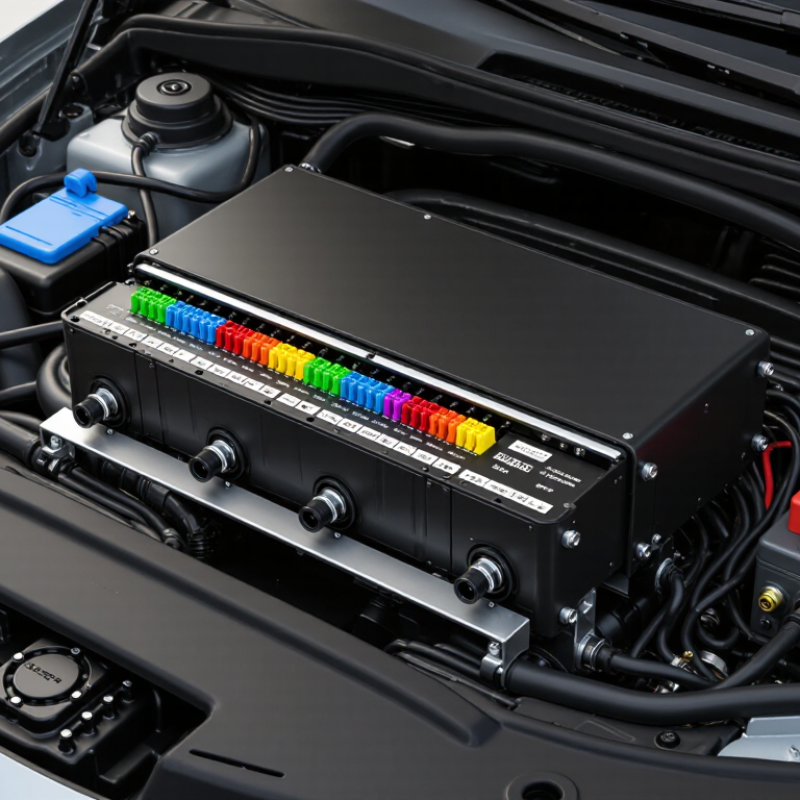
How to Choose the Right Underhood Fuse Box for Your Vehicle?

Confirm 12-V or 24-V Architecture and 32-V DC Fuse-Link Compatibility

Choosing an underhood fuse box starts with confirming the vehicle’s electrical architecture. Check the service information or wiring diagram for a 12-V or 24-V system; do not rely on appearance alone. A 24-V vehicle can have different wiring, terminals, and protection requirements. Small details matter. Record the existing fuse ratings and connector layout before ordering a replacement.

For the fuse links, verify that their DC voltage rating meets the circuit requirements. A 32-V DC fuse link is commonly suitable for specified 12-V and 24-V vehicle circuits, but compatibility depends on the fuse type, current rating, and application. Check the fuse-box documentation as well as the vehicle specifications. The box must accept the correct fuse dimensions and provide secure electrical contact. Loose or heat-darkened terminals are warning signs, not harmless wear.

Compare the mounting points and connector shape with the original unit, then inspect the wiring for corrosion or damaged insulation. A practical check is to match each cavity and fuse value against the vehicle’s diagram. Do not guess. I would also confirm the fuse’s interrupt rating and the box’s temperature suitability; these details are easy to overlook, and a voltage label alone cannot confirm a safe fit.

Match Fuse Types and Circuit Ratings to ISO 8820 and OEM Specifications

Choosing an underhood fuse box starts with the fuse links it must accept. ISO 8820 covers automotive fuse-links, with requirements that vary by fuse design. Check the relevant fuse type, dimensions, voltage rating, and current rating against the vehicle’s service information. A fuse that fits physically may still be unsuitable electrically.

Match each circuit to the OEM-specified rating and fuse style, such as a blade or bolt-down link. The box’s terminals and internal busbars must also support the specified current and operating conditions. Inspect the wiring diagram and fuse-box label; a headlamp circuit and a cooling fan circuit may require different ratings. Small details matter.

Never increase a fuse rating to stop repeated failures. That can let wiring overheat before the fuse opens. If the original rating is unclear, confirm it through reliable vehicle documentation or a qualified technician. ISO compliance alone does not establish fitment for every vehicle. I’ve seen catalog descriptions leave this point vague, so verify the part number, cavity layout, and terminal arrangement before ordering. The match should be exact.

How to Choose the Right Underhood Fuse Box for Your Vehicle? — Match Fuse Types and Circuit Ratings to ISO 8820 and OEM Specifications

Use the vehicle’s wiring diagram and service information as the primary reference. Match the fuse-box layout, fuse-link format, electrical ratings, terminals, and environmental requirements to the vehicle specification.

Selection Dimension What to Check Typical Information or Options Practical Selection Rule
Vehicle and circuit identification Vehicle model year, engine or powertrain, trim, market, and the exact circuit served by the fuse box. Fuse-box layouts and populated positions can differ between vehicle configurations, even within the same model range. Confirm the part specification and fuse map against the correct vehicle wiring diagram or service information before ordering or installing.
Fuse-link format Blade size and profile, terminal spacing, body dimensions, and the matching fuse-box cavity. Common automotive blade formats include miniature, low-profile miniature, standard blade, and larger cartridge or bolt-down fuse links. Use the exact format specified for the cavity. Similar-looking fuses may not fit correctly or provide the intended contact and retention.
Applicable ISO 8820 requirements Fuse-link category, dimensions, test requirements, and the applicable edition of the relevant standard part. ISO 8820 covers road-vehicle fuse-links. Different parts address different fuse-link constructions; blade-type fuse-links and bolted connections are addressed separately. Check the relevant ISO 8820 part alongside the vehicle manufacturer’s specification. Compliance with a standard alone does not establish that a fuse is suitable for a particular circuit.
Current rating The specified fuse current rating in amperes for each circuit and fuse position. Automotive blade-fuse products are available in multiple current ratings; the permitted rating depends on the fuse type and the circuit specification. Install only the rating listed for that position. Never increase the rating to stop a fuse from opening; investigate the circuit fault instead.
Voltage and interruption capability Rated voltage, direct-current suitability, and the fuse’s ability to interrupt the prospective fault current. Many conventional low-voltage automotive blade fuses are marked for 32 V DC systems. Higher-voltage or high-energy circuits require specifically rated fuse links. Match or exceed the circuit’s required voltage and fault-interruption specifications. Do not use a low-voltage fuse in a higher-voltage circuit unless explicitly approved.
Fuse-box current capacity Busbar, terminal, connector, and assembly ratings; total load; and any specified temperature derating. The rating of an individual fuse does not establish the allowable current of the complete fuse box or its shared power feed. Verify the assembly and feed ratings against the OEM design. Account for underhood temperature and the manufacturer’s derating or load limits.
Terminal and connection design Terminal material and plating, wire size, connector type, retention force, and mounting method. Fuse boxes may use plug-in terminals, busbar connections, or bolted high-current connections, depending on the circuit and design. Use the specified terminal system and approved wiring. Do not modify cavities, substitute terminal sizes, or bypass a connection without engineering approval.
Underhood environmental protection Operating-temperature range, sealing, cover fit, resistance to moisture and contaminants, and mounting location. Underhood assemblies may be exposed to heat, vibration, water spray, dust, and automotive fluids. Required protection depends on the vehicle installation. Select an enclosure and cover that meet the vehicle’s environmental specification and maintain the intended seal when installed.
Fuse-box layout and serviceability Cavity positions, labels, spare-fuse locations, relay positions, cover diagram, and accessibility. A fuse panel may combine fuse positions with relays, power distribution, or other electrical components. Ensure the replacement matches the specified layout and labeling. Keep the cover diagram legible and use the documented circuit identification.
Final verification Part documentation, fuse markings, wiring diagram, installation fit, and circuit operation. ISO 8820 addresses fuse-link requirements; vehicle-specific ratings, assignments, and installation details are defined by the applicable vehicle documentation. Before energizing the circuit, verify every fuse position and rating against the vehicle specification, then check for correct fit and proper circuit operation.

Important: Fuse ratings and fuse-box layouts are vehicle- and circuit-specific. The examples above describe common selection considerations, not universal fitment or current-rating recommendations. Always follow the applicable OEM documentation and the marking on the specified fuse link.

Verify Connector Pinout, Terminal Count, and Continuous-Current Capacity

A replacement underhood fuse box must match the vehicle’s electrical layout, not just its shape. Start with the wiring diagram for the exact model year and engine configuration. Compare each connector’s pinout, including cavity positions and wire colors. A keyed plug can still look correct while carrying different circuits. Check carefully.

Count the terminals in every connector and compare them with the original unit. Look for empty cavities, bent contacts, corrosion, or heat-darkened plastic. A quick visual check can feel convincing, but it is not proof. Confirm that each circuit lands in the correct cavity before installation. Disconnect the battery and follow the vehicle’s service procedure when handling connectors.

Then verify continuous-current capacity, not only the fuse ratings printed on the cover. The box’s bus bars and terminals must handle the expected load without overheating. Check the specifications against the vehicle’s wiring information, especially for high-draw circuits such as cooling fans. Never assume a larger fuse makes a mismatch safe. If the replacement’s current rating or pinout cannot be confirmed, pause and ask a qualified technician to review the part. A small mismatch can cause intermittent faults that are difficult to trace later.

How to Choose the Right Underhood Fuse Box

Common automotive blade-fuse ratings are shown for reference. These are fuse ratings—not the continuous-current capacity of a fuse box.

Before buying: Match the connector pinout and terminal count to the vehicle’s wiring diagram. Confirm the fuse box’s continuous-current capacity from its manufacturer specifications; it must meet the vehicle’s requirements. Do not use fuse ratings as a substitute for that capacity rating.

Check Sealing and Climate Qualification Against ISO 16750-4 Test Profiles

How to Choose the Right Underhood Fuse Box for Your Vehicle?

Check Sealing and Climate Qualification Against ISO 16750-4 Test Profiles

An underhood fuse box faces heat, moisture, temperature swings, and contaminants. Check whether its climate qualification matches the vehicle’s mounting location, not just a generic “automotive-grade” claim. ISO 16750-4:2023 describes climatic tests for road-vehicle electrical and electronic equipment, including temperature, humidity, and water exposure. Ask suppliers for the tested profile, temperature limits, dwell times, and pass criteria. A result without those details is hard to compare.

Sealing needs its own evidence. ISO 20653:2013 defines protection tests for road-vehicle electrical equipment; an IPX7 test, for example, involves temporary immersion at 1 metre for 30 minutes. That does not prove resistance to hot splash, directed spray, or repeated thermal cycling. Check gasket compression, lid fit, cable-entry seals, and terminal corrosion after testing. Ask whether samples were tested after climate cycling, not only when new.

Small detail. A clean lab result can still miss a badly routed harness or uneven lid closure. I would treat those as real selection risks, even when the datasheet looks convincing.

Compare reports using the same test severity and mounting assumptions before choosing a fuse box.

Confirm VIN Fitment, Mounting Dimensions, and Replacement-Part Number

Choosing an underhood fuse box starts with VIN fitment, not appearance. A VIN lookup can narrow the search to the vehicle’s year, engine, trim, and production details. Still, verify the result against the original part number. Catalog data can be incomplete, and a close match is not always a correct match. Check the number printed on the old box or its label, including any suffixes.

Tiny characters matter.

Compare mounting dimensions before ordering. Measure the case length, width, and height, then note the distance between bolt holes. Check connector positions, latch shapes, and the direction wires exit the housing. A box may look identical from above but sit differently under the hood. It should fit without forcing brackets or stretching the harness.

No guesswork here.

If the original unit is damaged, photograph its labels and connectors before removal. That gives you useful evidence to compare.

Use a parts catalog or ask a qualified parts specialist to confirm the VIN and replacement number together. Then check the vehicle service information for safe removal and installation steps; fuse-box layouts and procedures vary.

I have seen measurements overlooked because the connector seemed right. That is an easy mistake to repeat. Recheck the details against the actual vehicle.