How to Leverage Robotic Automation for Business Efficiency?
In today's fast-paced business landscape, organizations must find ways to enhance efficiency. Robotic automation offers a promising solution. This technology streamlines tasks, reduces human error, and saves valuable time. Many companies have begun to see its potential for transforming operations. However, implementing robotic automation is not without challenges.
Businesses often struggle with the transition. Employees may resist changes or feel threatened by automation. Additionally, integrating robotic systems into existing workflows can be complex. It’s essential to train staff and redefine their roles in the process. Taking these steps can lead to a smoother adaptation to robotic automation.
Moreover, while this technology has numerous advantages, it requires thoughtful reflection and planning. Organizations should continuously assess the impact of automation. Are they achieving the desired efficiency? Is the technology truly enhancing productivity? Addressing these questions will help businesses leverage robotic automation effectively.

Understanding Robotic Automation in Business Context
Robotic automation is transforming the business landscape. It streamlines processes and reduces costs. Companies can automate repetitive tasks, increasing efficiency. For instance, invoice processing can be handled by software. This frees up employees to focus on more strategic activities.
However, the implementation is not flawless. Organizations may face challenges, including employee resistance. Some workers fear automation threatens their jobs. There is also the risk of system errors. A minor glitch can disrupt operations. Businesses must address these concerns carefully. Communication with employees is vital for a smoother transition.
Incorporating robotic automation requires thoughtful planning. Each department needs a tailored approach. Assessing workflow is essential before automation can happen. Not every task is suitable for automation. Businesses must evaluate which processes truly benefit from it.
Identifying Suitable Processes for Automation Implementation
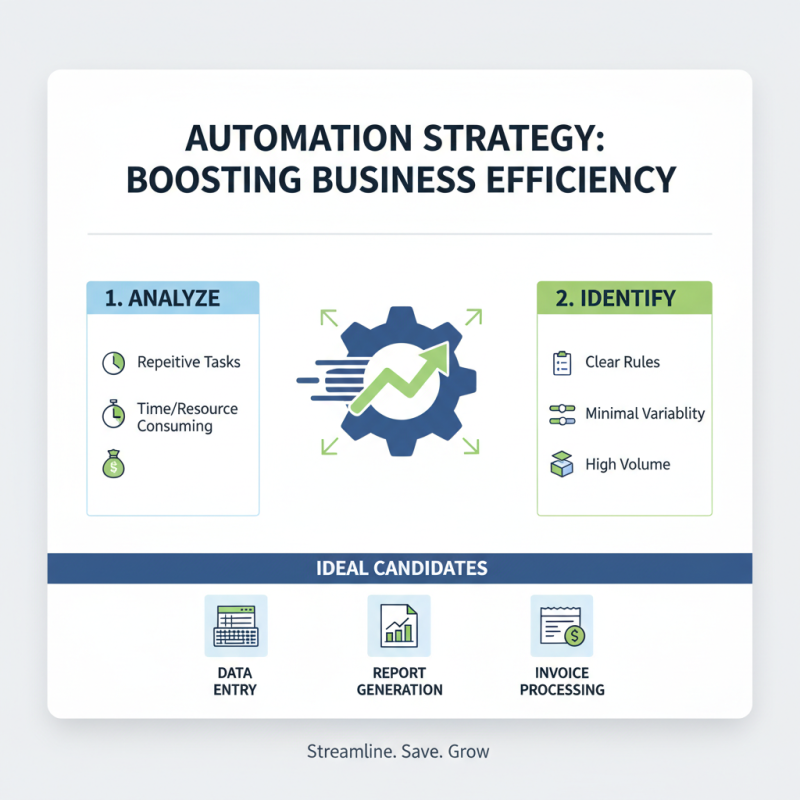
Identifying suitable processes for automation can drastically improve business efficiency. Start by analyzing repetitive tasks. These tasks often consume significant time and resources. Look for processes with clear rules and minimal variability. Examples include data entry, report generation, and invoice processing.
**Tips:** Focus on tasks with high volume. If a task is done more than once a week, consider it for automation. Engage employees in this process. They can offer insights into pain points and inefficiencies.
Next, evaluate the impact of automation on your team. Will it eliminate jobs, or will it free up employees for more strategic work? Sometimes, automation raises concerns. Employees may feel threatened or lose motivation. It’s essential to address these feelings early.
**Tips:** Communicate openly about the benefits. Highlight how automation can enhance their roles. Provide adequate training. This ensures everyone feels part of the transition. Automation isn’t just about technology; it's a cultural shift. Embrace it.
Assessing the Cost-Benefit Analysis of Automation Solutions
As businesses consider robotic automation, a cost-benefit analysis becomes essential. A report by McKinsey indicates that automation can boost productivity by up to 30%. This figure is significant. However, not all sectors experience the same benefits. Manufacturing may see larger gains compared to service industries. Tailoring solutions to specific business models is crucial.
Initial investments for automation tools can be quite high. Forbes reports an average return on investment (ROI) of about 200% over five years for automation projects. Yet, hidden costs often arise. Maintenance, training, and integration can strain budgets. Measuring efficiency gains against these costs is vital.
Moreover, companies need to be wary of potential drawbacks. Automation might lead to job displacement. Reskilling efforts are crucial to address this issue. A smooth transition can minimize resistance and enhance morale. Balancing technology adoption and human factors is a continuous challenge in the automation journey.
Best Practices for Integrating Robotics into Existing Workflows
Integrating robotic automation into existing workflows can drastically improve business efficiency. According to a recent industry report, organizations that implement robotic process automation (RPA) can achieve up to a 30% reduction in operational costs. This isn’t just about cutting costs; it's about enhancing productivity. Employees can focus on more value-driven tasks when robots handle repetitive processes.
One key best practice is to start small. Identify processes that are time-consuming and rule-based. For example, data entry or invoice processing can yield quick wins. In fact, 61% of companies report significant time savings after automating mundane tasks. However, integration is not always seamless. Careful planning is necessary to align robotic tasks with human workflows. Misalignment can result in frustration among employees or even delays.
Additionally, monitor performance closely. Some organizations overlook the need for ongoing assessment. Regular evaluations provide insights into the effectiveness of robotic systems. They also allow for fine-tuning processes to better meet organizational goals. Robotics can boost efficiency, but failing to adapt can lead to wasted resources and missed opportunities for improvement.
How to Leverage Robotic Automation for Business Efficiency? - Best Practices for Integrating Robotics into Existing Workflows
| Statistics |
Before Automation |
After Automation |
Improvement (%) |
| Time Taken to Complete Tasks |
10 hours/week |
4 hours/week |
60% |
| Error Rate |
5% |
1% |
80% |
| Cost Savings |
$10,000/year |
$25,000/year |
150% |
| Employee Satisfaction |
70% |
90% |
28.57% |
| Project Delivery Speed |
20 days |
10 days |
50% |
Measuring and Optimizing Automation Performance Metrics
Measuring automation performance is crucial for maximizing business efficiency. Metrics such as cycle time, accuracy, and engagement levels can provide insights into how robotic processes are performing. Analyzing these metrics reveals where improvements are needed. For example, if cycle times are longer than expected, it may indicate bottlenecks in the automation workflow.
Optimization requires continuous evaluation. Regular feedback loops can highlight areas for refinement. For instance, if an automation tool struggles with complex tasks, it may require additional programming or a review of the task structure. Sometimes, the automation process can inadvertently reduce employee engagement. It's essential to evaluate whether automation is enhancing or hindering team productivity.
Balancing automation benefits with human oversight can lead to better results. Analyzing the performance metrics helps stakeholders make informed decisions. Are the current metrics adequate? Is there room for more granular data? Reflecting on these questions ensures both efficiency and effectiveness in automation practices.
Measuring Automation Performance Metrics
This chart illustrates the performance metrics of robotic automation in business efficiency. The data reflects the percentage improvement in various areas of operation over a six-month period after implementing automation solutions.