What Is Metallic Liquid Tight Conduit and How Does It Work?
Metallic Liquid Tight Conduit protects electrical conductors where moisture, vibration, oil, and movement create practical installation challenges. It combines a flexible metallic core with a water-resistant outer jacket. The result is a bendable pathway that helps shield cables without making every connection rigid.
Electrical educator Mike Holt emphasizes a useful field principle: “Protect the conductors, and the system lasts longer.” That idea explains why installers choose Metallic Liquid Tight Conduit for pumps, motors, rooftop equipment, machine tools, and outdoor control panels. A technician can route the conduit around a tight corner, secure it with suitable fittings, and maintain a continuous protective enclosure. Small details matter.
The conduit does not make an unsafe installation safe by itself.
Its performance depends on correct sizing, grounding, fittings, support spacing, and sealing. The metallic core can provide mechanical protection and bonding continuity, but only when connections are properly assembled. A loose connector may admit water. A sharp bend may restrict the conductors. An oversized route may sag under vibration.
This guide examines what Metallic Liquid Tight Conduit is, how its layered construction works, and where it performs best. It also considers limitations that product descriptions sometimes overlook. Real installations are rarely perfect. Dust gathers. Space disappears. Maintenance changes the original layout. Understanding those conditions helps engineers and electricians select the right conduit, install it carefully, and inspect it before energizing the system.
Definition and Purpose of Metallic Liquid Tight Conduit
Metallic liquid tight conduit is a flexible metal raceway with a sealed, moisture-resistant outer jacket. Its purpose is simple: protect electrical conductors where water, oil, dust, vibration, or movement could cause damage. The metal core provides mechanical strength, while the jacket limits liquid entry around the wiring path. In practice, it is often installed near pumps, motors, rooftop equipment, washdown areas, and exposed industrial machinery.
Its design follows a practical sequence. Conductors pass through the conduit, and listed fittings secure each end. When properly tightened, the fitting helps maintain the enclosure’s liquid-resistant pathway. UL 1660 and NEC requirements address liquidtight flexible metal conduit construction, fittings, grounding, and installation conditions. NFPA’s Electrical Fires report recorded an annual average of 35,150 U.S. home fires involving electrical distribution and lighting equipment from 2015 to 2019. That figure does not prove conduit prevents every failure, but it shows why physical protection matters.
Installation details often decide performance. A sharp bend can stress the jacket, and excessive length can weaken support. The metal conduit may also serve as a grounding path only when the complete system meets applicable code requirements. That assumption is risky. Field inspections should check bonding, fitting tightness, bend radius, and jacket damage. The conduit looks durable. It is not indestructible.
Key Components and Protective Materials
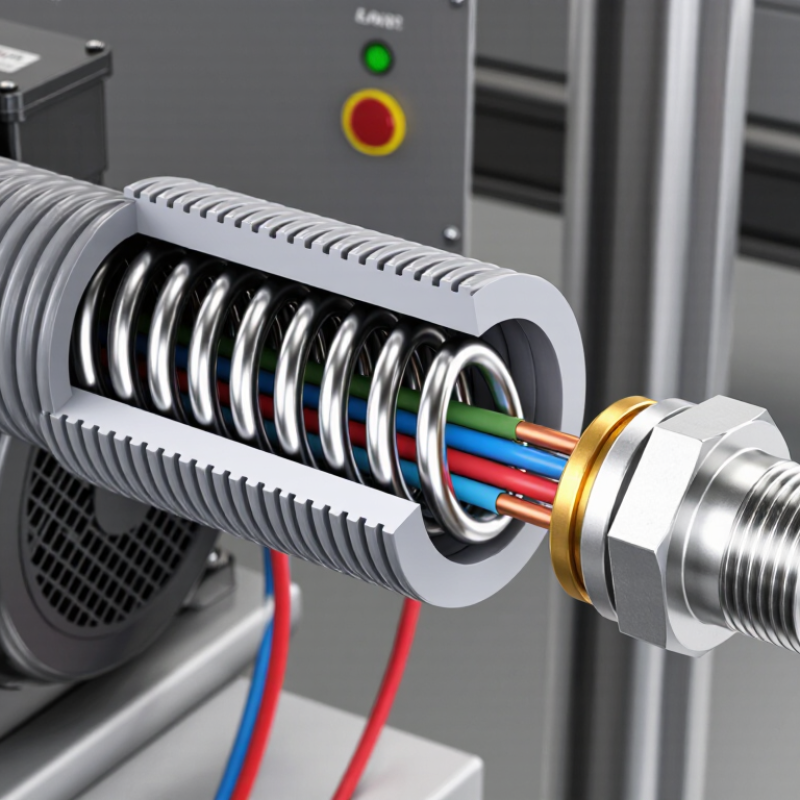
Metallic liquid tight conduit, often called LFMC, protects electrical conductors in demanding environments. Its main body is a flexible metal strip, commonly galvanized steel, formed into a continuous spiral. This structure allows bending around machinery, panels, and tight corners. A sealed polymer jacket surrounds the metal core. It blocks water, oil, dust, and some corrosive chemicals from reaching the conductors.
The protective materials work as a system. The steel core resists crushing and provides mechanical strength. The outer PVC or thermoplastic jacket adds insulation and shields against abrasion, sunlight, and moisture.
Liquidtight fittings use compression components, sealing rings, and locknuts to close each connection. A small fitting error can defeat an otherwise strong conduit. That detail deserves careful attention.
Inside, insulated copper or aluminum conductors carry power or control signals. The conduit may also support grounding, but this depends on installation requirements, fitting design, and local electrical rules. A bonding jumper may be necessary, especially across flexible sections. Inspectors often check jacket damage, bend radius, thread engagement, and visible gaps near fittings. Field experience shows that over-bending can weaken the jacket without obvious marks. I have found that clean cuts and properly tightened fittings matter more than speed. Conditions vary, so selecting a material only by appearance is an unreliable shortcut.
How Metallic Liquid Tight Conduit Works Step by Step
Metallic liquid tight conduit combines a flexible metal core with a protective, waterproof jacket. It shields conductors from impact, moisture, oil, and vibration. The metal layer also helps provide mechanical protection and, when properly bonded, an effective grounding path.
The process starts with planning the route. An installer measures the distance, checks bending space, and selects fittings rated for the environment. The conduit is cut squarely, without crushing its spiral core. A fitting then grips the metal armor while its sealing ring compresses around the outer jacket. That seal matters. A loose fitting can let water reach the conductors.
Next, the installer threads or pulls the conductors through the prepared conduit. The bend radius must stay within the permitted limit, because a sharp bend can restrict pulling and damage insulation. At each end, the fitting is tightened to the specified torque. The installer checks that no metal edge touches the wires.
Power stays off.
A continuity test can confirm the bonding path, while insulation testing may reveal hidden conductor damage. The final inspection should look for gaps, flattened sections, loose fittings, and unsupported weight. In actual field work, small errors are easy to miss, especially in crowded panels. I would recheck every connection rather than trust appearance alone. Liquid tight does not mean suitable for every installation; temperature, chemical exposure, movement, and local electrical requirements still control the selection.
Common Applications and Environmental Protection Benefits
What Is Metallic Liquid Tight Conduit and How Does It Work?
Metallic Liquidtight Flexible Metal Conduit (LFMC) combines a flexible metal core with a liquid-resistant jacket. Its spiral structure bends around pumps, motors, rooftop units, and vibrating equipment. Listed fittings seal each connection, limiting water, oil, dust, and mechanical damage. Under NFPA 70, Article 350, the complete assembly must match the installation environment. The jacket alone is not the protection system.
Common applications include food-processing rooms, wastewater facilities, parking structures, outdoor controls, and industrial machinery. In field inspections, failures often begin at poorly tightened fittings or unsupported bends. That detail matters near washdown areas. NOAA’s 2023 Billion-Dollar Weather and Climate Disasters report recorded 28 U.S. events. Those storms increase exposure to flooding, wind-driven rain, salt, and debris. LFMC can shield conductors during these short, violent exposure periods, when rigid raceways are impractical. It cannot correct bad drainage or replace proper enclosure design.
Environmental benefits are mainly indirect, but still meaningful in practice. A sealed, durable raceway can reduce conductor replacement, unplanned shutdowns, and discarded installation materials. The U.S. Environmental Protection Agency estimated 600 million tons of construction and demolition debris in 2018. Longer service intervals may help prevent a small cable fault from becoming a larger waste stream. However, “green” is not automatic. Incorrect fittings, overbending, corrosion, or poor grounding can shorten service life. Designers should verify UL 360 listing, NFPA 70 requirements, and local environmental conditions before selection. A practical review should check temperature, chemical contact, UV exposure, movement, and cleaning pressure.