Why Robotic Process Automation is Transforming Business Efficiency Today?
In today's fast-paced business environment, organizations are constantly seeking ways to enhance efficiency and productivity. Robotic Process Automation (RPA) is emerging as a transformative solution that allows companies to automate repetitive tasks, streamline operations, and reduce human error. According to Dr. Emily Chen, a leading expert in the field of robotic process automation, "RPA revolutionizes the way businesses operate by enabling them to focus on strategic initiatives rather than mundane tasks." This shift towards automation is not just about saving time but also about reallocating human resources to where they can create the most value.
The significance of robotic process automation extends across various industries, driving efficiency while transforming workforce dynamics. As businesses integrate RPA into their operations, the potential for innovation and growth expands. Employees are liberated from tedious tasks, allowing them to engage in more creative and impactful work, thereby fostering a culture of continuous improvement. With the rise of RPA, the business landscape is set for a remarkable evolution, fundamentally altering how organizations leverage technology to enhance performance.

Understanding Robotic Process Automation (RPA) and Its Definition
Robotic Process Automation (RPA) is a technology that enables organizations to automate repetitive and rule-based tasks traditionally performed by humans. By leveraging software robots, RPA mimics human actions to interact with digital systems and applications, executing tasks with speed and accuracy. This capability not only streamlines workflows but also enhances overall operational efficiency by allowing employees to focus on higher-value activities that require critical thinking and creativity.
Understanding RPA involves recognizing its fundamental components, which include software robots, the software interface, and the processes they automate. These robots can handle a wide range of tasks, from data entry and extraction to invoice processing and customer service interactions. The flexibility and scalability of RPA make it applicable across various industries, where it significantly reduces the likelihood of errors and increases productivity. Organizations adopting RPA are witnessing transformative changes in their business operations, leading to a more agile and responsive work environment.
Key Technologies Driving Robotic Process Automation in Businesses
Robotic Process Automation (RPA) is increasingly becoming a cornerstone for businesses aiming to enhance operational efficiency. Key technologies driving RPA include artificial intelligence (AI), machine learning, and advanced analytics. According to a report by McKinsey, up to 45% of activities that individuals are paid to perform can be automated using existing RPA technology, highlighting its significant potential to streamline workflows across various sectors. The integration of AI within RPA allows for more sophisticated decision-making capabilities, enabling bots to handle complex processes previously thought to require human intervention.
Furthermore, natural language processing (NLP) has emerged as a critical driver of RPA, facilitating better communication between software bots and users. A study from Gartner indicates that by 2024, organizations that have embraced AI-powered RPA solutions will achieve at least a 25% productivity improvement in their business processes. The ability to analyze large volumes of data in real-time, paired with machine learning algorithms, empowers RPA tools to continuously learn and adapt, leading to further efficiency gains. With these technologies, businesses not only reduce operational costs but also reallocate human resources to more strategic tasks, ultimately transforming their operational landscapes.
Impact of Robotic Process Automation on Business Efficiency
Benefits of Implementing RPA for Business Efficiency Improvement
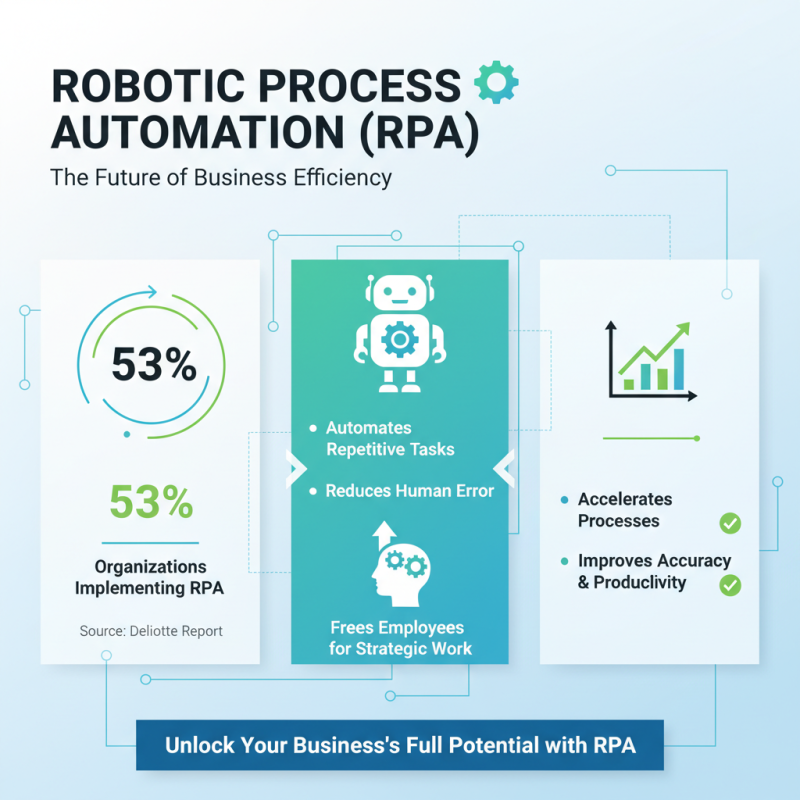
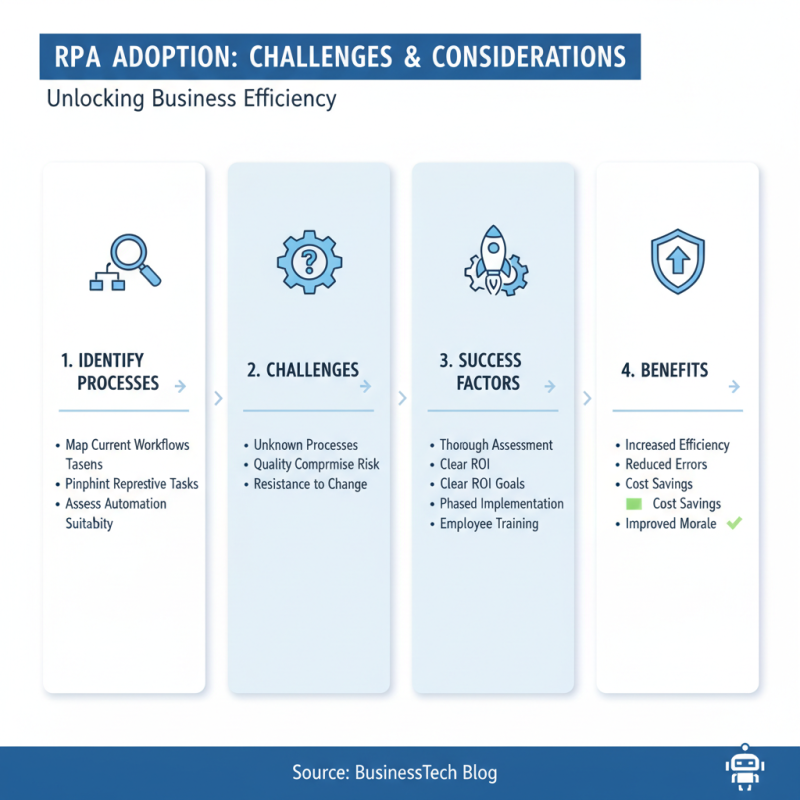
Robotic Process Automation (RPA) is increasingly recognized as a game-changer in enhancing business efficiency across various sectors. According to a recent report by Deloitte, nearly 53% of organizations have started implementing RPA, highlighting its growing significance in today’s business landscape. RPA allows companies to automate repetitive and rule-based tasks, freeing up employees to focus on more strategic activities. This shift not only accelerates processes but also minimizes the risk of human error, resulting in improved accuracy and productivity.
The benefits of implementing RPA are substantial. A study by McKinsey suggests that companies can achieve operational cost reductions of 20-30% by automating their workflows. Furthermore, RPA can lead to enhanced compliance, as automated systems can be programmed to adhere to strict regulations consistently. With the ability to process large volumes of data quickly and accurately, businesses can gain insights and make informed decisions faster. This rapid data handling positions organizations to respond more effectively to market changes, giving them a competitive edge in their respective industries.
Real-World Applications of RPA Across Various Industries
Robotic Process Automation (RPA) is rapidly reshaping efficiency across various sectors, allowing organizations to streamline operations and reduce costs. A recent report from McKinsey indicates that automation technologies, including RPA, could increase productivity by up to 30% in sectors like banking, insurance, and healthcare. These industries have adopted RPA to handle repetitive tasks such as data entry, claims processing, and customer service interactions, freeing up human employees to focus on more complex, value-adding activities.
In the healthcare sector, RPA is making significant strides by automating patient scheduling, billing processes, and compliance reporting. According to a study published by the Healthcare Information and Management Systems Society (HIMSS), organizations implementing RPA have reported a 50% reduction in administrative costs. Similarly, the finance industry is leveraging RPA to improve accuracy and speed in transaction processing and regulatory compliance. The Capgemini Digital Transformation Institute estimates that RPA can save up to $400 billion annually by enhancing operational efficiency in finance-related tasks. As RPA continues to evolve, its real-world applications demonstrate profound impacts on business process optimization across diverse industries, ultimately driving sustainable growth.
Why Robotic Process Automation is Transforming Business Efficiency Today?
| Industry |
Application |
Benefits |
Efficiency Gains (%) |
| Finance |
Invoice Processing |
Reduced manual errors, Faster processing time |
80% |
| Healthcare |
Patient Data Management |
Improved patient care, Streamlined data entry |
70% |
| Retail |
Order Processing |
Faster order fulfillment, Enhanced customer satisfaction |
85% |
| Telecommunications |
Customer Support Automation |
Reduced wait times, Improved service quality |
75% |
| Manufacturing |
Inventory Management |
Optimized stock levels, Reduced costs |
90% |