What is a Robotics Technician? Skills, Responsibilities, and Career Path Explained
In the rapidly evolving field of technology, the role of a robotics technician has become increasingly crucial. As experts in the installation, maintenance, and repair of robotic systems, these technicians play a key role in ensuring the efficiency and safety of automation processes across various industries. According to Dr. Emily Larson, a prominent figure in robotics engineering, "Robotics technicians are the backbone of our automated future, bridging the gap between complex technology and its practical applications." This statement accentuates the significance of their expertise in a world that is continually driven by advancements in robotics and automation.
As the demand for automated solutions continues to grow, so does the need for skilled robotics technicians. Their responsibilities extend beyond mere technical proficiency; they must possess a comprehensive understanding of both mechanical and electrical systems to troubleshoot and optimize robotic operations effectively. This blend of skills not only enhances the technicians' abilities but also positions them at the forefront of innovation in industries ranging from manufacturing to healthcare.
The career path of a robotics technician is as dynamic as the technology they work with. With opportunities for specialization and advancement, individuals can expect to engage with cutting-edge developments that reshape our interaction with machines. Through hands-on experience and continuous learning, those pursuing a career as a robotics technician can contribute significantly to shaping the future of technology and automation.

Definition of a Robotics Technician and Their Role in the Industry
A robotics technician is a skilled professional who specializes in the assembly, maintenance, and operation of robotic systems used across various industries, including manufacturing, healthcare, and logistics. These technicians are instrumental in the integration of robots into production lines, ensuring that systems function seamlessly and efficiently. According to the Bureau of Labor Statistics, employment of robotics technicians is projected to grow by 9% from 2020 to 2030, reflecting the increasing reliance on automation in various sectors.
In their role, robotics technicians are responsible for troubleshooting and repairing robotic systems, programming robots for specific tasks, and ensuring compliance with safety standards. They work closely with engineers and other technicians to optimize robotic workflows and improve productivity. A report by the International Federation of Robotics suggests that the global supply of industrial robots has exceeded three million units, underscoring the high demand for skilled technicians capable of managing these complex machines. The blend of mechanical skills, programming knowledge, and problem-solving abilities makes robotics technicians essential in fostering innovation and efficiency in today's technology-driven economy.
Robotics Technician Skills Distribution
Essential Skills Required for a Successful Robotics Technician
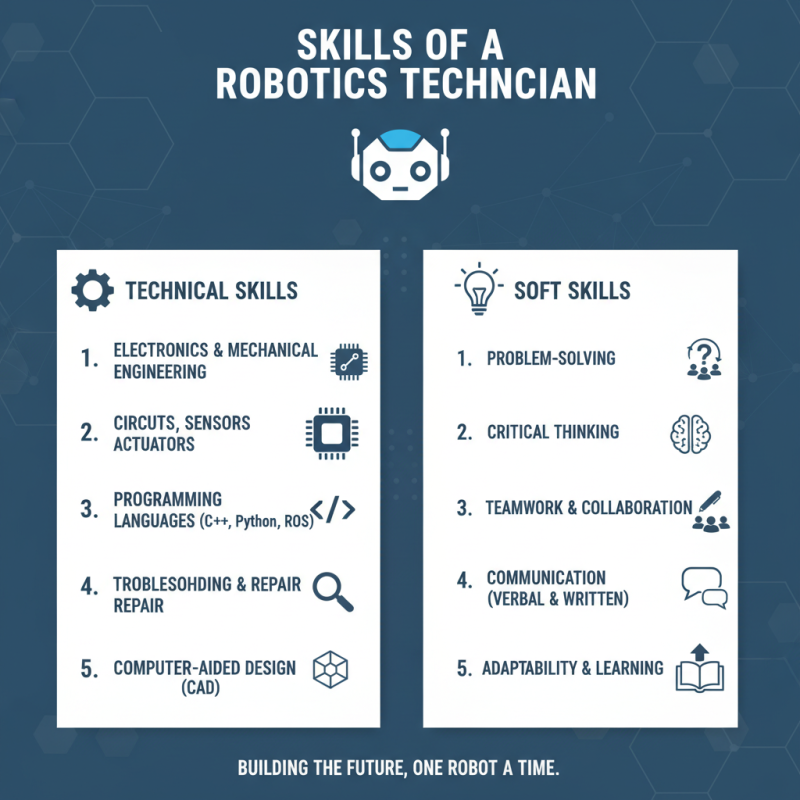
A successful robotics technician must possess a blend of technical and soft skills that enable them to design, build, and maintain robotic systems effectively. Firstly, a solid foundation in electronics and mechanical engineering is crucial. This includes understanding circuits, sensors, actuators, and programming languages commonly used in robotics. Proficiency in troubleshooting and repair skills is also essential, as technicians often work with complex systems that require quick resolution of technical issues. Knowledge of computer-aided design (CAD) software can further enhance their ability to create and modify robotic components.
In addition to technical expertise, interpersonal skills are vital for a robotics technician. Effective communication is necessary when collaborating with engineers, clients, and team members to troubleshoot issues or develop new ideas. Problem-solving skills allow technicians to think critically and creatively when faced with technical challenges. Adaptability is another important trait, as the field of robotics is continually evolving with new technologies and methodologies. By cultivating both technical and soft skills, robotics technicians can thrive in their roles and contribute significantly to advancements in automation and robotics.
Key Responsibilities and Daily Tasks of a Robotics Technician
Robotics technicians play a crucial role in the design, maintenance, and operation of robotic systems across various industries. One of the key responsibilities of a robotics technician is to troubleshoot and repair robotic equipment. This often involves diagnosing issues using diagnostic tools and technical manuals, as well as performing hands-on repairs and replacements of components. Daily tasks may also include conducting routine maintenance checks to ensure systems are operating optimally, which helps prevent costly downtime and extends the lifespan of the equipment.
In addition to maintenance and repair, robotics technicians are often responsible for programming and configuring robotic systems. This may involve writing or modifying code to improve the functionality of the robot or adapting the system for new tasks. Technicians may collaborate with engineers and other team members to integrate robotic solutions into manufacturing processes or other operational workflows. Their work ensures that robotic systems are not only efficient but also safe for human operators, requiring a solid understanding of both technical specifications and safety protocols.
Educational Pathways and Certifications for Aspiring Robotics Technicians
To pursue a career as a robotics technician, aspiring individuals typically need to follow a structured educational pathway. Most employers require at least an associate degree in robotics technology, mechanical engineering, or a related field. These programs provide foundational knowledge in electronics, programming, and mechanical systems, which are essential for understanding and assembling robotic systems. Courses may include robotics design, automation, computer-aided design (CAD), and systems integration, equipping students with the technical skills required in the industry.
In addition to formal education, obtaining relevant certifications can significantly enhance an aspiring robotics technician's employability. Numerous organizations offer certification programs that validate specific skills, such as programming languages relevant to robotics or proficiency in robotics software. Furthermore, hands-on experience through internships or cooperative education programs is invaluable, allowing students to apply their theoretical knowledge in real-world scenarios. As technology continues to evolve, staying up-to-date with advancements through continuous education and workshops is also crucial for those looking to advance their career in this dynamic field.
Career Opportunities and Advancement in Robotics Technology Fields
The field of robotics technology offers a variety of career opportunities for those interested in becoming a robotics technician. As industries increasingly rely on automation and advanced technologies, the demand for skilled technicians has surged. Robotics technicians play a critical role in the installation, maintenance, and troubleshooting of robotic systems across sectors such as manufacturing, healthcare, and logistics. Entry-level positions often require a strong foundation in electronics, mechanics, and programming, which can be acquired through formal education or vocational training.
Advancement in robotics technology fields can lead to various pathways, empowering technicians to specialize in niche areas like robotic programming, system design, or project management. With experience, technicians may transition into roles such as robotics engineers, automation specialists, or even managerial positions overseeing teams of technicians and engineers. Continuous education and staying abreast of industry trends are essential for career growth, enabling professionals to adapt to evolving technologies and take on more complex projects. The intersection of robotics with emerging technologies like artificial intelligence and machine learning further enhances the scope of career opportunities for aspiring robotics technicians.