
Accordian Closable

China Top 10 EV BMS System Manufacturers in 2026

China’s electric vehicle industry is moving from rapid expansion toward measurable engineering maturity. In 2026, battery management systems will influence safety, driving range, charging speed, and long-term battery health. This guide introduces China’s top 10 EV BMS system manufacturers and explains why they deserve attention.

The phrase Ev Bms System covers more than a circuit board. It includes cell monitoring, balancing, temperature sensing, state-of-charge estimation, communication, and fault protection. A reliable supplier should demonstrate stable performance under heat, vibration, voltage changes, and repeated charging cycles. Numbers matter. Manufacturing scale matters too. However, laboratory claims alone cannot prove field reliability.

This overview uses practical evaluation points, including product experience, automotive partnerships, quality systems, software capability, testing depth, and after-sales support. It also considers whether manufacturers provide traceable technical information rather than broad marketing promises. Some companies may lead in passenger vehicles, while others perform better in commercial fleets or energy storage applications. Reality is messier. Rankings can change when new platforms, regulations, or battery chemistries appear.

Readers should treat this list as a research starting point, not an automatic purchasing decision. Supplier audits, sample testing, cybersecurity reviews, and vehicle-level validation remain essential. Evidence comes first. The strongest manufacturers combine dependable hardware with accurate algorithms, responsive engineering teams, and disciplined production control. This introduction prepares buyers, engineers, and industry observers to compare China’s leading Ev Bms System providers with greater confidence, while recognizing the limitations of public data and rapidly changing market conditions.
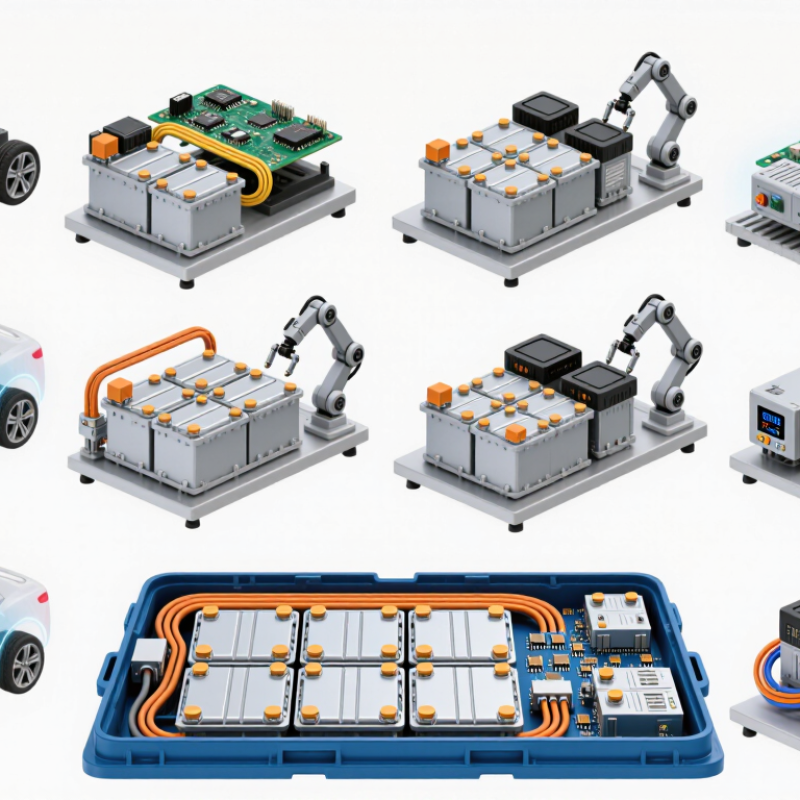
China Top 10 EV BMS System Manufacturers in 2026

How EV BMS Systems Work and Why They Matter

China Top 10 EV BMS System Manufacturers in 2026

How EV BMS Systems Work and Why They Matter

An electric vehicle battery management system is the pack’s quiet control layer. It measures each cell’s voltage, current, and temperature many times per second. These readings help estimate state of charge and state of health. The controller then limits charging or driving when conditions become unsafe.

A practical BMS also balances cells. Passive balancing releases small amounts of energy as heat, while active balancing moves energy between cells. The choice affects cost, efficiency, and thermal design. During fast charging, the system watches temperature rise, charger requests, insulation status, and contactor operation. It can open the high-voltage circuit within milliseconds when a serious fault appears.

Data quality matters. A loose connector, drifting sensor, or damaged communication line can create a false warning—or miss a real one. No algorithm is perfect. Engineers should validate models with cold starts, hot-weather charging, vibration, aging packs, and repeated fault tests. Field logs are equally valuable because laboratory conditions rarely capture every driver habit.

For Chinese EV manufacturers, dependable BMS development requires traceable testing, cybersecurity controls, functional safety processes, and clear service procedures. The best design is not merely accurate on paper. It remains understandable when a technician checks a pack at 3 a.m. A small weakness can become a large repair bill.

Key Criteria for Ranking China’s EV BMS Manufacturers in 2026

Ranking China’s EV BMS manufacturers in 2026 requires more than comparing production volume or advertised accuracy. The key criteria should reflect real vehicle conditions. Engineers should examine cell-voltage sampling, temperature response, current measurement, and state-of-charge accuracy. Results must remain stable during winter charging, steep climbs, and repeated fast charging. Bench results alone are insufficient. Independent testing, traceable calibration records, and documented failure rates provide stronger evidence of engineering maturity.

Safety deserves the highest weight. A reliable BMS should detect overvoltage, insulation faults, abnormal temperature rise, and sensor disagreement within controlled limits. It should also support clear fault isolation and safe power reduction. Manufacturing quality matters equally. Auditors should review component traceability, end-of-line testing, software version control, and supplier consistency. One overlooked connector can undermine an otherwise excellent design.

Field performance adds another practical measure. Ranking teams should study warranty patterns, fleet telemetry, diagnostic response time, and the repair process. Secure software updates and documented cybersecurity controls are increasingly important in connected vehicles. Cost should be assessed through lifecycle value, not only purchase price. No ranking is flawless. Public data may be incomplete, and some suppliers disclose less than others. That gap should reduce confidence, not disappear from the scoring model.

Profiles of China’s Top 10 EV BMS System Manufacturers

China’s EV BMS sector includes manufacturers with different technical strengths and market experience. The following profiles examine ten leading Chinese suppliers through engineering capability, production scale, and field reliability.

One manufacturer focuses on passenger EVs, where accurate cell balancing supports longer daily range. Another serves electric buses and designs systems for vibration, humidity, and frequent charging.

A third develops BMS units for battery-swapping stations, emphasizing fast identification and connector safety. One supplier specializes in lithium iron phosphate packs, while another supports high-nickel batteries with tighter temperature monitoring.

A heavy-truck specialist prioritizes high-current measurement and durable communication networks. A separate manufacturer provides compact systems for light commercial vehicles and delivery fleets.

One profile centers on cloud diagnostics, using battery data to identify abnormal voltage changes. Another integrates thermal sensors, contactors, and emergency shutdown controls into a single platform.

The tenth supplier targets overseas projects and pays closer attention to testing documents, software compatibility, and regional certification needs.

Practical evaluation still matters.

A clean laboratory report cannot replace repeated road testing in winter and summer conditions. Some suppliers have strong hardware but less mature software tools. Others offer flexible customization, yet their documentation may require improvement.

Engineers should inspect sampling accuracy, balancing speed, insulation detection, fault response, and update procedures.

They should also ask how suppliers handle returned modules and unclear field data. Small details matter.

A reliable BMS should explain its decisions clearly, not merely display warnings.

Technologies and Applications Shaping China’s EV BMS Industry

China Top 10 EV BMS System Manufacturers in 2026

China’s EV BMS industry is moving from basic voltage monitoring toward intelligent battery supervision. Leading manufacturers now combine cell-level sensing, thermal control, insulation monitoring, and high-speed communication. These technologies support passenger cars, electric buses, delivery fleets, and battery-swapping stations. Fast charging makes accuracy more difficult. A small temperature error can affect charging limits and battery safety.

Cloud-connected BMS platforms are becoming practical tools for fleet operators. They can compare pack performance, detect abnormal resistance, and identify early signs of cell imbalance. Machine learning may improve state-of-charge and state-of-health estimates, but it is not magic. Poor field data still produces weak decisions. Wireless BMS designs reduce wiring and weight, although signal reliability requires strict validation. Manufacturers with strong testing processes usually gain more trust than those relying on impressive specifications.

Tips: Check the system’s measured accuracy, thermal response, diagnostic records, and cybersecurity controls. Ask for test results under cold starts, rapid charging, vibration, and long-term cycling. Do not judge a BMS only by its software interface. Its protection logic must respond within milliseconds. Engineers should also review compliance evidence, traceability, and after-sales support. One overlooked detail is service training. A capable system can still underperform when technicians misunderstand its warnings.

China Top 10 EV BMS System Manufacturers in 2026 — Technologies and Applications Shaping China’s EV BMS Industry

China’s EV battery-management-system demand is closely linked to the expansion of installed power-battery capacity. The chart shows annual power-battery installations in China and the rising share of lithium iron phosphate (LFP) batteries, which increases demand for cell monitoring, balancing, thermal management, state-of-charge estimation, and functional-safety software. The figures are industry-level data and do not represent any individual company or brand.

Source: China Automotive Power Battery Industry Innovation Alliance annual industry statistics; LFP share calculated from reported annual installation data.

How to Choose a Chinese EV BMS Manufacturer for Your Project

Choosing a Chinese EV BMS manufacturer requires more than comparing prices or reading a top-ten list. Start with your battery chemistry, cell count, voltage range, charging current, and vehicle communication protocol. A supplier should explain these limits clearly, not hide them in a dense datasheet.

Ask for evidence from real development work. Review sample test reports for overvoltage, deep discharge, thermal runaway response, insulation monitoring, balancing accuracy, and communication loss. Check whether the engineering team can support CAN diagnostics, firmware updates, and calibration during vehicle integration. IATF 16949, ISO 9001, EMC testing, and functional safety processes matter, but certificates alone prove little. Inspect production traceability, incoming-cell controls, end-of-line testing, and software version management.

Request prototype units before signing a large contract. Test them at low temperatures, high temperatures, vibration, and repeated fast charging. Measure balancing time yourself. Small differences may become serious after thousands of cycles. A factory visit can reveal useful details, such as labeled workstations and controlled firmware loading, though it cannot replace independent testing. Be careful with confident promises. Some suppliers communicate well during sales but respond slowly after integration begins. Define response times, spare-unit policies, cybersecurity responsibilities, and change-approval procedures in writing. Your project may still face unexpected delays; strong documentation only makes those problems easier to manage.

China Top 10 EV BMS System Manufacturers in 2026 - How to Choose a Chinese EV BMS Manufacturer for Your Project

Anonymous buyer-oriented comparison of ten representative Chinese EV BMS supplier profiles. The figures show commonly available project capability ranges rather than company-specific claims.

Rank Supplier Profile Typical EV Application Supported Pack Voltage Cell Monitoring Range Balancing Technology Communication Interfaces Functional Safety Position Thermal Management Support Key Compliance Scope Customization Lead Time Best-Fit Project Type
1 Supplier Profile A Passenger EV and plug-in hybrid platforms 400–800 V nominal architectures Up to 96 series cells per monitoring domain Passive balancing; active balancing available by project CAN, CAN FD, LIN, daisy-chain cell communication ASIL-oriented development available Liquid-cooling control, heater control and temperature interlocks UN 38.3, GB/T 31467 series, ISO 26262 project support Approximately 12–20 weeks High-volume vehicle programs requiring deep integration
2 Supplier Profile B Electric buses and commercial vehicles 300–1,000 V nominal architectures Up to 192 series cells using distributed monitoring Passive balancing with configurable current thresholds CAN 2.0B, CAN FD, RS485 and Ethernet gateway options Safety diagnostics project-dependent Contactor, pump, fan and coolant-valve control GB/T 31467, UN 38.3, IEC 62619 where applicable Approximately 10–18 weeks Large battery packs exposed to demanding duty cycles
3 Supplier Profile C Low-speed EVs, utility vehicles and fleet carts 48–400 V nominal architectures 8–48 series cells Passive balancing, typically 30–100 mA CAN, RS485, UART and Bluetooth service interface Basic safety monitoring Temperature sensing and external thermal-controller interface UN 38.3 and application-specific EMC testing Approximately 6–12 weeks Cost-sensitive fleets and low-to-medium production volumes
4 Supplier Profile D Electric trucks and specialty commercial vehicles 400–1,000 V nominal architectures Up to 240 series cells with multiple monitoring units Passive balancing; active balancing under feasibility review CAN FD, CAN, RS485, Ethernet and diagnostic UDS ISO 26262 work products available by scope Chiller, coolant pump, compressor and heating-loop control UN 38.3, GB/T 31467, ISO 26262 and ISO 21434 support Approximately 16–24 weeks Heavy-duty vehicles requiring traceable validation evidence
5 Supplier Profile E Two-wheelers, three-wheelers and compact mobility EVs 24–120 V nominal architectures 4–24 series cells Passive balancing, typically 20–80 mA CAN, UART, RS485 and mobile service connection Protection-focused design Temperature monitoring with limited active thermal control UN 38.3, IEC 62133-2 or applicable local requirements Approximately 4–10 weeks Compact packs where size, cost and fast delivery are priorities
6 Supplier Profile F Energy-storage-integrated EV and charging platforms 200–1,500 V system architectures Modular monitoring for 12–96 cells per unit Passive balancing with modular expansion capability CAN, CAN FD, RS485, Modbus and Ethernet Safety concept defined per system Liquid cooling, HVAC interface and thermal-event signaling UN 38.3, IEC 62619, IEC 61508 or ISO 26262 by application Approximately 12–22 weeks Projects combining vehicle batteries with stationary charging assets
7 Supplier Profile G Performance EVs and high-power charging vehicles 400–900 V high-power architectures Up to 120 series cells per monitoring chain High-speed passive balancing; active option available CAN FD, Ethernet, UDS and isolated service interface Advanced fault detection available High-flow liquid cooling and rapid temperature protection UN 38.3, GB/T 31467, ISO 26262 and EMC validation support Approximately 16–26 weeks High C-rate packs with strict response-time requirements
8 Supplier Profile H Fleet vans, logistics vehicles and delivery EVs 300–800 V nominal architectures Up to 144 series cells Passive balancing with state-of-health algorithms CAN, CAN FD, RS485 and telematics gateway integration Fleet diagnostic functions available Cooling-pump control, temperature derating and service alerts UN 38.3, GB/T 31467 and fleet EMC requirements Approximately 8–16 weeks Commercial fleets requiring remote monitoring and service data
9 Supplier Profile I Industrial vehicles, autonomous shuttles and AGVs 48–600 V nominal architectures 8–80 series cells Passive balancing with configurable sleep modes CAN, RS485, Modbus, UART and industrial Ethernet options Industrial protection and diagnostics Temperature sensors and external thermal-management interface UN 38.3, IEC 62619 and machinery-specific EMC requirements Approximately 6–14 weeks Industrial mobility applications with repeated charge cycles
10 Supplier Profile J Prototype, retrofit and small-batch EV programs 48–800 V configurable architectures 4–96 series cells Passive balancing; active balancing subject to pack design CAN, UART, RS485, Bluetooth and PC configuration tools Validation depth depends on program scale Basic pump, fan, heater and thermal-cutoff interfaces UN 38.3 and customer-defined environmental and EMC testing Approximately 4–12 weeks Rapid prototypes, retrofits and proof-of-concept vehicles

Selection criteria should include cell chemistry compatibility, maximum continuous and peak current, measurement accuracy, balancing strategy, isolation design, cybersecurity, software-update capability, validation documentation, after-sales support and compliance with the destination market’s transport, EMC and functional-safety requirements.