China Top 10 Restringing Rackets Machine Manufacturers
Choosing among China’s top 10 Restringing Rackets Machine manufacturers requires more than comparing prices or production capacity. A reliable manufacturer should demonstrate accurate tension control, stable clamping, durable materials, and responsive technical support. These details matter on a busy workshop floor, where a machine may restring dozens of rackets each day.
Ron Yu, a respected racquet-stringing educator and technician, has often emphasized, “Consistency is more important than speed.” That principle guides this overview. A professional machine should maintain tension evenly, reduce frame stress, and support different racket shapes without awkward adjustments. Clear digital controls help operators repeat settings. Strong clamps should grip firmly without damaging delicate strings.
The manufacturers discussed in this guide are assessed through practical indicators, including engineering experience, quality inspection, user feedback, warranty service, and customization capability. Factory visits, sample testing, and after-sales communication can reveal weaknesses that product brochures hide. That part is sometimes overlooked.
Not every expensive machine is automatically better. Not every low-cost option is unreliable. The real question concerns performance over time, especially after repeated calibration, cleaning, and daily use. Small inconsistencies can affect a player’s control, power, and confidence.
This ranking is not absolute. Technology changes, and regional service quality may vary. Buyers should verify specifications directly before making a decision. A showroom demonstration is useful, but long-term reliability remains harder to prove. That is where careful research becomes essential.
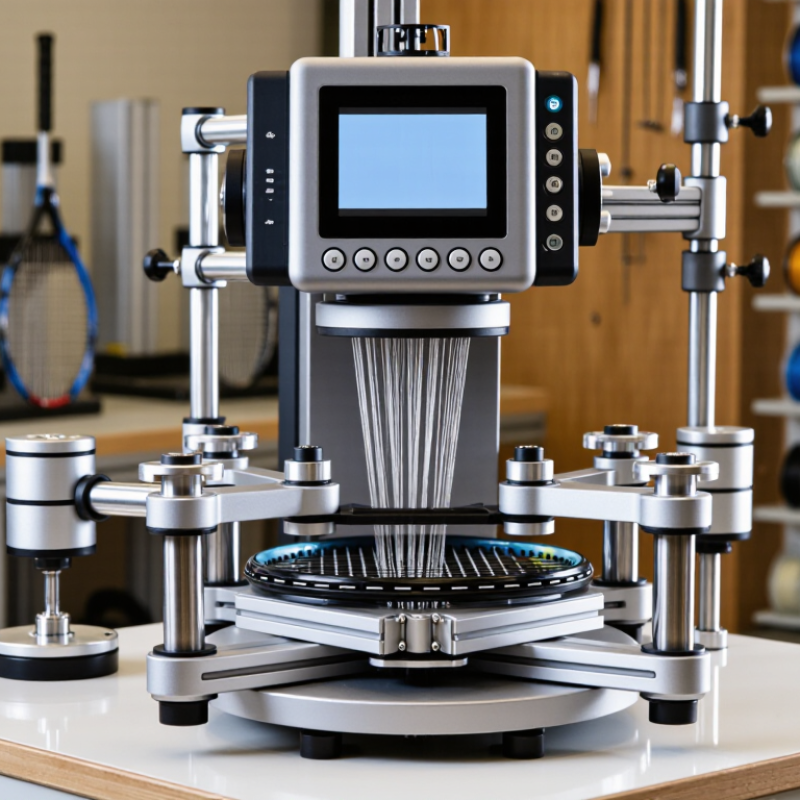
China’s Racket Restringing Machine Industry Overview
China Top 10 Restringing Rackets Machine Manufacturers
China’s racket restringing machine industry is expanding with tennis, badminton, and squash participation. The ITF Global Tennis Report 2021 recorded about 87 million tennis players worldwide, while Asia represented roughly one-third of global participation. China’s 2020 national fitness survey also reported that 37.2% of adults exercised regularly. These figures support steady demand for accurate restringing equipment in clubs, academies, and retail workshops.
Manufacturers in the top ten segment usually compete through constant-pull systems, electronic tension control, six-point mounting, and adjustable clamps. A practical machine should maintain stable tension during repeated pulls. A 0.1-kilogram calibration step sounds impressive, but calibration drift matters more. Buyers should inspect load-cell records, clamp wear, motor noise, and local service response. The China market is price-sensitive, yet professional workshops increasingly value repeatability over the lowest purchase cost.
Public data remains imperfect. Most market reports classify restringing machines under wider sports equipment or machinery categories. Mordor Intelligence and Grand View Research both identify Asia-Pacific as a major sports equipment growth region, but neither isolates China’s restringing-machine revenue clearly. That reporting gap deserves attention. Export statistics can also mix manual tools, parts, and complete electronic machines. Therefore, ranking the top ten manufacturers should consider verified production experience, testing documents, tension accuracy, spare-part availability, and user feedback rather than shipment claims alone. A bright control panel is not enough.
How the Top Ten Manufacturers Are Evaluated
How the Top Ten Manufacturers Are Evaluated
The evaluation begins with measurable performance, not catalog claims. The 2024 ITF Global Tennis Report estimates more than 100 million tennis players worldwide. That scale increases demand for repeatable string tension and dependable workshop equipment. Each machine is checked using the same reference racket, string type, and target tension. Testers record tension deviation, clamp slippage, mounting stability, and setup time. A useful machine should remain consistent after repeated cycles, not only during a showroom demonstration.
Technical evidence carries greater weight than polished marketing language. Calibration records, factory quality controls, warranty terms, and replacement-part availability are reviewed. Manufacturers with documented testing procedures receive stronger scores. The evaluation also considers operator safety, electrical compliance, packaging quality, and training support. The 2024 Global Sports Equipment Market report identifies durability and after-sales service as important purchasing factors across professional equipment categories. However, broad market data cannot prove a machine’s real accuracy.
User experience is tested in practical conditions. A technician strings several rackets during one session and notes heat, noise, vibration, and adjustment errors. Small weaknesses become visible. Independent reviews, repair histories, and distributor feedback are compared against factory statements. The process is not perfect; sample size and technician habits can affect results. That limitation should remain visible. A high ranking reflects verified performance, transparent documentation, and service reliability, rather than production volume alone.
China Top 10 Restringing Rackets Machine Manufacturers: How the Top Ten Manufacturers Are Evaluated
This evaluation framework compares manufacturers using practical procurement criteria, including product quality, manufacturing capability, technology, safety compliance, customization, delivery performance, after-sales service, and total cost of ownership. The percentages represent the relative importance of each criterion in a neutral industry assessment and do not disclose any company or brand results.
Profiles of China’s Top Ten Restringing Machine Manufacturers
China’s leading restringing machine manufacturers serve professional clubs, repair shops, and sporting goods distributors. Their strengths differ, so a careful profile should examine engineering, testing, service, and production consistency. Factory visits, sample trials, and technician interviews reveal more than catalog claims.
One manufacturer focuses on compact machines for small workshops. Another develops electronic tension control with clear digital readings. A third builds reinforced frames for busy training centers. One specializes in portable units with folding supports. Another supplies programmable systems for repeated stringing patterns. A further manufacturer emphasizes low-noise operation. One produces customized fixtures for different racket shapes. Another is experienced in export packaging and installation guidance. One invests heavily in replacement parts and remote troubleshooting. The final profile highlights semi-automatic equipment for growing service counters.
These manufacturers often use steel frames, calibrated tension heads, and replaceable clamps. Experienced technicians still check tension accuracy with independent tools. Small differences matter. A racket can feel uneven after only a few kilograms of variation. Reliable suppliers explain calibration intervals and provide written operating instructions. They also identify suitable voltage, workspace size, and maintenance needs before shipment.
No factory is perfect. Some advanced machines are difficult for beginners. Some affordable models need closer manual adjustment. This is where honest technical support becomes important. Buyers should request test results, warranty conditions, spare-part availability, and training records. A polished brochure cannot replace a practical demonstration. Feedback from long-term users may also expose weaknesses that short trials miss.
Key Technologies and Product Differences
China Top 10 Restringing Rackets Machine Manufacturers
China’s leading restringing racket machine manufacturers usually compete through tension accuracy, frame protection, and production consistency. In practical workshop use, electronic models often provide tension settings from 10 to 90 pounds. Higher-end machines may adjust in 0.1-pound increments. That sounds impressive, but calibration matters more than the display. A precise screen cannot correct a loose load cell.
Mounting systems create another clear product difference. Six-point supports distribute pressure around the racket frame and reduce distortion during stringing. Some machines use fixed supports, while others offer rotating clamps and adjustable mounting arms. For badminton rackets, narrow supports and delicate clamps are useful. Tennis rackets often need stronger posts and wider adjustment ranges. Small details matter.
Motor design also separates the top ten manufacturers. Constant-pull systems continue drawing tension after string relaxation, while lockout systems stop at the selected force. Constant-pull models usually suit professional stringers, but they require careful calibration and regular cleaning. Dust around the linear guide can affect movement. I have seen operators trust automatic functions too quickly. That is a mistake.
Digital control panels may include pre-stretch, knot functions, speed adjustment, and memory settings. These features save time, yet simple controls can be more reliable in busy repair shops. Manual machines cost less and are easier to maintain, but they demand stronger operator technique. Noise, clamp smoothness, spare-part access, and after-sales training also reveal real manufacturing quality. Catalog specifications help, but hands-on testing tells the harder truth.
How to Select a Reliable Chinese Manufacturer
Selecting a reliable Chinese restringing racket machine manufacturer requires evidence, not polished photographs. The ITF Global Tennis Report 2024 recorded more than 106 million tennis players across 199 countries. That scale creates steady demand for accurate, serviceable stringing equipment. Ask manufacturers for test reports showing tension accuracy, clamp stability, pulling speed, and calibration intervals. Ask for evidence.
A capable factory should explain its quality system clearly. The ISO Survey 2023 recorded over 1.2 million ISO 9001 certificates worldwide, but certification alone does not guarantee a precise machine. Verify the certificate, production address, and inspection scope.
Request a working sample, then test ten consecutive pulls with the same reference tension. Measure variation, noise, frame support, and reset performance. Test it yourself.
Also inspect spare-part availability, operator manuals, warranty terms, and response times. A dependable supplier should provide serial-number traceability and pre-shipment inspection records.
In practice, a polished showroom proves little. I would rather see a busy calibration bench and documented corrections.
No factory is perfect. Manufacturers that admit occasional defects, explain root causes, and show corrective actions often appear more trustworthy than those promising zero problems.
Before signing, compare sample results with independent technician feedback and require written acceptance criteria.