Top Agricultural Drones to Watch in 2026 for Global Buyers?
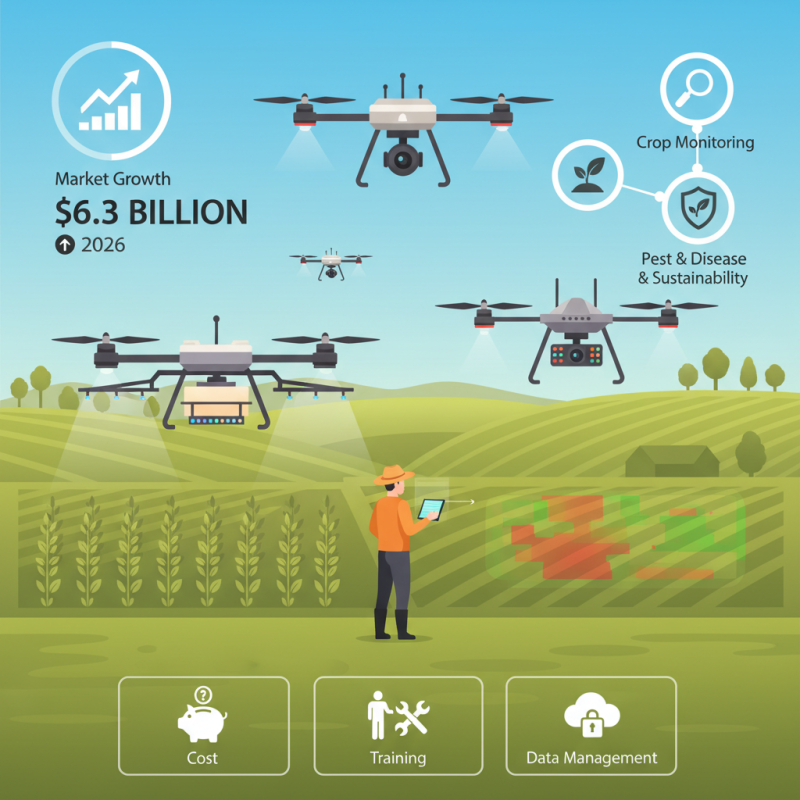
As we look toward 2026, Agricultural Drones are set to revolutionize the farming landscape. The global market for agricultural drones is anticipated to reach $6.3 billion by 2026, according to a report from MarketsandMarkets. This rapid growth highlights the increasing adoption of precision agriculture techniques. Farmers are turning to these advanced technologies for effective crop monitoring and management.
Size and efficiency matter in this industry. Drones equipped with high-resolution cameras and multi-spectral sensors can analyze fields with exceptional precision. They help detect issues such as pest outbreaks or nutrient deficiencies early. However, the integration of these technologies is not without challenges. Many farmers still face barriers regarding cost, training, and data management.
Despite the hurdles, the appeal of Agricultural Drones is undeniable. These tools promise to enhance productivity and sustainability in farming. As we explore the top agricultural drones to watch, it’s essential to reflect on the balance between innovation and accessibility. Understanding the real-world application of these technologies will be crucial for global buyers in their purchasing decisions.
Emerging Technologies in Agricultural Drones by 2026
The agricultural drone industry is rapidly evolving, driven by innovative technologies. In 2026, we can expect to see advanced features that enhance efficiency. Improved sensors will allow drones to collect precise data about crop health. This data is crucial for farmers aiming to optimize yields and reduce waste.
AI integration will play a significant role. Drones will analyze data in real-time, offering actionable insights. Farmers will receive alerts about pests or diseases, enabling timely interventions. However, access to this technology remains a challenge for small-scale farmers. Cost and training can limit their adoption.
Another emerging trend is the use of drones for automated planting. This technology promises to revolutionize traditional farming methods. Drones equipped with seed-release mechanisms can cover large areas quickly. However, relying solely on technology may overlook the importance of traditional farming knowledge. Balancing these approaches will be essential as we move forward.
Top Agricultural Drones to Watch in 2026 for Global Buyers
| Drone Type | Payload Capacity | Flight Time | Max Range | Key Features |
| Multispectral Drone | 10 kg | 30 min | 5 km | Crop Health Monitoring |
| Agricultural Sprayer | 15 kg | 25 min | 4 km | Precise Pesticide Application |
| Survey Drone | 5 kg | 40 min | 10 km | High-Resolution Mapping |
| Monitoring Drone | 8 kg | 35 min | 6 km | Live Streaming & Analysis |
| Autonomous Drone | 20 kg | 50 min | 15 km | Automated Flight Plans |
Key Features to Look for in Agricultural Drones
When considering agricultural drones, versatility is key. Look for drones with multiple functionality, such as crop monitoring, soil analysis, and planting. These features can enhance productivity and sustainability in farming practices. A drone's flight time significantly affects its efficiency. You want models that offer longer battery life to cover more fields in a single charge.
Sensor quality is crucial for precise data collection. High-resolution cameras and multi-spectral sensors provide clearer images for better decision-making. Automation capabilities also cannot be overlooked. Drones with automated flight paths and programmed tasks save both time and labor costs.
Tips: Always check for regulatory compliance in your region. Local laws may restrict drone operations. It’s also beneficial to consider user-friendliness. A more intuitive interface can reduce training time for your team. While it’s tempting to invest in the latest model, older versions with proven reliability might suit small to mid-sized operations just as well. Balancing innovation with practicality is essential to avoid unnecessary expenditures.
Top Agricultural Drones Features Ratings
This chart represents key features of agricultural drones anticipated to be significant in 2026. The ratings indicate their importance to global buyers, showing specifications such as altitude, payload capacity, battery life, camera resolution, and flight range.
Market Leaders and Innovators in Agricultural Drone Industry
The agricultural drone industry is evolving rapidly. Many companies are leading this change through innovation and expertise. They focus on maximizing crop yields and minimizing waste. These advancements not only enhance productivity but also address sustainability in farming.
Technological breakthroughs are evident in drone capabilities. Enhanced imaging sensors provide detailed data on soil health. Some drones can now cover large fields in a fraction of the time, proving essential for modern farmers. However, challenges remain. The integration of drones into existing farming practices can be complex. Training for operators is vital to ensure effective use of this technology.
In 2026, buyers will benefit from the growing array of features in these drones. Precision farming will become more accessible, but potential users must remain cautious. Not all drones will suit every farm's unique needs. Continuous feedback from farmers will help refine drone technology further. This collaboration is crucial for the future of agricultural innovation.
Regulatory Trends Affecting Agricultural Drone Usage
As we move into 2026, regulatory trends are reshaping the agricultural drone landscape. Governments worldwide are increasingly recognizing the potential benefits of drones in agriculture. However, strict regulations are required to ensure safety and accountability. The FAA in the United States, for example, is adapting its rules to integrate drones more fully into airspace while prioritizing safety standards.
Data from a recent industry report indicates that about 80% of farmers are concerned about compliance with these regulations. As drones become more ubiquitous, regulatory bodies are focusing on air traffic management and data privacy. In Europe, the new EU Drone Regulation emphasizes remote identification and operational limits, which can delay the adoption process for some growers.
Farmers need to stay informed about these changes. The research suggests that 75% of agricultural drone users believe clearer guidelines would encourage broader usage. There remains a balance to achieve between innovation and regulatory compliance. As regulations evolve, ongoing education and adaptation will be essential for maximizing agricultural efficiency and productivity.
Predicted Impact of Agricultural Drones on Global Farming Practices
As agricultural drones evolve, their impact on global farming practices is becoming clearer. These advanced tools revolutionize field monitoring. Farmers can now assess crop health with precision. By using drones, they save time and resources. This technology facilitates timely interventions for better yields.
Drones enable data collection on a large scale. GPS and imaging technologies help farmers identify problem areas. However, reliance on drones can present challenges. For example, the initial costs and maintenance may deter some farmers. Additionally, training is essential for effective use. Farmers must learn how to interpret the data correctly.
While drones are promising, ethical considerations arise. Privacy concerns may develop, especially in populated areas. Furthermore, over-reliance on technology could diminish traditional farming skills. Finding the balance between innovation and preserving methods is crucial for the future of agriculture. The integration of drones into farming practices may redefine the industry, but it requires thoughtful implementation.