
Accordian Closable

Who Are the Top Car Window Film Manufacturers in China?

China has become an important source of automotive films, serving vehicle owners, distributors, and professional installers worldwide. Car Window Film manufacturers vary in scale, technical focus, and customer support. A large factory is not automatically the right supplier.

Behind a film’s dark appearance are practical details: visible light transmission, heat rejection, ultraviolet protection, adhesive behavior, and optical clarity. These features affect cabin comfort and the view through the glass. Small differences can show up on a bright afternoon or during a long drive. That matters.

Some manufacturers emphasize dyed, carbon, or ceramic film lines. Others focus on private-label production, custom specifications, or export services. Product names alone reveal little. A polished brochure is not proof of consistent performance.

This guide examines how to assess leading Chinese manufacturers without treating a ranking as a guarantee. It considers production capabilities, product documentation, quality-control practices, and responsiveness to technical questions. Look for clear specifications and explainable test methods. Ask for current samples and written details. Compare the same measurements across suppliers whenever possible.

Numbers can mislead. A strong supplier should explain what a stated performance figure means and how it was measured. Still, even careful comparisons leave room for judgment: installation conditions, glass type, and personal comfort preferences can change the result. A sample roll may help, but it cannot answer every question about long-term consistency. The goal is to make a more informed shortlist, then verify claims directly with each manufacturer.
Who Are the Top Car Window Film Manufacturers in China?

What Is Automotive Window Film and How Is It Manufactured?

Who Are the Top Car Window Film Manufacturers in China?

What Is Automotive Window Film and How Is It Manufactured?

Automotive window film is a thin, layered material fitted to vehicle glass. It can reduce glare and solar heat while helping limit ultraviolet exposure. The International Window Film Association’s technical guidance states that qualifying films can block up to 99% of UV radiation. That figure depends on the product, so it should not be treated as a guarantee for every film. A film’s appearance alone tells you little.

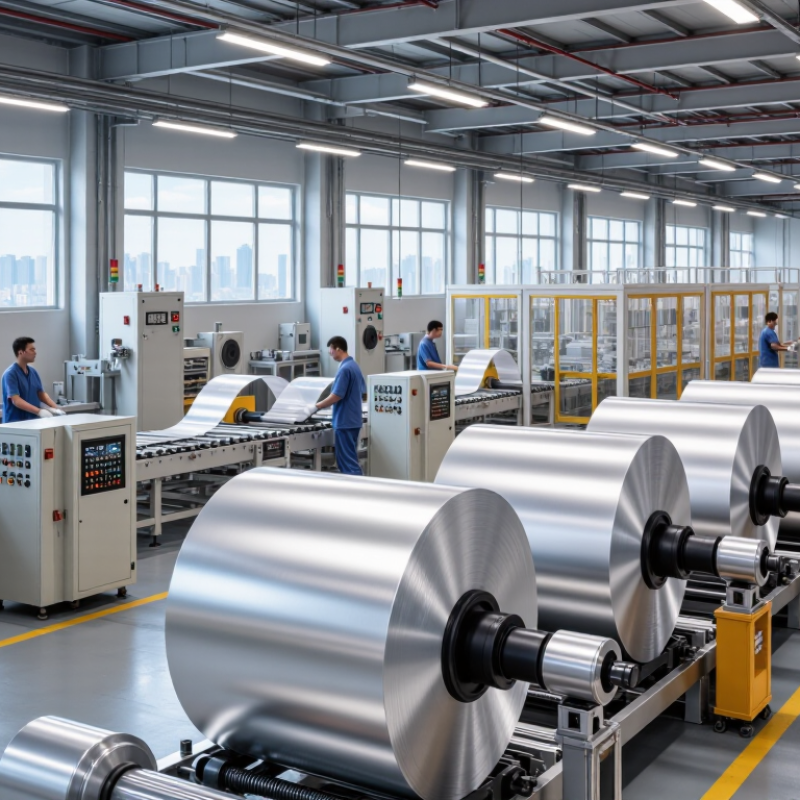
Manufacturing usually starts with polyester resin, which is melted, extruded, and stretched into a clear, thin sheet. Manufacturers then add functional layers, such as dyed, metallized, or ceramic coatings, to shape the film’s light and heat performance. Adhesive and a removable liner are added before the material is slit into rolls. Samples are checked for thickness, haze, color consistency, and adhesion. Small defects matter. A tiny coating variation can show up as a visible shade difference across a car window.

Tips: Ask for measured visible-light transmission and UV-rejection data, not just a “dark” sample. Check that figures apply to the finished film. One limitation is easy to miss: installation quality also affects appearance and durability. Even a well-made roll can look uneven if dust or trapped moisture remains beneath it.

What Automotive Window Film Is Designed to Filter

Automotive window film is a thin, functional material applied to vehicle glass. Its construction may include a polymer base, functional coatings, and an adhesive layer. The chart shows commonly used ultraviolet wavelength bands—not the measured performance of any film.

Ultraviolet band boundaries follow a common convention: UVA 315–400 nm, UVB 280–315 nm, and UVC 100–280 nm. Actual film UV rejection should be checked using product test data.

How Has China’s Car Window Film Industry Developed?

China’s car window film industry grew with the country’s expanding vehicle market. Earlier, many buyers relied on imported products. Domestic manufacturers gradually built stronger capabilities in coating, laminating, adhesive development, and precision cutting. The shift took time. Today, local factories can produce films for different climates and customer needs, while supplying both domestic distributors and overseas markets.

Manufacturing has become more technical. Producers work to control film thickness, optical clarity, color consistency, and adhesive performance. Testing may measure haze, peel strength, and heat or ultraviolet rejection. A clear sample matters. But long-term performance matters more. Installers can spot problems that laboratory numbers miss, such as edge lifting after repeated heating. Quality still varies between suppliers, so buyers should review test data and evaluate samples under real conditions.

Demand is changing, too. Drivers increasingly look for cabin comfort, reduced glare, and lower cooling loads, including in electric vehicles. Manufacturers are responding with films that balance heat control and visible light. Some are also improving production efficiency and reducing material waste. Progress is uneven. A polished brochure cannot prove durability, and technical claims need independent verification. China’s industry has grown beyond basic processing, but consistent performance remains a practical test.

Which Manufacturers Are Among China’s Leading Car Window Film Suppliers?

China’s leading car window film suppliers are not defined by one product type. Many are manufacturers with in-house coating, laminating, and quality-control steps. Others specialize in ceramic, dyed, or metallized films, while export-focused factories may offer OEM production. These profiles can overlap. A polished catalogue alone proves little.

Buyers should compare measurable details. Ask for test reports covering visible light transmission, ultraviolet rejection, and infrared performance. Then inspect samples under daylight: haze, color shifts, and uneven edges become easier to spot. Check whether adhesive layers stay clear after heat exposure, and whether production batches are traceable. Small details matter.

A supplier may be a factory, or a trading company working with one. Confirm the production site and request consistent samples from different batches. Clear warranty terms and responsive technical support also matter. Claims can sound impressive. They still need verification. Even a capable manufacturer may not suit every vehicle or market, so product specifications should match the intended use.

How Do Leading Chinese Manufacturers Differ in Technology and Product Range?

Who Are the Top Car Window Film Manufacturers in China?
How Do Leading Chinese Manufacturers Differ in Technology and Product Range?

Chinese manufacturers differ in film materials, coating methods, and quality-control systems. Some focus on dyed or metallized films for basic glare reduction and privacy. Others offer ceramic films designed to reduce heat without relying on a reflective appearance. Their products may vary in visible-light transmission, infrared rejection, UV protection, thickness, and optical clarity. Ask for test data and check how each figure was measured.

Product ranges also differ. One supplier may offer a few standard shades, while another provides several ceramic grades, roll widths, and options for different vehicle windows. Consistency matters: uneven color, haze, or distortion can become noticeable when viewing road signs through side glass. A higher infrared-rejection figure alone does not prove a cooler cabin; testing methods and installation conditions matter. I would be cautious about treating any single specification as a complete quality verdict.

Tips: Request a sample and inspect it in daylight. Compare technical sheets using the same test method, confirm warranty terms, and ask about installer training. Check local tint requirements before choosing a shade. Small details matter.

Who Are the Top Car Window Film Manufacturers in China? - How Do Leading Chinese Manufacturers Differ in Technology and Product Range?

Technology-based comparison of common automotive window-film categories. Manufacturer names and brand rankings are omitted; actual specifications vary by product and should be checked against technical data sheets.

Film technology or product category How it works Common product range Typical strengths Trade-offs and checks
Dyed film Uses dye in the film layers to reduce visible light and glare. Mainly privacy and solar-control shades for side and rear windows. Non-metal construction; generally an entry-level option with a range of shades. Heat rejection depends on the specific construction. Ask about color stability and warranty terms.
Carbon film Uses carbon-based materials in the film to provide shading and solar control without a conventional metal layer. Usually offered in several visible-light-transmission options for passenger vehicles. Non-metal construction can avoid the signal-interference concerns associated with some metalized films. Performance varies by formulation; compare measured solar and optical specifications rather than the category name alone.
Metalized or sputtered film Uses a thin metallic layer, often deposited by a coating process, to reflect part of the incoming solar energy. Solar-control films in different shades and constructions. Can provide strong solar reflection and a reflective appearance, depending on the design. Some metalized films may affect radio-frequency signals. Confirm compatibility with the vehicle’s antennas and electronic devices.
Ceramic or nano-ceramic film Uses ceramic-based particles or coatings to control solar energy while maintaining a non-metal construction. Commonly available in multiple shades, including lighter options for vehicles where visibility is important. Can be designed for heat and glare control without relying on a metallic layer; typically avoids metal-related signal interference. “Nano-ceramic” is not a standardized performance grade. Request test methods and product-specific data.
Spectrally selective film Designed to manage different portions of the solar spectrum selectively, allowing visible light through while reducing other solar energy. Often offered as premium solar-control products, including relatively light shades. Can balance daylight visibility with solar control when supported by appropriate product specifications. The term describes a design approach, not a guaranteed result. Compare visible light transmission and total solar energy rejection for the exact film.
Clear UV-protection film Uses UV-absorbing materials or coatings while keeping the film relatively clear. Clear or lightly tinted options for windows where a dark appearance is not wanted. Can provide UV protection without substantially darkening the glass, depending on the product. Check the stated UV wavelength range, test method, visible light transmission, and suitability for the intended glass.
Safety or security film Uses a thicker film construction and adhesive system intended to help hold broken glass together. Available in clear and, in some product lines, tinted versions; installation details can be important to performance. May improve glass fragment retention after breakage when correctly selected and installed. Does not make glass unbreakable. Confirm thickness, test documentation, edge attachment requirements, and intended application.

For a manufacturer-to-manufacturer comparison, verify product-specific technical data, independent test reports, production quality controls, warranty coverage, and compliance with local window-tint regulations. Permitted tint levels vary by jurisdiction and window position.

What Should Buyers Consider When Selecting a Chinese Window Film Manufacturer?

When comparing Chinese window film manufacturers, check process control, not just price. OICA’s 2023 production statistics recorded about 93.5 million vehicles worldwide, a 10% increase from 2022. That scale suggests strong demand, but it does not prove a particular factory can deliver consistent film.

Request batch-specific test reports for visible light transmission, total solar energy rejection, haze, and UV blocking. Confirm the test method, sample thickness, and tested wavelength range; “IR rejection” figures can be misleading when suppliers use different ranges. ASTM D1003 provides a method for measuring haze, while ISO 9050 covers light and solar properties of glazing. Ask whether an independent laboratory tested the same product specification you plan to buy. A neat sample is not enough.

During a factory review, look at coating-line cleanliness, roll labeling, and how defects are traced back to production batches. Ask for capacity records, lead times, warranty terms, and a clear process for handling complaints. Certificates matter, but check their scope and issuing body. I would also order pilot rolls and test them on curved glass in real installation conditions. It takes time. I have sometimes trusted brochure figures too quickly; that is a mistake worth avoiding.