China is the world’s largest market for industrial robots, making supplier selection consequential for factories and integrators. The International Federation of Robotics (IFR), in its World Robotics 2024 report, recorded 276,288 industrial robot installations in China during 2023. That represented 51% of installations worldwide. The scale is striking. It also makes the phrase “top FANUC robot suppliers” harder to define: a large catalogue does not necessarily mean dependable commissioning or local support.
This guide examines Chinese suppliers offering FANUC robots, systems, or integration services. It focuses on practical checks: whether a company’s FANUC relationship can be verified, which models it supplies, and whether its engineers can support installation, programming, and maintenance. Ask about response times, spare-parts availability, and experience with applications such as welding, machine tending, or palletizing. Request references for projects similar to yours. A showroom demo is useful, but it cannot replace evidence from a working production line.
There is a limitation worth noting. Supplier rankings can change, and public listings may not confirm current authorization or service capacity. Treat any shortlist as a starting point, not a verdict. A careful buyer should verify claims directly with the supplier and FANUC, then compare written quotations and support terms. Small details matter: controller compatibility, tooling, safety design, and who answers the phone after commissioning. That distinction matters.
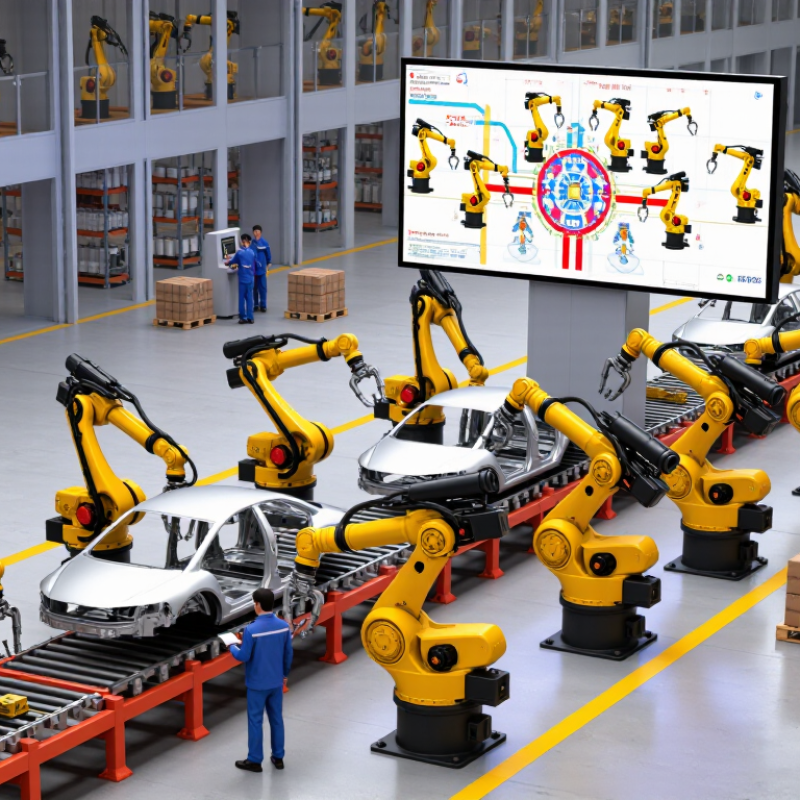
In 2023, China installed 276,288 industrial robots, according to the International Federation of Robotics (IFR). That is substantial. The figure shows how deeply automation has entered factories, from automotive welding cells to compact electronics assembly lines. Yet installations are not spread evenly. Large coastal manufacturing hubs often have denser supplier networks, while smaller plants may face longer service waits and tighter budgets.
For buyers, this scale creates more choice, but it also makes supplier evaluation harder. A robot’s payload and reach matter, but so do controller compatibility, spare-part availability, commissioning support, and operator training. Ask for documented cycle-time tests using your actual workpiece. Check whether local engineers can respond during a production stoppage, not only during installation. These details are less visible than a robot arm, but they shape uptime.
The headline number needs context. It counts installations, not factories with fully successful automation projects. Some cells still need manual tending, and integration can take longer than planned. That is a useful reminder. Compare suppliers through measured results, clear service terms, and a pilot run on the real production floor, where cycle times and operator access can be checked directly.
China’s industrial robot supply chain includes distributors, system integrators, and original equipment manufacturers. They serve different needs. Distributors typically provide robot units, standard accessories, quotations, and delivery coordination. Some can arrange commissioning, but the scope varies. Ask for clear documentation, serial-number records, warranty terms, and local service contacts before placing an order.
Integrators focus on the working cell around the robot. They may design fixtures, select grippers, write motion programs, and connect equipment to a production line. A useful discussion starts with the part, cycle time, and available floor space—not just the robot model. Request a layout drawing and a practical acceptance test. Details matter.
OEMs often build robots into their own machines, such as packaging or welding equipment. This can simplify purchasing because the robot and process arrive as one system. It can also make later changes harder if drawings or program access are limited. That distinction is easy to miss. Compare support response times and spare-part availability, too. One overlooked cable or fixture can delay a restart. Even a careful supplier may underestimate commissioning time; ask how schedule changes are handled.
| Supplier Type | Typical Role | What Is Usually Supplied | Main Strength | Key Limitation | Best Fit | What to Verify Before Purchase |
|---|---|---|---|---|---|---|
| Authorized or Independent Distributor | Sources and resells robots and related products; may provide product selection, delivery coordination, and basic technical support. | Robot arm, controller, standard accessories, spare parts, and, depending on the seller, commissioning or training services. | Direct access to product options and a comparatively straightforward purchasing process. | Application engineering and on-site integration capabilities vary significantly by seller. | Buyers with an established application, in-house engineering resources, or an existing automation integrator. | Authorization status, product origin and condition, warranty coverage, after-sales responsibility, spare-parts availability, and delivery terms. |
| System Integrator | Designs and builds a complete automation cell or production line around the robot and the customer’s process. | Robot, end-of-arm tooling, fixtures, safety equipment, vision or sensing equipment, controls, programming, installation, and commissioning. | Combines equipment and engineering into a solution designed for a specific production task. | Project scope, lead time, performance, and support depend on the integrator’s application experience and contractual commitments. | Factories needing a working robotic application such as handling, machine tending, welding, assembly, or palletizing. | Relevant application references, cycle-time assumptions, safety design, acceptance criteria, documentation, training, and post-installation support. |
| OEM or Machine Builder | Builds and sells a standardized machine or production system that incorporates a robot as part of the equipment. | A packaged machine or production unit, potentially including the robot, process equipment, controls, guarding, and operating documentation. | Provides a more standardized equipment package and a single machine-level interface for the buyer. | Customization may be limited to the machine builder’s available configurations; robot-level access and service responsibilities should be clarified. | Buyers seeking repeatable equipment for a defined process rather than a fully bespoke automation project. | Included equipment and exclusions, process capability, interfaces, safety compliance, acceptance testing, warranty boundaries, and service arrangements. |
| Hybrid Supplier | Combines product supply with some integration, machine-building, or service capabilities. | May offer a robot, a partially configured cell, a complete system, or ongoing maintenance, depending on the project. | Can reduce coordination between product sourcing and implementation when capabilities are clearly defined. | The supplier’s role can be unclear unless deliverables, responsibilities, and support boundaries are specified. | Projects where the buyer wants one primary supplier but needs a tailored mix of equipment and engineering. | Who owns design approval, programming, installation, safety validation, commissioning, warranty handling, and ongoing service. |
Selection note: Supplier categories are not a quality ranking. Capabilities, authorization, service coverage, and product availability should be confirmed directly for the specific supplier and project.
A useful supplier ranking starts with authorization, not polished product photos. Ask for current authorization documents and confirm which product lines and regions they cover. Check that the legal entity on the paperwork matches the company issuing your quotation. A vague certificate is not enough. Keep a copy of each document and note its expiry date; verification can take time, but it reduces uncertainty later.
Technical expertise is easier to judge with practical questions. Can the team explain payload, reach, cycle time, and installation constraints for your actual workpiece? Ask for a similar project reference, a sample risk assessment, and a clear commissioning plan. During a site visit, look for organized wiring, labeled components, and realistic safety checks. A confident sales answer is not the same as engineering depth. I would also ask who handles problems after delivery—this detail is often overlooked.
Service coverage should be measured in response time, technician location, spare-parts access, and escalation procedures. Request service terms in writing, including weekend support if production depends on it. A supplier with a nearby engineer may be more useful than a larger firm several provinces away. Rankings are never perfect: one supplier may excel technically but have limited local coverage. Score each factor separately, then compare the results against your production needs.
China accounted for 51% of global robot installations in 2023, reflecting the scale of its manufacturing sector. That is enormous. The figure describes new installations, not every robot already operating in factories. It also does not mean every region or industry adopted automation at the same pace.
Demand comes from varied production floors. Automotive plants may use robots for welding and material handling, while electronics facilities often need compact systems for precise assembly. Food, metalworking, and logistics operations bring different requirements. A supplier’s fit depends on payload, reach, cycle time, safety integration, and the conditions around each workcell. A dusty workshop and a clean assembly area are not interchangeable.
High installation volume can support a broad service network, but the headline number alone cannot verify local response times or spare-parts availability. Buyers should ask for documented commissioning experience, technician coverage, training plans, and maintenance procedures. They should also check how a system handles real production changes, not just a polished demonstration. Still, scale can mislead. I would want evidence from comparable applications before treating market size as proof of supplier quality.
A supplier’s sales claim is not proof of authorization. Ask for a current authorization letter, then confirm it through the robot manufacturer’s official channel. Check that the company name, service region, and product categories match your purchase. Ask who will handle installation and repairs; a sales office may not employ its own technicians. Request references from factories using similar robot models and ask what happened when a cell stopped unexpectedly. Ask for proof.
Parts need the same scrutiny. Get a written list of included components, their condition, and traceable part numbers. For refurbished items, request inspection records and clear photographs of labels and connectors. Warranty terms should state the coverage period, exclusions, labor costs, and who pays for shipping. Keep these details in the quotation, not only in a call or chat. That distinction matters.
Support can be tested before purchase. Send a practical question about backup recovery or fault diagnosis and note how quickly the supplier responds. Confirm service hours, escalation contacts, and whether on-site visits are available near your plant. A polished presentation is reassuring, but it cannot prove response quality. I would still verify these details twice; it feels repetitive, yet one missed warranty condition can become an expensive surprise.
Use these checks to assess a supplier. The chart shows the four verification areas, not supplier ratings or market-share data.
Request verifiable authorization records, traceable parts documentation, written warranty terms, and details of available technical support before choosing a supplier.