
Choosing an Ips Panel supplier involves more than comparing unit prices. Buyers need to assess image quality, production capacity, product consistency, communication, and delivery options. A display that looks crisp in a sample may behave differently across a large order. Small details matter: viewing angles, brightness, interface compatibility, and how the supplier handles quality concerns.
This guide introduces ten suppliers for global buyers to consider, with attention to their product focus and business capabilities. Supplier information can change, and a strong reputation alone does not guarantee a good fit. Ask for current specifications, sample units, and clear details about testing and warranty support. Check whether the panel suits your device, operating environment, and expected production volume. These steps are practical, not glamorous.
There is no perfect shortlist. Some buyers may prioritize cost, while others need steady supply or engineering support. The right choice depends on the project, and sometimes the comparison remains imperfect. Use the profiles as a starting point, then verify claims directly with each supplier.
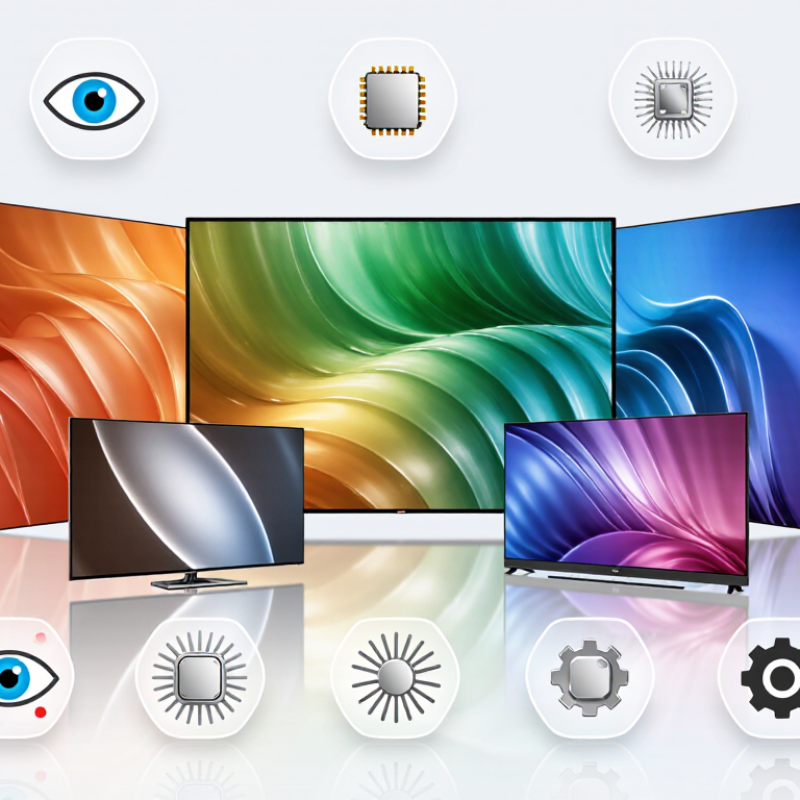
An IPS (in-plane switching) panel controls light by rotating liquid crystals within the plane of the display. This structure helps maintain color and brightness when viewed from the side. Useful in shared workspaces. A team reviewing charts around one monitor can see similar tones without sitting directly in front of it. IPS panels are common in office displays, tablets, medical viewing stations, and control-room screens, though each application has different image and durability requirements.
Color consistency can support photo editing and design, but the panel alone does not guarantee accurate color. Backlight quality, factory calibration, surface coating, and viewing conditions also matter. In a bright room, reflections may make a well-calibrated screen difficult to judge. Response time and contrast vary by panel design, so buyers should compare measured specifications rather than relying on the IPS label. Details count.
IPS panels can suit interactive equipment and public information screens, where viewers approach from changing angles. Still, IPS is not a magic fix. Some models show glow near the corners on dark images, and performance can vary between units. For a practical evaluation, inspect sample screens with gray and dark test images, check brightness at several angles, and confirm operating-temperature requirements. That extra testing takes time, but it can reveal issues a specification sheet misses.
IPS panels are used in monitors, laptops, tablets, televisions, and professional displays. A viewing angle of up to 178° is a common published specification for IPS displays; actual performance varies by panel model and measurement conditions. This chart illustrates the typical specification, not a supplier ranking.
Compare IPS suppliers using measured performance, not brochure adjectives.
Request brightness in cd/m², contrast, response time, and color gamut with stated test conditions. Ask for viewing-angle results and color uniformity across the screen, not just at its center. Numbers need context. Check sample units against production units, then inspect several panels for tint shifts, backlight bleed, and dead pixels. Agree on defect thresholds, inspection methods, and warranty terms before placing an order.
Supply stability matters too. IDC’s Worldwide Quarterly PC Monitor Tracker reported 125.9 million monitor shipments in 2023, down 8.6% from 2022. Such demand changes make verified capacity, realistic lead times, and clear allocation policies important. Request recent quality records, lot traceability, and an escalation contact. Confirm whether the supplier can support your required panel sizes and interface, and ask how it handles engineering changes. A polished audit file is useful, but it cannot replace consistent deliveries. I would also check that quoted specifications appear on the final inspection report.
Tips: Ask for three production samples, not one. Record their measured brightness and color variation, then compare those results with the written specification. Check the factory. If a supplier will not disclose test methods, treat that gap as a purchasing risk.
For global buyers comparing the top 10 IPS panel suppliers, start with application fit, not headline price. IPS panels are widely chosen for stable color and broad viewing angles, but performance varies by size, backlight, and production batch. Omdia’s 2024 Display Long-Term Demand Forecast points to continued growth in display area through 2030, partly as screen sizes increase. That matters: a supplier’s capacity for larger panels may not reflect its strength in compact industrial displays. Ask for the exact panel model, brightness, contrast, viewing-angle data, and lifecycle status. Request samples from the intended production line. A polished sample is not proof of consistent output.
Tips: Compare like with like. Check pixel-defect limits, uniformity, interface, operating temperature, and delivery lead time in writing. Ask for inspection records and a change-notification process. For example, a gray test image can reveal cloudy corners that disappear on a bright sales demo. Small detail, big headache.
Supplier rankings can hide trade-offs. A large producer may offer scale, while a specialist may handle customization more closely. Neither is automatically safer. Verify monthly capacity, sample-to-mass-production timing, warranty terms, and backup plans for discontinued components. Where possible, review third-party test results against your own acceptance criteria. Data sheets are useful, but they can miss real-world variation. That’s worth checking.
IPS sourcing depends on repeatable output across panel sizes, brightness levels, and operating temperatures. Compare native resolution, luminance uniformity, response-time test conditions, viewing-angle data, and reliability methods. Numbers need context. IDC’s January 2025 Worldwide Quarterly Personal Computing Device Tracker reported 262.7 million PC shipments in 2024, up 1.0% year over year. This indicates a large device market, but it does not reveal any supplier’s IPS share. Buyers should assess whether a supplier serves monitors, industrial equipment, or automotive displays, since each market demands different lifetimes, temperature ranges, and customization. Published capacity can also differ from capacity available for your order.
Certifications help assess process controls, but their scope matters. ISO 9001 addresses quality management, ISO 14001 environmental management, and IATF 16949 automotive quality systems. IEC 62368-1 concerns equipment safety, not panel image quality. Check the certified site, scope, issuing body, and expiry date; a factory certificate is not product validation. Request sample test reports for color consistency, dead pixels, response time, and aging, alongside yield and lead-time history. One gap remains: supplier dashboards rarely show how performance changes during production ramp-up. A pilot run is useful, but it cannot eliminate every risk.
Note: The entries below are anonymous sourcing profiles, not named or ranked companies. They are a comparison framework rather than verified supplier records. Actual panel availability, production capability, market coverage, and certifications vary by supplier, product, and manufacturing site; confirm them directly during qualification.
| Anonymous profile | Capability focus to assess | Potential buyer markets | Key qualification evidence | Certification checks |
|---|---|---|---|---|
| Supplier 01 — Large-format display profile | Ask about large-area IPS cell and module availability, resolution options, uniformity controls, and annual capacity. | Televisions, digital signage, and large-format monitors. | Current panel roadmap, dimensional drawings, sample test reports, and capacity allocation terms. | Request current ISO 9001 and ISO 14001 certificates where applicable; verify site scope and validity. |
| Supplier 02 — Monitor-panel profile | Compare pixel density, refresh-rate options, viewing-angle performance, response-time data, and interface support. | Office, professional, gaming, and creator monitors. | Datasheets, measured performance conditions, defect criteria, and sample approval process. | Check applicable product safety and market-compliance documentation, including IEC 62368-1 evidence where relevant. |
| Supplier 03 — Mobile and tablet profile | Assess compact panel availability, touch integration options, power targets, and mechanical customization support. | Tablets, portable monitors, and selected mobile devices. | Mechanical drawings, optical test methods, interface specifications, and lifecycle notice policy. | Request RoHS and REACH declarations for the specific product and sales market; confirm revision dates. |
| Supplier 04 — Automotive-display profile | Evaluate temperature range, sunlight readability, long-term availability, traceability, and change-control processes. | Instrument clusters, center displays, and in-vehicle systems. | Reliability plans, environmental test results, product-change notifications, and supply-continuity commitments. | Verify IATF 16949 certification for the relevant manufacturing site and scope; request customer-specific quality evidence as needed. |
| Supplier 05 — Industrial-display profile | Check extended-temperature options, stable supply, interface compatibility, and support for custom module integration. | Industrial control, instrumentation, and human-machine interfaces. | Operating-condition limits, lifecycle statements, burn-in or reliability data, and engineering support terms. | Confirm applicable safety, EMC, and substance-compliance documentation for the finished product and destination market. |
| Supplier 06 — Medical-display profile | Assess luminance consistency, grayscale performance, calibration support, and documented quality controls. | Medical monitors and display modules for medical equipment. | Optical specifications, calibration procedures, production traceability, and quality-system documentation. | Check the applicable quality-system and regulatory requirements for the finished medical device; do not treat a panel certificate as device approval. |
| Supplier 07 — Public-display profile | Review brightness options, thermal-management needs, optical bonding availability, and operating-hour conditions. | Retail signage, transport displays, and information kiosks. | Brightness and uniformity reports, environmental limits, bonding specifications, and maintenance guidance. | Request market-specific safety and EMC evidence for the assembled display; verify substance declarations for the supplied configuration. |
| Supplier 08 — Touch-display profile | Compare touch integration, cover-glass options, optical bonding, controller compatibility, and gesture performance. | Point-of-sale terminals, kiosks, education devices, and interactive displays. | Touch test results, stack-up drawings, durability data, and system-level sample evaluation. | Verify applicable electrical safety, EMC, and material-compliance documents for the finished assembly. |
| Supplier 09 — Custom-module profile | Evaluate custom FPCs, backlight design, connectors, mechanical adaptation, and engineering-change support. | Specialized equipment, embedded systems, and application-specific devices. | Design review records, tooling ownership terms, change-control process, and prototype-to-production plan. | Check quality-system certificates and product declarations for the exact production location and customized bill of materials. |
| Supplier 10 — Broad-portfolio sourcing profile | Compare breadth of IPS panel formats, cross-product consistency, allocation flexibility, and end-of-life management. | Buyers sourcing multiple display categories or planning regional product variants. | Product-family roadmap, delivery performance records, authorized-channel confirmation, and product-change notices. | Validate certificates and declarations by product family and manufacturing site; confirm certificate issuer, scope, and expiration. |
Selecting an IPS panel supplier starts with the application, not a headline price. Define screen size, resolution, brightness, interface, operating temperature, and viewing angle before requesting quotes. Ask for dated datasheets and sample-lot measurements, with written limits for dead pixels, luminance uniformity, and color shift. Small details matter. Test several samples under your actual backlight and enclosure conditions; one sample can hide variation. Gartner reported that worldwide PC shipments fell 14.8% in 2023, to 241.8 million units. That market shift is a reminder to check a supplier’s capacity flexibility and forecast assumptions, not just its current quotation.
During supplier review, verify production capability, quality controls, traceability, and the process for handling failed lots. Request inspection records and clarify minimum order quantities, tooling costs, warranty terms, and replacement lead times. UNCTAD reported in 2024 that weekly container-ship transits through the Suez Canal were 67% below their 2023 peak. This is not an IPS-specific measure, but it makes delivery buffers and alternate routing worth discussing. Compare total landed cost, not panel price alone. Ask for written delivery milestones and escalation contacts. Still, an audit cannot predict every production mismatch; keep a small incoming-inspection plan, even with a trusted supplier.