2025 Top 10 Robotic Automation Solutions Transforming Industries Worldwide
In the ever-evolving landscape of technology, robotic automation solutions have emerged as a transformative force across various industries, reshaping operational efficiencies and productivity. According to Dr. Emily Chen, a leading expert in robotics and automation, "As businesses seek to enhance productivity and reduce costs, robotic automation solutions are no longer just an option; they are a necessity for surviving and thriving in today's competitive market." The year 2025 promises a noteworthy shift as we witness remarkable advancements that leverage cutting-edge technologies such as AI, machine learning, and advanced robotics.
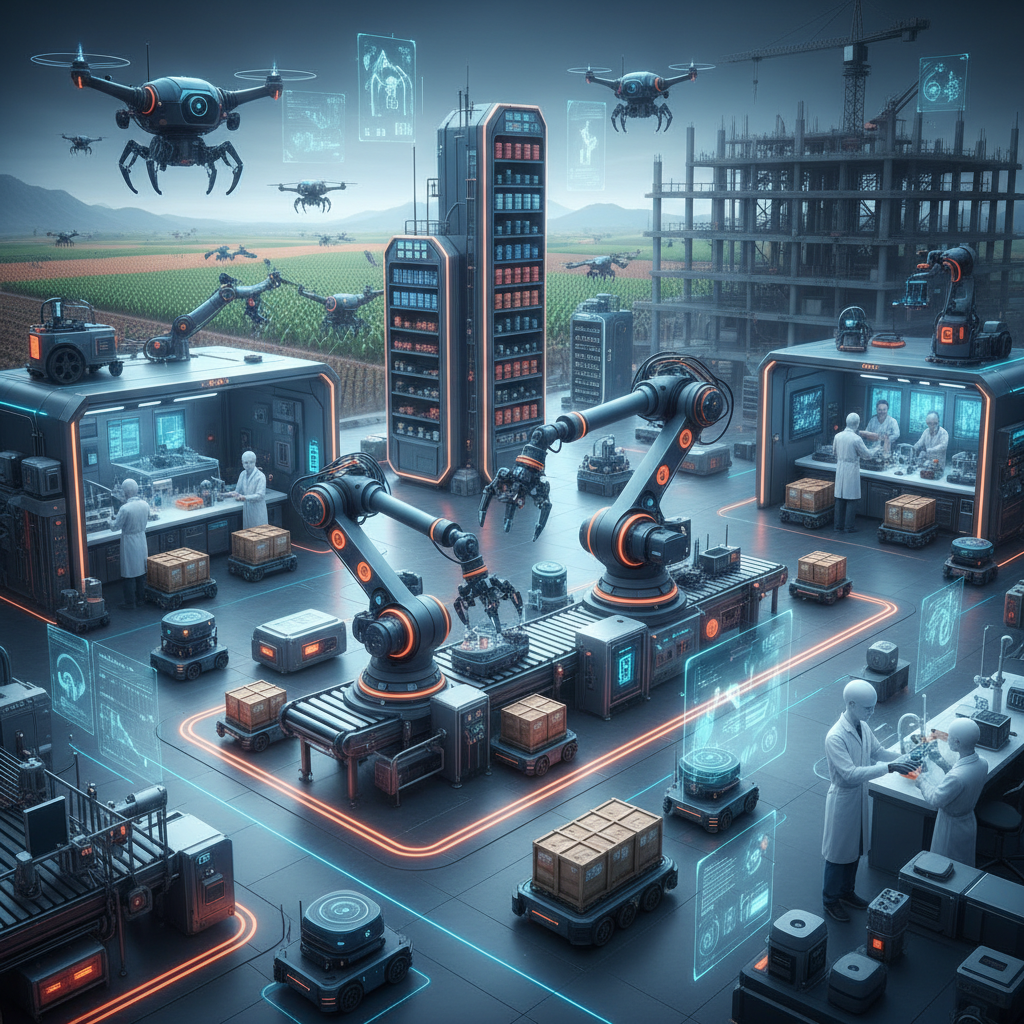
From manufacturing and logistics to healthcare and finance, the implications of these innovations are profound. As organizations increasingly adopt robotic automation solutions, they are not only streamlining processes but also unlocking new opportunities for growth and innovation. In this comprehensive exploration, we will delve into the top 10 robotic automation solutions set to transform industries worldwide by 2025, illustrating how these technologies are paving the way for a more efficient and sustainable future. Analyzing each solution's impact and applications will provide valuable insights into the future landscape of industry automation.
Impact of Robotic Automation on Manufacturing Efficiency
The impact of robotic automation on manufacturing efficiency is profound, transforming production processes across various sectors. Automation technologies, particularly in manufacturing, have led to higher production rates and enhanced productivity. With the integration of advanced robotics into the supply chain, companies are utilizing materials more efficiently and improving product quality. By automating routine tasks such as picking and packing, manufacturers significantly increase output and accuracy while fostering scalability, essential for meeting rising consumer demands.
Moreover, the infusion of artificial intelligence into robotics is revolutionizing the manufacturing landscape. Techniques like predictive maintenance and autonomous systems contribute to exceptional precision and adaptability, minimizing downtime and optimizing workflows. As the industry adapts to these innovations, the ongoing evolution towards Industry 4.0 becomes apparent, spotlighting automated solutions that not only enhance efficiency but also address labor shortages. This shift highlights the critical balance between leveraging advanced technologies and maintaining human involvement in operational processes, ultimately driving economic growth and productivity gains on a global scale.
Impact of Robotic Automation on Manufacturing Efficiency (2025)
Revolutionizing Supply Chains with Advanced Robotics
As industries worldwide seek greater efficiency and cost-effectiveness, robotic automation has become a game-changer, particularly in transforming supply chains. Advanced robotics technology is now integral to streamlining logistics, reducing human error, and enhancing overall productivity. With the integration of AI and machine learning, robots are not just performing repetitive tasks but are also capable of making real-time decisions that adapt to changing supply chain dynamics.
**Tip:** To leverage robotics effectively, companies should assess their unique supply chain challenges and select automation solutions that align with their operational goals. Implementing pilot programs can also provide insights before a full-scale rollout.
The rise of autonomous mobile robots (AMRs) is revolutionizing warehouse operations by optimizing material handling and inventory management. These robots swiftly navigate complex environments, cutting down on labor costs and delivery times. Furthermore, collaborative robots (cobots) are enhancing human-robot interaction, allowing workers to focus on higher-value tasks while robots handle mundane chores.
**Tip:** Investing in employee training is crucial when integrating robotic solutions to ensure a seamless transition and maximize the collaborative potential of both humans and machines. This not only fosters a culture of innovation but also empowers workers to effectively engage with new technologies.

Enhancing Healthcare Services through Robotic Solutions
The integration of robotic solutions in healthcare services is set to reshape the industry dramatically. With the global medical robots market experiencing rapid growth, innovations range from sophisticated surgical assistants to intelligent logistics systems. These advancements are not only streamlining operations but also improving patient outcomes by enhancing the precision of medical procedures and the efficiency of hospital workflows.
Recent partnerships, such as those between healthcare providers and robotics companies, are paving the way for life-saving innovations. By leveraging advanced robotics and artificial intelligence, hospitals can optimize their logistics, automate routine tasks, and ultimately focus on delivering superior patient care. The deployment of agentic AI and digital twins in medical environments showcases how technology can be harnessed to create more responsive and adaptive healthcare systems, significantly benefiting both practitioners and patients alike.
2025 Top 10 Robotic Automation Solutions Transforming Industries Worldwide - Enhancing Healthcare Services through Robotic Solutions
| Solution |
Key Benefits |
Industry Impact |
Implementation Year |
| Robotic Surgery Assistants |
Increased precision, lower recovery time |
Surgery |
2025 |
| Automated Medication Dispensing |
Reduced errors, enhanced efficiency |
Pharmacy |
2025 |
| Telepresence Robots |
Remote consultations, better patient access |
Patient Care |
2025 |
| Mobile Disinfection Robots |
Enhanced sanitation, pathogen control |
Healthcare Facilities |
2025 |
| Patient Monitoring Robots |
Continuous monitoring, proactive alerts |
Critical Care |
2025 |
| Wearable Health Robots |
Real-time health tracking, mobility support |
Personal Health |
2025 |
| Rehabilitation Robots |
Assisting recovery, personalized therapy |
Rehabilitation |
2025 |
| AI-Driven Robotic Nurses |
24/7 support, administrative efficiency |
Nursing |
2025 |
| Guided Surgical Robots |
Improved outcomes, less invasiveness |
Surgery |
2025 |
| Automated Patient Porters |
Streamlined logistics, reduced workload |
Hospital Operations |
2025 |
Smart Robotics in Agriculture: Transforming Farming Practices
The global agricultural market is projected to reach $100.31 billion by 2024, with an impressive growth trajectory expected to see it soar to approximately $919.22 billion by 2033. This immense growth is being fueled by the integration of smart robotics and artificial intelligence in farming practices, heralding a new era of agricultural efficiency and sustainability. Innovations like automated harvesting robots and intelligent monitoring systems are transforming traditional practices, allowing farmers to optimize productivity and resource management.

For instance, the introduction of advanced robotic solutions, such as quadruped robots in precision agriculture, showcases the potential for technology to enhance yield through automation. These intelligent systems can perform tasks such as crop monitoring and precise harvesting, significantly reducing labor costs and increasing efficiency. Moreover, the rise of digital agriculture initiatives, with applications of AI facilitating everything from soil analysis to plant health assessments, demonstrates the transformative impact of technology on farming. As the sector evolves, these advancements are not just reshaping farming techniques but also underpinning a broader push towards sustainable agricultural development worldwide.
The Future of Service Industries: Robotic Automation Trends
The future of service industries is increasingly tied to robotic automation, which is set to revolutionize operations worldwide. With the global AI robotics market projected to reach $5.23 billion in 2024, it is expected to surge to $61.9 billion by 2025 and further rise to $322.6 billion by 2032. This remarkable growth highlights the transformative potential of robotic automation across various sectors, including service-oriented industries.
As businesses embrace automation, it is essential to stay informed about the latest trends. For instance, understanding the diverse applications of robots in personal, public, and industrial services can help companies identify opportunities to enhance efficiency and customer satisfaction. Incorporating robotic systems not only streamlines processes but also allows for more innovation in service delivery.
Tips: When considering robotic automation for your business, assess the specific needs of your industry to choose the right solutions. Additionally, keep an eye on the emerging technologies outlined by industry research reports, as these will guide your investment and development strategies in automation. Lastly, collaboration with leading component manufacturers can ensure you have access to the best resources available in the market.