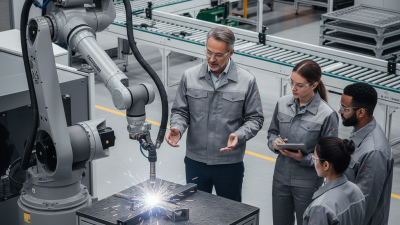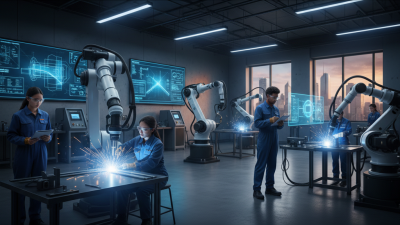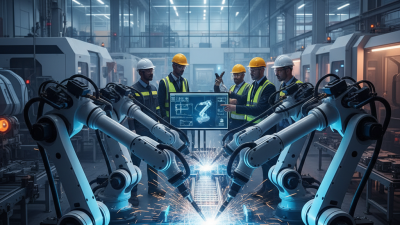
For global manufacturers, robotic welding classes are becoming essential training grounds, not optional technical extras. They connect robot programming with practical weld quality, production planning, and disciplined shop-floor habits. A strong course should cover torch angles, wire-feed settings, fixture design, seam tracking, offline programming, and controlled troubleshooting. It should also explain how operators verify results through visual inspection, weld samples, and documented process checks.
John C. Lippold, a respected welding educator and author, describes welding as “both an art and a science.” That idea matters in robotic production. A robot can repeat a programmed path precisely, but it cannot repair poor joint design or careless setup. The best robotic welding classes therefore combine digital simulation with hands-on practice. Learners should program a cell, adjust parameters, inspect a bead, and understand why the result changed.
Real factories are rarely perfect. Fixtures may shift. Sensors may lose accuracy. A training program that ignores these details creates false confidence. Global teams also need consistent terminology, measurable assessments, and instruction aligned with recognized welding and safety practices. Certification alone is not enough. Experience still matters.
The most useful courses leave room for reflection. What failed? Why? Was the problem in programming, fit-up, material preparation, or operator judgment? Manufacturers comparing robotic welding classes should seek instructors with verified production experience, modern equipment, and evidence-based teaching methods. Practical competence lasts longer than a certificate.
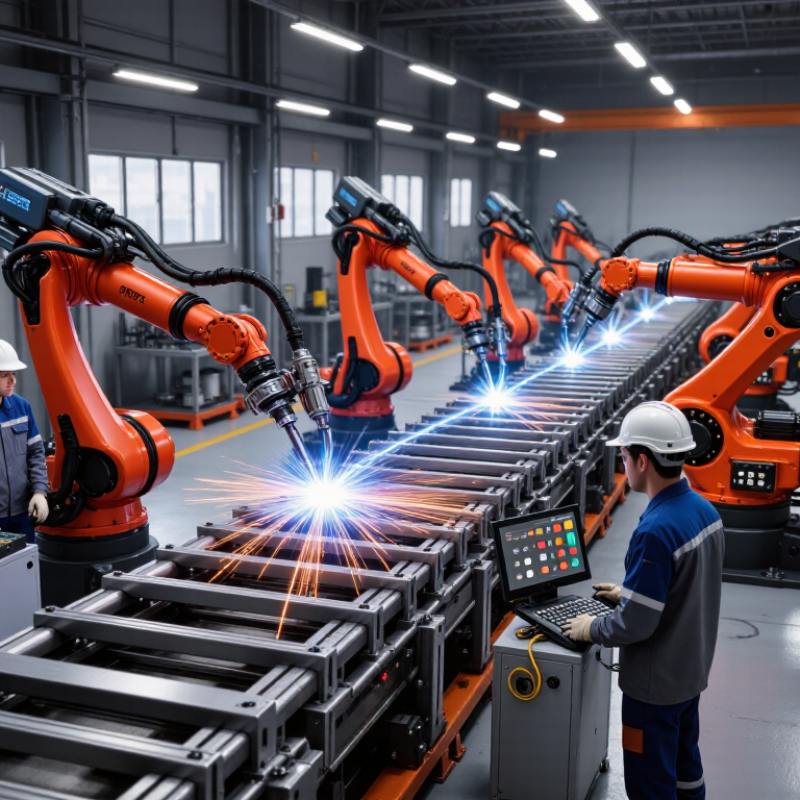
Robotic welding training prepares technicians to control automated cells safely and consistently. Its purpose extends beyond teaching pendant navigation. Trainees learn joint design, torch angles, shielding gas, fixturing, sensing, inspection, and scheduled maintenance. The International Federation of Robotics reported 541,302 industrial robots installed worldwide in 2023. That growth increases demand for workers who understand both welding practice and automation logic.
A credible class combines classroom instruction with supervised production exercises. Students should set parameters, correct arc instability, and investigate porosity or incomplete fusion. They should also read welding procedures and document quality results.
Applications include automotive frames, agricultural machinery, pressure equipment, structural steel, and ship components.
Each sector requires different tolerances, materials, access limits, and inspection methods. A polished simulation is not enough.
The World Economic Forum’s Future of Jobs Report 2023 states that 44% of workers’ skills may be disrupted by 2027. It also estimates that 60% of workers will need training before then.
Robotic welding courses should therefore include refresher modules, not one-time certification alone. Safety drills matter. A misplaced fixture can damage a weld, halt production, or injure personnel. Training plans sometimes promise full readiness too quickly. Real competence develops through repeated trials, recorded defects, and honest review of failed welds.
Professional robotic welding classes teach more than button pressing. They build the practical judgment needed on a busy manufacturing floor. Trainees learn cell safety, emergency procedures, protective equipment, and controlled startup routines. Safety comes first. They also study welding symbols, joint design, material behavior, and heat distortion. These skills help operators connect robot movement with finished weld quality.
Programming practice usually begins with pendant control, coordinate systems, and accurate tool-center-point setup. Students adjust travel speed, wire feed, voltage, torch angle, and weld sequences. They inspect bead width, penetration, spatter, and undercut using real sample parts. A small fixture error can shift a weld by several millimeters. That detail matters. Good classes teach repeatable fixturing, sensor use, and offline planning, not only basic motion commands.
Troubleshooting is often the most valuable lesson. Instructors may introduce inconsistent wire feeding, poor grounding, gas coverage problems, or collision risks. Learners record symptoms, test one variable, and verify the result. Documentation supports reliable production and easier handovers between shifts. Maintenance skills include nozzle cleaning, cable inspection, calibration checks, and scheduled component replacement. A perfect first weld is unlikely. Careful reflection after each failed test often develops stronger judgment than quick success. Professional training should also explain quality records, worker communication, and process validation for different production environments.
How to Compare Robotic Welding Courses for Global Manufacturers
A strong robotic welding course should match production reality, not only classroom theory. The International Federation of Robotics reported 541,302 new industrial robots installed worldwide in 2023. That growth increases demand for welders who can program, troubleshoot, and protect process quality.
Compare each course across five areas: hands-on hours, controller practice, fixture design, weld inspection, and fault recovery. Ask whether learners adjust torch angles, manage wire feed issues, and restart a cell safely. Training should also reference ISO 10218 and ISO/TS 15066 principles. These details separate useful instruction from polished marketing. The World Economic Forum’s Future of Jobs Report 2023 estimates that 44% of workers’ skills may be disrupted by 2027. A short course may help, but it rarely builds complete capability. That is worth admitting.
Tips: Request a sample lesson and an assessment rubric. Check instructor experience in high-volume production. Measure practical tasks, not attendance. Compare multilingual materials, remote support, and local safety requirements. A course using real weld coupons can reveal more than several hours of slides. Also review maintenance training, data logging, and operator handover procedures. These areas are often overlooked. A perfect course does not exist. Choose the one that exposes weaknesses safely.
How to Compare Robotic Welding Courses for Global Manufacturers
This benchmark compares core capabilities that matter to global manufacturers: safety and risk assessment, robot programming, welding process setup, offline programming, production troubleshooting, and competency assessment. Higher scores indicate broader course coverage and stronger alignment with international manufacturing requirements.
Top Robotic Welding Classes for Global Manufacturers?
The strongest robotic welding classes combine classroom instruction with supervised cell practice. Trainees should program motion paths, adjust arc parameters, inspect weld profiles, and recover from common faults. A teach pendant, positioner, welding power source, wire feeder, torch, guarding, and fume extraction should be available. Offline simulation adds value, but it cannot replace live production checks.
Training formats should match the manufacturer’s workforce and shift pattern. Short intensive courses suit experienced welders. Blended programs work better for global teams across time zones. The International Federation of Robotics reported about 541,000 industrial robot installations in 2023. That scale increases demand for technicians who understand both welding quality and robot behavior. Practical assessments matter more than attendance certificates.
Certifications should cover welding procedure knowledge, robot programming, electrical safety, risk assessment, and inspection methods. Programs aligned with ISO 10218 principles can strengthen machine-safety training, while local welding qualifications may remain necessary. The World Economic Forum’s Future of Jobs Report 2023 found that 44% of workers’ skills could be disrupted by 2027. Training plans therefore need regular updates. They are rarely perfect. A weak point is often overlooked: operators may pass a test but still struggle with torch access, reflective surfaces, or inconsistent joint fit-up. A useful final assessment uses real fixtures, measured weld samples, and documented corrective actions.
Top Robotic Welding Classes for Global Manufacturers?
Building a Global Workforce Through Robotic Welding Education
Global manufacturers need more than operators who can press “start.” They need technicians who understand torch angles, wire speed, fixtures, sensors, and safe cell recovery. The International Federation of Robotics reported 541,302 industrial robots were installed worldwide in 2023. That scale increases demand for practical robotic welding education across languages and production sites.
Effective classes should combine programming, weld inspection, preventive maintenance, and supervised practice. Learners should troubleshoot misalignment on a real fixture, not only watch demonstrations. The World Economic Forum’s Future of Jobs Report 2023 found that 44% of workers’ skills may be disrupted by 2027. Training must therefore include adaptable problem-solving, digital documentation, and continuous assessment. A certificate alone is not enough.
Tips: Build a shared skills standard for every location. Use identical practice tasks, scoring rubrics, and safety checks. Add remote lessons, but keep physical welding trials. Hands-on time matters.
The Manufacturing Institute and Deloitte estimated that up to 3.8 million manufacturing jobs may be needed by 2033, with 1.9 million potentially unfilled. Robotic welding courses can narrow that gap when they support apprentices, experienced welders, and maintenance staff together. However, global programs often assume identical equipment and workplace habits. That assumption is risky. Local instructors should adjust examples for materials, shift patterns, language, and documented procedures. Progress may be uneven. That is acceptable. Honest skills records are more reliable than inflated completion rates.
A practical comparison of robotic welding education pathways for manufacturers developing international production teams
| Course Type | Primary Audience | Recommended Level | Typical Duration | Delivery Format | Core Competencies | International Workforce Value | Suggested Assessment |
|---|---|---|---|---|---|---|---|
| Robotic Welding Fundamentals | New operators, production trainees, and maintenance apprentices | Entry | 3–5 training days | Classroom + Lab | Robot safety, welding-process basics, work-cell components, teach pendant navigation, torch positioning, and basic troubleshooting | Creates a common technical foundation for employees working across different plants and shifts | Written knowledge test plus a supervised basic programming task |
| Robotic Cell Operation and Production Control | Welding operators, line leaders, and production supervisors | Entry to Intermediate | 2–4 training days | Hands-on Workshop | Job loading, fixture checks, start-up and shutdown procedures, weld-quality checks, consumable control, and production documentation | Improves consistency in standard work, shift handovers, and first-level response to downtime | Practical cell-operation checklist and simulated production run |
| Robot Programming and Offline Programming | Robot programmers, manufacturing engineers, and process specialists | Intermediate | 5–10 training days | Lab + Simulation | Coordinate systems, motion instructions, weld schedules, program recovery, collision avoidance, path optimization, and offline simulation principles | Supports faster deployment of standardized programs between facilities and reduces dependence on local trial-and-error | Program-development project validated on a training cell or simulation platform |
| Welding Process Technology for Robotic Applications | Welding engineers, quality engineers, and senior technicians | Intermediate | 3–5 training days | Technical Seminar + Lab | GMAW and FCAW parameters, shielding gas, wire-feed control, arc characteristics, heat input, distortion, and weld discontinuities | Aligns process decisions across regions and helps teams distinguish programming problems from welding-process problems | Parameter-selection exercise and evaluation of sample welds using documented criteria |
| Robotic Welding Quality and Inspection | Quality inspectors, welding coordinators, and manufacturing auditors | Intermediate | 2–4 training days | Classroom + Inspection Lab | Visual inspection, weld discontinuities, traceability, inspection records, sampling plans, corrective action, and procedure compliance | Establishes repeatable quality language and inspection practices for multi-site production networks | Inspection practical, defect-identification exercise, and completed quality report |
| Safety, Risk Assessment, and Work-Cell Integration | Safety professionals, automation engineers, supervisors, and maintenance teams | Intermediate | 2–3 training days | Workshop | Hazard identification, safeguarding concepts, emergency stops, interlocks, lockout/tagout, maintenance access, and change-management controls | Helps plants apply consistent safety reviews when robotic cells are installed, modified, or transferred between sites | Documented risk-assessment exercise and work-cell safety audit |
| Robotic Welding Maintenance and Troubleshooting | Electrical technicians, mechanical technicians, and maintenance supervisors | Intermediate to Advanced | 4–6 training days | Hands-on Lab | Preventive maintenance, cable and torch inspection, sensor checks, fault-code analysis, calibration concepts, and controlled recovery procedures | Builds local technical capability and supports faster, safer recovery from common production interruptions | Fault-isolation practical and preventive-maintenance documentation review |
| Advanced Robotic Welding Optimization | Senior programmers, process engineers, and continuous-improvement teams | Advanced | 3–5 training days | Application Lab | Cycle-time analysis, path optimization, takt-time balancing, weld-sequence improvement, fixture utilization, and data-based process improvement | Enables experienced teams to transfer measurable productivity improvements across comparable production lines | Before-and-after improvement project using cycle time, quality, and downtime measures |
| Train-the-Trainer for Global Welding Operations | Regional instructors, technical managers, and plant learning leaders | Advanced | 3–5 training days | Instructor Workshop | Competency mapping, lesson planning, practical demonstrations, multilingual instruction, coaching, skills verification, and training-record control | Creates scalable internal education systems and reduces variation in training quality between countries | Micro-teaching session, standardized lesson plan, and trainee-evaluation exercise |
| Standards-Based Welding Coordination | Welding coordinators, quality managers, and engineering leaders | Advanced | 2–5 training days | Seminar + Case Study | Welding procedure control, personnel competence, documentation, change control, qualification concepts, and audit preparation | Provides a structured framework for managing welding competence and documentation across jurisdictions | Procedure-documentation case study and internal-audit simulation |
Note: Durations are typical planning ranges for industrial training programs. Exact course content, qualification requirements, and assessments should be aligned with applicable national regulations, customer specifications, workplace risk assessments, and relevant welding or machinery standards.