
Why Choose Industrial Lithium Batteries for Global Buyers?
Global manufacturers are rethinking how they store and use energy. Industrial Lithium Battery systems offer stable power for warehouses, factories, telecommunications sites, and renewable energy projects. Their value extends beyond basic capacity. Buyers examine service life, charging efficiency, safety controls, operating temperature, and maintenance requirements before approving a purchase.
In practical installations, battery performance depends on more than the cells. A reliable system includes a battery management system, protective enclosures, thermal monitoring, and clear maintenance procedures. These details matter. A forklift fleet may face repeated charging cycles every day, while a remote solar installation may need dependable power through cold nights and dusty conditions. Choosing the correct chemistry, capacity, and discharge rate can prevent costly interruptions.
No battery is perfect. That deserves attention. Lithium technology can reduce replacement frequency, but it still requires professional design and responsible handling. Experienced suppliers should provide test records, traceable specifications, warranty terms, and technical support. Independent certifications and documented quality controls also help global buyers compare products with greater confidence. Yet paperwork alone cannot prove real-world reliability. Site assessments, pilot testing, and feedback from operating facilities remain valuable. A thoughtful purchasing decision weighs immediate cost against safety, energy efficiency, service access, and total ownership expense. The strongest Industrial Lithium Battery choice is not always the cheapest model. It is the system that performs consistently, meets applicable standards, and fits the buyer’s actual operating conditions.
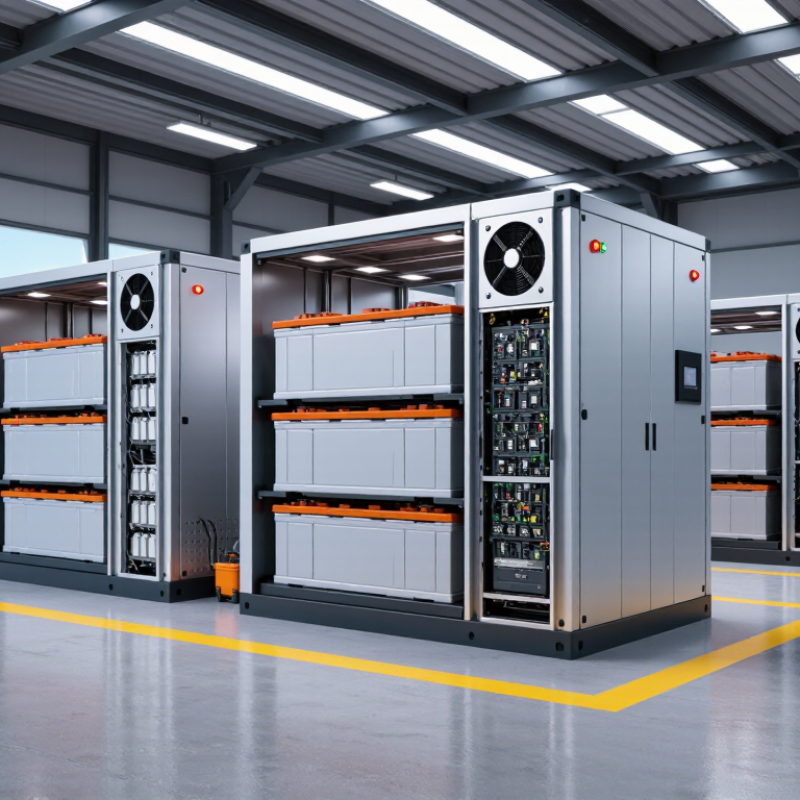
Industrial Lithium-Ion Basics: 90–95% Efficiency and 2,000–5,000 Cycles
Industrial lithium-ion batteries attract global buyers because their efficiency converts more stored electricity into usable power. The U.S. Department of Energy’s Energy Storage Technology and Cost Characterization Report places lithium-ion round-trip efficiency near 85–95%, depending on system design. Well-managed industrial systems often target 90–95%.
That figure is not automatic. Inverters, cooling equipment, wiring, and standby losses reduce site-level performance. A 1,000 kWh battery may deliver less than 900 kWh after conversion losses. Real sites rarely match laboratory numbers. This matters in factories with frequent peak-demand events, where every lost kilowatt-hour affects operating costs.
Cycle life also drives purchasing decisions. Industry assessments from NREL and the International Renewable Energy Agency commonly associate lithium-ion systems with roughly 2,000–5,000 cycles, although chemistry, depth of discharge, temperature, and charging speed change the result. Lithium iron phosphate cells often support longer daily cycling, while high energy-density designs may require stricter thermal controls. A battery rated for 5,000 cycles may achieve less under constant full-depth operation. Buyers should request tested cycle data, warranty conditions, usable capacity, and degradation curves, not only headline specifications. Some datasheets still present ideal figures too confidently.
Why Choose Industrial Lithium Batteries for Global Buyers? - Industrial Lithium-Ion Basics: 90–95% Efficiency and 2,000–5,000 Cycles
| Evaluation Dimension | Typical Industrial Lithium-Ion Range | What the Data Means | Global Buyer Consideration |
|---|---|---|---|
| Round-Trip Efficiency | Approximately 90%–95% | A typical lithium-ion battery can return about 90–95% of the energy supplied to it, with losses occurring during charging, discharging, and power conversion. | Confirm whether the supplier quotes cell, battery-pack, or complete-system efficiency, because these figures are not identical. |
| Cycle Life | About 2,000–5,000 cycles | Cycle life depends on chemistry, depth of discharge, operating temperature, charge rate, and the end-of-life capacity threshold used for testing. | Request test conditions, including discharge depth, temperature, and the remaining-capacity definition at end of life. |
| Usable Depth of Discharge | Commonly 80%–100%, system-dependent | Lithium systems generally support a deeper usable discharge than many lead-acid systems, but the recommended limit varies by battery management settings and warranty terms. | Compare usable kilowatt-hours rather than only the battery’s nominal capacity. |
| Energy Density | Roughly 100–265 Wh/kg at cell level | Actual pack-level energy density is lower because of enclosures, wiring, cooling, contactors, and the battery management system. | Use pack-level specifications when evaluating shipping weight, floor space, and equipment integration. |
| Charge Acceptance | High; often supports 0.5C–1C charging | Many industrial lithium-ion designs can charge faster than traditional lead-acid batteries, although the permitted rate depends on cell design and thermal management. | Check the continuous charging current, peak charging current, charger compatibility, and cooling requirements. |
| Power Capability | Application-specific; commonly high | Lithium batteries can deliver strong short-duration power, but the allowable output is limited by cell chemistry, temperature, state of charge, and battery management controls. | Review both continuous and peak kW ratings instead of relying only on amp-hour capacity. |
| Maintenance Requirement | Generally low routine maintenance | Sealed lithium battery packs typically do not require electrolyte topping-up or equalization charging, but inspections, software checks, and thermal-system maintenance may still be necessary. | Confirm remote monitoring, service intervals, spare-part availability, and local technical support. |
| Calendar Life | Commonly 8–15 years, application-dependent | Calendar aging occurs even when the battery is not cycled. High temperature and prolonged storage at a high state of charge can accelerate degradation. | Ask for storage conditions, expected annual throughput, warranty period, and capacity-retention commitments. |
| Operating Temperature | Typically about −20°C to 55°C, model-dependent | Charging below freezing may require heating or restrictions, while high temperatures can reduce service life and available power. | Match the battery’s certified temperature range with the installation location and seasonal climate. |
| Safety Architecture | Battery management system plus protection hardware | Industrial packs commonly use monitoring for voltage, current, temperature, balancing, overcharge, over-discharge, and short-circuit protection. | Request safety certifications, transport documentation, fault-response behavior, and installation requirements for the target market. |
| Common Industrial Chemistries | LFP, NMC, and other lithium-ion variants | Lithium iron phosphate is widely selected where long cycle life and thermal stability are priorities; nickel-manganese-cobalt designs can offer higher energy density but require careful safety management. | Select chemistry according to energy density, power demand, temperature, safety priorities, and total cost of ownership. |
| Total Cost of Ownership | Often favorable for intensive daily use | Higher initial purchase cost may be offset by efficiency, reduced maintenance, deeper usable capacity, longer cycle life, and lower downtime. | Compare lifetime delivered energy, replacement schedules, labor, charging infrastructure, and warranty coverage—not purchase price alone. |
| Note: Values are representative industry ranges rather than guarantees. Actual performance depends on battery chemistry, cell format, pack design, operating profile, environmental conditions, charging equipment, and supplier test methods. | |||