China Best Manufacturing Robots for Global Buyers?
China has become the world’s largest market for manufacturing robots, offering global buyers a broad and increasingly capable supplier base. According to the International Federation of Robotics’ World Robotics 2024 report, China installed 276,288 industrial robots in 2023. That represented about 51% of global installations. Its operational robot stock also exceeded 1.7 million units.
The numbers are impressive. They are not the whole story.
Chinese manufacturers now produce articulated robots, SCARA systems, collaborative robots, welding cells, and machine-tending solutions. Buyers can often find shorter lead times, competitive pricing, and integrated support for electronics, automotive, metalworking, and logistics applications. However, product quality varies between suppliers. A polished factory video cannot replace cycle-time testing, safety validation, spare-parts planning, and software demonstrations.
Marina Bill, President of the International Federation of Robotics, said, “The global race for automation is on.” Her observation reflects a market where investment decisions increasingly depend on measurable productivity, not impressive specifications alone. The International Federation of Robotics and market research reports from Interact Analysis also show strong demand for automation, although growth differs across industries and regions.
For global buyers, the real question is not simply whether China makes the cheapest manufacturing robots. It is whether a supplier can deliver stable accuracy, reliable uptime, compatible controls, documented safety functions, and responsive after-sales service. A robot that loses precision after months of operation becomes an expensive showroom ornament. This guide examines China’s leading manufacturers through practical criteria, while recognizing one uncomfortable truth: supplier comparisons are useful, but factory trials remain essential.
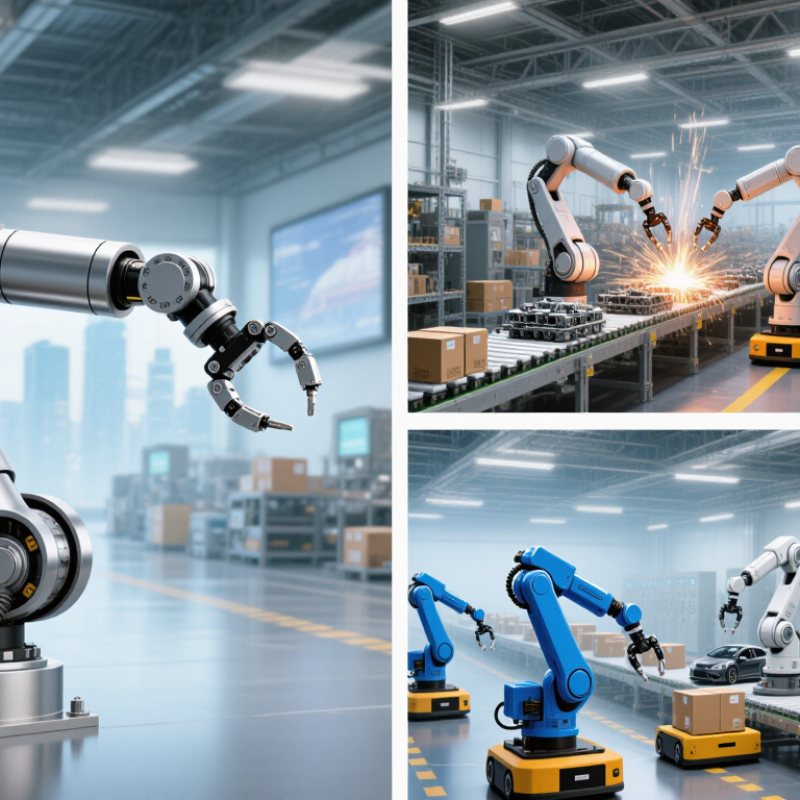
What Makes a Manufacturing Robot Suitable for Global Buyers?
A manufacturing robot suitable for global buyers must do more than repeat fast movements. It should match the product, factory layout, workforce, and local safety requirements. The International Federation of Robotics reported 541,302 industrial robot installations worldwide in 2023. That scale shows strong demand, but it also raises buyer expectations.
Reliability begins with measurable performance. Buyers should check cycle time, positioning accuracy, payload, reach, and permitted working temperature. A robot moving metal parts needs different protection from one handling food packaging. Clear manuals, multilingual software, remote diagnostics, and accessible spare parts can reduce costly downtime. Small details matter. A loose cable connector can stop an entire production cell.
Integration is equally important. The system should communicate with common industrial networks and support documented safety functions. ISO 10218 and ISO/TS 15066 provide useful references for robot safety and collaborative applications. The IFR reported more than 4.28 million industrial robots operating globally at the end of 2023, making long-term service support increasingly important. However, no checklist is perfect. Buyers sometimes focus on purchase price and overlook training, tooling, installation, and software updates. A realistic evaluation should include total cost over five years, not only the quotation received today. Test videos help, but an on-site acceptance test reveals more. That is where noise, vibration, access space, and operator habits become visible.
What Makes a Manufacturing Robot Suitable for Global Buyers?
Payload capacity is a practical starting point when comparing robot types for international manufacturing projects. These representative industry ranges show that delta and SCARA robots are commonly used for fast, lightweight handling, while articulated and Cartesian robots can support heavier production tasks. Global suitability also depends on safety compliance, electrical compatibility, documentation, integration support, spare parts availability, and local service capability.
Data shown are representative industry ranges; actual payload limits vary by configuration, reach, speed, tooling, and manufacturer specifications.
Main Types of Manufacturing Robots Made in China
China Best Manufacturing Robots for Global Buyers?
Main Types of Manufacturing Robots Made in China
China’s manufacturing robot sector now serves automotive, electronics, metalworking, logistics, and general assembly. According to the International Federation of Robotics’ World Robotics 2024 report, China installed 276,288 industrial robots in 2023. That represented more than half of global installations. The figure suggests strong production capacity, but it does not guarantee that every machine fits every factory.
Articulated robots remain the most common type. Their multi-jointed arms handle welding, painting, palletizing, and machine tending. SCARA robots offer fast horizontal movement for electronic assembly and small-part insertion. Delta robots work well with lightweight products, especially food and packaging applications. Cartesian robots use linear axes for accurate loading, dispensing, and gantry systems. Collaborative robots support lower-force tasks near workers, although their safe operation still requires risk assessment and proper guarding.
Mobile robots are also expanding inside Chinese factories. They transport bins, components, and finished goods between workstations. The International Federation of Robotics reported that global professional service robot sales reached nearly 200,000 units in 2023, with transportation and logistics among the leading applications. Buyers should examine payload, reach, repeatability, cycle time, software compatibility, and after-sales support. Documentation quality matters more than a polished demonstration.
The choice is not always obvious. A low purchase price may hide integration costs, spare-part delays, or difficult programming. In my view, pilot testing with real materials is essential. Factory conditions are rarely as clean as a showroom.
Key Industries Using Chinese Manufacturing Robots
China Best Manufacturing Robots for Global Buyers?
Chinese manufacturing robots are increasingly used across automotive, electronics, metal processing, logistics, and food production. The International Federation of Robotics reported 276,288 industrial robot installations in China in 2023. That represented about 51% of global installations, showing the country’s strong manufacturing demand.
276,288 industrial robot installations in China in 2023
51% of global installations
Automotive plants use robots for welding, painting, inspection, and heavy-part handling. Electronics factories need smaller systems for precise assembly, screwdriving, testing, and packaging. In metalworking, robots manage repetitive cutting, polishing, and loading tasks near high-temperature equipment. Food and beverage producers often apply robots to carton packing, palletizing, and hygienic handling. These applications reduce repetitive labor and improve production consistency.
The data is impressive, but adoption is not automatically efficient. A robot can repeat a weak process perfectly. Buyers should examine cycle time, payload, reach, software compatibility, maintenance access, and worker training before purchase. The IFR’s World Robotics 2024 report also recorded China’s operational industrial robot stock at roughly 1.75 million units in 2023. That scale suggests mature demand, not guaranteed suitability for every factory. Small manufacturers may need simpler systems, while complex plants require integration with vision, sensors, and production software. Pilot testing remains essential. Real factory conditions are messier than demonstrations.
How to Evaluate Robot Quality, Performance, and Cost
China Best Manufacturing Robots for Global Buyers?
How to Evaluate Robot Quality, Performance, and Cost
A reliable robot starts with measurable construction quality. Check joint accuracy, repeatability, payload stability, cable protection, and enclosure sealing. Ask for test records, not attractive catalog claims. During factory evaluations, I inspect machining surfaces, wiring routes, emergency stops, and maintenance access. Small details often reveal long-term reliability. Numbers can mislead.
Performance should match the real production task. Test the robot with your actual gripper, material weight, cycle speed, and workspace limits. Record cycle times over several hours, not just during a short demonstration. Watch for heat, vibration, position drift, and software interruptions. A machine that performs well for ten cycles may struggle after continuous operation. Test it live.
Cost includes much more than the purchase price. Calculate installation, programming, training, spare parts, energy use, and expected downtime. Request a clear warranty scope and response time for technical support. Confirm whether manuals, electrical drawings, and software access are included. These documents can save days during troubleshooting. A cheaper robot may require costly integration work.
Global buyers should also review factory quality controls, inspection procedures, export documentation, and compliance with applicable local standards. Independent acceptance testing can reduce uncertainty before shipment. Still, no evaluation is perfect. Supplier claims deserve verification, and my own checklist has missed issues before. Leave room for pilot testing, because real production conditions often expose weaknesses that polished demonstrations hide.
Steps for Selecting, Buying, and Integrating Chinese Robots
China has become a major source of industrial robots for global buyers.
The International Federation of Robotics reported 276,288 installations in China during 2023, over half of the global total of 541,302 units. Its 2024 report also recorded China’s robot density at 470 robots per 10,000 manufacturing employees. These figures show scale, not automatic suitability.
Selection should begin with the production task.
Define payload, reach, cycle time, positioning accuracy, working temperature, and available floor space. Request a test using your real workpieces, not only a demonstration video. Compare total cost, including tooling, software, installation, training, spare parts, and remote support. A low purchase price can hide expensive integration work. Ask for technical drawings, safety documentation, maintenance intervals, and clear acceptance criteria. Independent audits and factory acceptance tests can expose weak controls. They are worth the time.
Integration needs equal attention.
Map every handoff between the robot, conveyor, sensors, PLC, and safety system. Confirm electrical standards and local compliance requirements before shipment. Run a factory acceptance test, then repeat it on site with production materials. Train operators beside the cell, where faults are visible. Track cycle time, downtime, rejected parts, and recovery time for at least several weeks. One pilot cell is safer than a rushed factory-wide rollout. I would still question my own assumptions; laboratory accuracy may disappear after dust, vibration, or changing product sizes enter the process.