Accordian Closable

How to Choose the Best Robotics Projects?

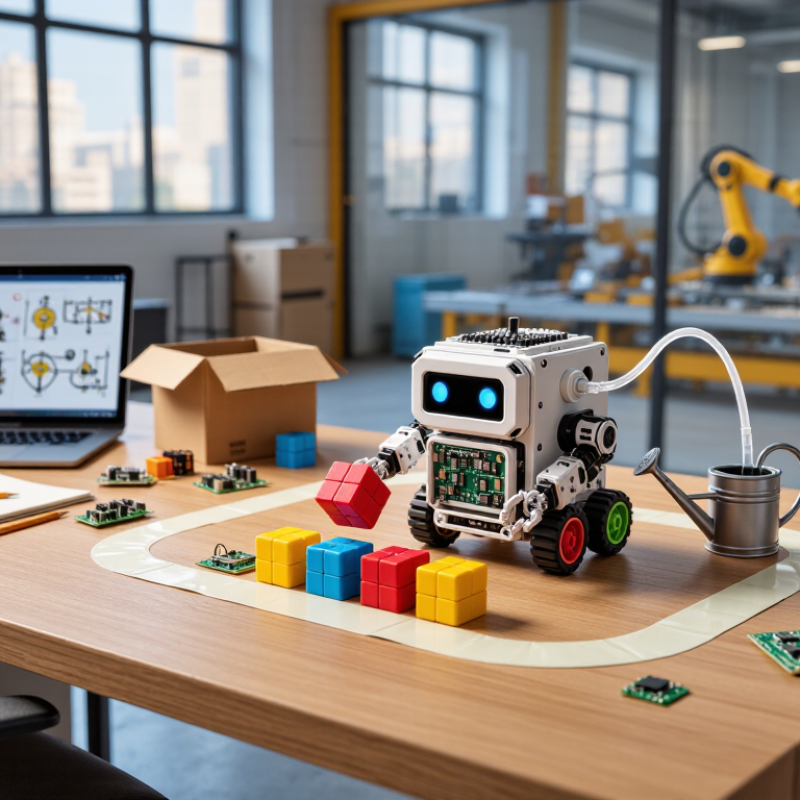
Choosing robotics projects is not a contest to build the most complicated machine. It is a way to solve a real problem, learn useful skills, and test ideas safely. Start with a real task. Can a small robot sort colored blocks, follow a taped route, or water one plant without flooding the desk? Specific goals make progress visible.

The International Federation of Robotics’ World Robotics 2024 report counted 541,302 industrial robot installations in 2023 and 4,281,585 robots operating in factories worldwide. These figures show how established robotics has become in industry, but they do not mean every project needs expensive hardware. A cardboard prototype, low-cost sensor, or simulator can reveal design flaws early. The data describe industrial use, not the best choice for a classroom or first-time builder.

Robotics pioneer Rodney Brooks wrote, “The world is not a particularly simple place,” in his essay “The Seven Deadly Sins of AI Predictions” for MIT Technology Review. That is a useful reminder when choosing a project: real environments are messy. A robot may miss a turn when the light changes, or its wheels may slip on a smooth floor. Pick a challenge with clear success measures, manageable costs, and room to improve. Check whether parts, instructions, and support are available before committing. Then build a small version and test it. A polished demo can still hide weak assumptions. That is worth remembering. The best robotics projects balance curiosity with practicality, and leave enough time to learn from what fails.
How to Choose the Best Robotics Projects?

Define Your Goals and Intended Learning Outcomes

Choose a robotics project by naming the skill you want to practice, not by starting with an impressive-looking machine. Do you want to learn sensor calibration, basic coding, mechanical design, or teamwork? Turn that goal into something observable: make a small rover stop within ten centimeters of a marked line, or program a gripper to lift three objects reliably. Clear outcomes help you judge progress without expensive equipment. Keep the first version simple. It may feel less exciting, but a working prototype teaches more than an ambitious design that never moves.

The International Federation of Robotics reported about 4.28 million industrial robots in operation worldwide in 2023, in its World Robotics 2024 report. That scale shows how widely robotics is used, but a classroom project does not need factory-level complexity. Match the build to your time, tools, and experience. For beginners, a project with one motor and one sensor can reveal how input, code, and movement connect. Record what works, what fails, and what you would change. Be honest: one successful test does not prove a design is reliable.

Tip: Write one measurable learning outcome before choosing parts. Set a test, such as completing five turns without leaving a taped path. If the robot misses, adjust one variable at a time. Small, imperfect trials count.

Assess Your Skills, Tools, Budget, and Available Time

Choose a project you can describe in one sentence: a small rover that avoids chair legs, or a sensor arm that sorts foam blocks. Let your current skills shape the first version. If you can wire a motor but have never tuned feedback control, precise movement may be too ambitious. Keep it small. The International Federation of Robotics reported 541,302 industrial robot installations worldwide in 2023, the second-highest annual figure on record. That shows the field’s momentum, not the right scale for a personal build.

Check your tools and budget before ordering parts. Do you have a multimeter, basic hand tools, and a safe place to test moving components? List the essentials, then add room for spare wires, a replacement sensor, and unexpected shipping costs. Estimates can be too optimistic. A sensor may also behave differently under bright room light than it did on your desk. That matters.

Match the project to the hours you can reliably spend each week. A simple obstacle-avoiding robot may fit a few weekends; a robot that maps a room needs more time for testing and debugging. The World Economic Forum’s Future of Jobs Report 2025 says 58% of surveyed employers expect robotics and autonomous systems to transform their businesses by 2030. Treat that as context, not pressure to build something complex. Set one testable milestone, such as completing a clean turn around a marked course. Test early.

Compare Project Ideas by Complexity and Practical Value

Choosing a robotics project means balancing technical challenge with a useful outcome. A line-following rover is easier to build, but may teach little beyond basic sensing. A small sorting arm adds mechanical design, calibration, and safety checks. Compare ideas by the skills they demand and the problem they solve. Keep it observable. For example, measure sorting accuracy, cycle time, and recovery after a misplaced object.

Industry figures show why practical value matters. The International Federation of Robotics reported 4,281,585 industrial robots operating worldwide in 2023, a 10% rise from 2022. That scale points to real needs in handling, inspection, and repetitive tasks. A student project cannot match factory equipment, of course. But a tabletop prototype can test one useful principle, such as whether a gripper handles three differently shaped objects reliably.

Complexity should also fit the available time, budget, and experience. The World Economic Forum’s Future of Jobs Report 2025 says 58% of surveyed employers expect robotics and automation to transform their businesses by 2030. This supports choosing projects that build transferable skills, not just impressive demos. A sensor-based inventory counter may be less flashy than a humanoid robot, yet easier to evaluate and improve. Expect imperfect results. Loose wiring, uneven lighting, and inconsistent object placement can distort tests; documenting those flaws is part of sound engineering, not a reason to hide them.

Check Safety Requirements and Access to Components

Before choosing a robotics project, check its hazards as carefully as its headline function. OSHA’s robotics safety guidance highlights programming, setup, testing, and maintenance as moments when people may enter hazardous areas. The U.S. Bureau of Labor Statistics recorded 5,283 fatal work injuries across all industries in 2023; this is not a robotics-specific figure, but it underscores why safety planning cannot be an afterthought. Build a simple risk checklist: moving joints, pinch points, exposed wiring, hot components, and battery charging.

Small is not automatically safe.

Look for documented voltage limits, suitable current protection, physical guards, and an accessible way to cut power before adjustments. For projects with moving parts, check whether the instructions explain safe testing and what to do if a sensor fails. OSHA guidance is useful, but it cannot replace a project-specific risk assessment. I have seen neat designs become awkward when a motor stalls and the instructions say little about recovery. That detail matters.

Check access to components before committing. The International Federation of Robotics’ World Robotics 2024 report recorded 541,302 industrial robot installations worldwide in 2023. That signals a large robotics field, not guaranteed access to affordable parts for a student project. Confirm that motors, sensors, connectors, and replacement fasteners are available from more than one source, and check their specifications match. Keep a small parts list with prices and lead times. It may feel fussy. One missing connector can stop the build.

Choose a Project and Plan Its First Development Steps

Choose a robotics project by matching its demands to your available time, tools, and skills. A small line-following rover may teach more than an ambitious humanoid design that never leaves the sketchbook. Write down what the machine should do, where it will operate, and how you will judge success. For example, a rover might follow a taped path across a two-meter table without leaving its boundaries. Keep the goal specific.

Next, list the parts and abilities the project requires. A basic rover may need two motors, wheels, a controller, a battery, and sensors that detect contrast. Check that the parts work together before ordering anything. Sketch the wiring and note the expected power needs; a mismatch can waste a week. Keep the first version simple.

Break development into small tests. First, make one motor turn. Then test both motors, read the sensor, and combine those functions. Record what happened, including failures, in a dated notebook. A sensor may behave differently under bright window light, so test in the actual workspace. Leave room in the schedule for surprises. Early estimates are often optimistic, and that is worth admitting. If the rover veers sharply, change one variable at a time and measure the result.