Accordian Closable

Top 10 Robotic Welding Cell Manufacturers Worldwide

Robotic welding cell technology is reshaping how factories manage speed, consistency, and skilled-labor shortages. The International Federation of Robotics reported 541,302 industrial robots installed worldwide in 2023. Manufacturing demand remains strong, especially in automotive, heavy equipment, energy, and metal fabrication. These figures show momentum, but they do not prove that every factory needs the same solution.

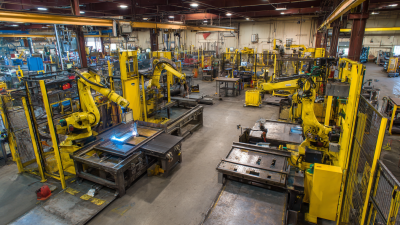
A robotic welding cell combines a robot, power source, positioner, tooling, sensors, safety equipment, and programming software. A well-designed system can repeat a weld path accurately across thousands of parts. It can also reduce exposure to heat, fumes, and awkward working positions. The details matter. A poorly fitted fixture can erase the robot’s productivity advantage. This is where manufacturer experience becomes visible.

Sami Atiya, President of ABB Robotics, has said, “Robotics and automation are no longer a luxury; they are a necessity for competitiveness.” That observation fits today’s welding market, although it needs qualification. Automation does not replace process knowledge. Skilled welders still define joint preparation, parameter limits, inspection methods, and repair decisions. The best suppliers support both people and machines.

This ranking examines ten leading robotic welding cell manufacturers worldwide. It considers system integration, robot reliability, welding performance, software, service coverage, safety, and application flexibility. Market presence alone is not enough. Some manufacturers publish impressive specifications, yet practical results can vary between facilities. Buyers should test sample parts, review cycle-time evidence, and calculate the full cost of ownership before investing. The “best” robotic welding cell is not always the fastest one. It is the one that remains stable on the factory floor.
Top 10 Robotic Welding Cell Manufacturers Worldwide

What Is a Robotic Welding Cell?

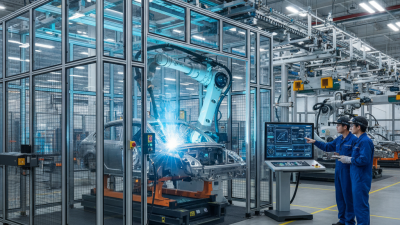
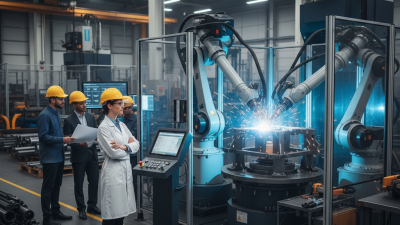
A robotic welding cell is a controlled workspace where an industrial robot performs welding tasks with repeatable movement. It usually includes a robot arm, welding power source, positioner, fixtures, sensors, and a guarded enclosure. The cell may also contain extraction equipment to manage welding fumes. Together, these components form one coordinated production system.

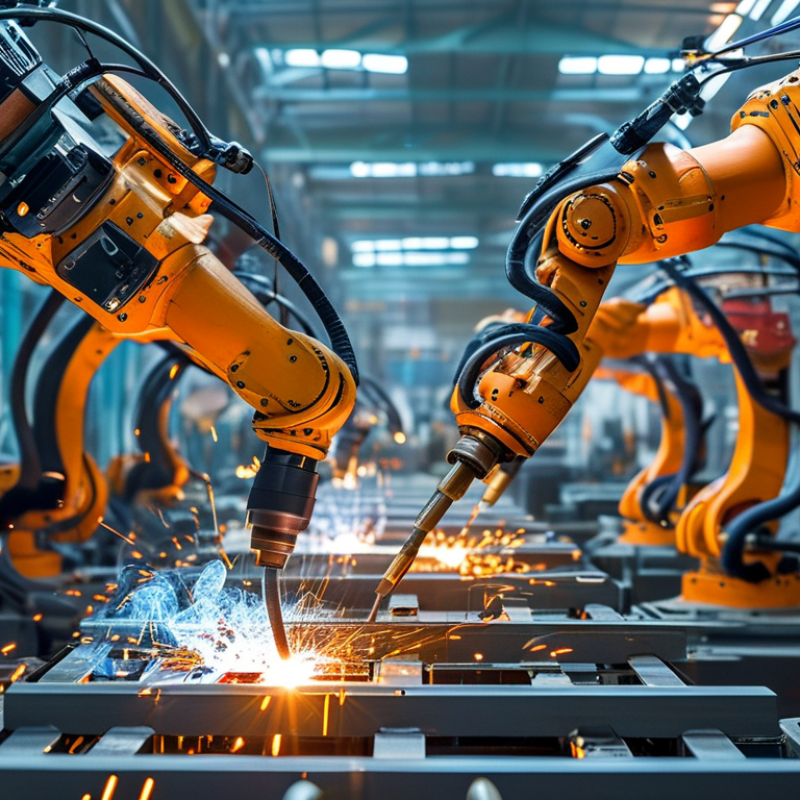
A technician loads metal parts into a fixture. The fixture holds each joint at a known position. The robot then follows programmed paths, controlling torch angle, travel speed, and wire feed. A positioner can rotate the workpiece, allowing better access to difficult seams. Sensors may detect part location or help correct small variations. This detail matters because real components are rarely identical.

The process is consistent, but not automatically perfect. Poor fixture design can create misalignment, even with accurate programming. Heat distortion may also change the joint during production. Experienced integrators review weld samples, monitor penetration, and adjust parameters after testing. They also check shielding gas flow, contact-tip condition, and cable routing during maintenance.

A reliable cell needs more than a fast robot. It needs suitable tooling, clear access, documented procedures, and trained operators. Safety interlocks, guarded doors, emergency stops, and routine inspections protect people near the equipment. Production data can reveal cycle-time losses or repeated weld defects. That feedback supports practical improvements, although some problems only become visible after extended operation.

How Robotic Welding Cell Manufacturers Are Evaluated

Top 10 Robotic Welding Cell Manufacturers Worldwide

How Robotic Welding Cell Manufacturers Are Evaluated

Evaluating robotic welding cell manufacturers requires more than comparing quoted prices. Experienced buyers inspect weld consistency, robot positioning accuracy, cycle time, and fixture repeatability. A strong supplier should provide measured test results, not vague performance claims. Ask for sample welds on materials, joint types, and thicknesses similar to your production work. Small details matter, including cable protection, torch accessibility, and the time required for changeovers.

Safety evidence carries equal weight. Review guarding, emergency stops, light curtains, software limits, and documented risk assessments. Reliable manufacturers explain how their cells meet applicable regional safety requirements. They also provide operator training, maintenance instructions, spare-parts support, and remote troubleshooting procedures. Talk with current users when possible. Their comments often reveal downtime patterns that brochures never mention.

Integration skills separate a workable cell from an expensive obstacle. Assess compatibility with existing fixtures, production software, material handling, and quality inspection systems. Request a factory acceptance test using your actual parts. Published cycle times may change after installation. That is normal, but the assumptions must be visible. I would also examine total ownership cost, including consumables, programming, energy use, service visits, and future expansion. No evaluation is perfect. A technically impressive cell can still fail when operators find it difficult to adjust.

Top 10 Robotic Welding Cell Manufacturers Worldwide

Top 10 Robotic Welding Cell Manufacturers Worldwide

The top 10 robotic welding cell manufacturers worldwide are usually judged by engineering depth, production reliability, and service coverage. Strong manufacturers design complete systems, not just robot enclosures. Their cells may include positioners, welding power sources, safety scanners, fume extraction, and programmable controllers.

A capable supplier studies the customer’s part geometry before proposing equipment. For example, a cell welding 6-millimeter steel brackets needs different torch access than one handling long structural beams. Leading manufacturers provide offline programming, fixture design, cycle-time studies, and operator training. Details matter. A well-built fixture can reduce distortion and improve repeatability across thousands of welds.

Worldwide rankings should also consider installation experience, spare-parts access, software support, and documented safety procedures. Manufacturers serving automotive, agricultural, construction, and general fabrication sectors often offer modular cells for different volumes. Yet automation is not always the best answer. A low-volume workshop may lose flexibility if tooling changes become expensive. This is where supplier honesty matters.

Real performance depends on more than advertised accuracy. Weld quality can decline because of contaminated material, poor joint preparation, or inconsistent shielding gas. Experienced manufacturers explain these risks before commissioning. They also measure arc-on time, rejection rates, maintenance intervals, and operator recovery time. Some systems look impressive during demonstrations but struggle on uneven factory floors. That weakness deserves attention. Selection should combine factory trials, reference checks, lifecycle costs, and realistic production data.

Top 10 Robotic Welding Cell Manufacturers Worldwide

Comparative overview of anonymized global manufacturers and their commonly documented robotic welding cell capabilities

Rank Primary Market Region Typical Cell Configuration Common Welding Processes Typical Robot Payload Class Typical Arm Reach Typical Repeatability Common Integration Features
1 Japan and Asia-Pacific Single- or dual-robot enclosed cell with positioner MIG/MAG, TIG, spot welding 6–20 kg 1.4–2.0 m Approximately ±0.05 mm Seam tracking, automatic wire feeding, safety fencing, production monitoring
2 Europe Modular robotic cell with rotary or tilt-turn positioner MIG/MAG, laser welding, arc welding 6–25 kg 1.5–2.1 m Approximately ±0.06 mm Offline programming, adaptive welding, fume extraction, quality data logging
3 North America Heavy-duty cell with floor-mounted robot and work-positioner MIG/MAG, flux-cored arc welding, spot welding 10–35 kg 1.7–2.6 m Approximately ±0.08 mm Part fixturing, torch cleaning, weld-parameter control, PLC and MES connectivity
4 Germany and Central Europe Flexible cell with linear track and interchangeable fixtures MIG/MAG, TIG, tandem arc welding 6–30 kg 1.6–2.5 m Approximately ±0.06 mm Laser seam sensing, digital twin support, automatic fixture recognition, traceability
5 South Korea and East Asia High-throughput multi-station cell MIG/MAG, spot welding, stud welding 6–16 kg 1.4–1.9 m Approximately ±0.05 mm Indexing tables, automatic tip dressing, vision inspection, cycle-time optimization
6 Italy and Southern Europe Compact turnkey cell for small- and medium-batch production MIG/MAG, TIG, laser welding 5–20 kg 1.3–2.0 m Approximately ±0.07 mm Quick-change tooling, simplified HMI, automatic calibration, operator access doors
7 Sweden and Northern Europe Modular cell designed for heavy fabrication MIG/MAG, flux-cored arc welding, submerged arc welding 10–40 kg 1.8–2.7 m Approximately ±0.08 mm Large-part handling, rotating positioners, weld monitoring, remote diagnostics
8 China and Greater Asia Standardized single-robot cell with optional positioner MIG/MAG, TIG, spot welding 6–25 kg 1.4–2.2 m Approximately ±0.08 mm Basic seam tracking, safety interlocks, barcode management, remote service capability
9 United States and Canada Custom engineered cell for automotive and industrial fabrication MIG/MAG, resistance spot welding, laser welding 8–35 kg 1.6–2.6 m Approximately ±0.07 mm Robotic transfer, vision systems, safety scanners, statistical process monitoring
10 Taiwan and Southeast Asia Cost-efficient modular cell for general fabrication MIG/MAG, TIG, arc welding 5–20 kg 1.3–2.0 m Approximately ±0.08 mm Fixture changeover, torch cleaning, basic vision guidance, production counter

Note: Company and brand names have been intentionally omitted. Technical values are representative ranges commonly specified for industrial robotic welding cells; actual performance depends on robot model, tooling, workpiece size, welding process, fixture design, and system configuration.

Key Technologies and Features Compared

Top 10 Robotic Welding Cell Manufacturers Worldwide: Key Technologies and Features Compared

Across ten leading global manufacturers, robotic welding cells differ more in integration quality than appearance. Industrial robots usually offer high payloads, long reach, and repeatable torch movement. Collaborative models support lower-volume work and simpler line changes. However, their slower speed can reduce output in heavy production.

Seam-tracking technology is a major comparison point. Laser sensors can detect joint variation before the torch reaches the weld. Through-arc sensing responds during welding, but it may struggle with unstable surfaces. Machine vision improves part recognition and inspection. It still needs careful lighting and calibration. Adaptive welding controls adjust voltage, wire speed, and travel speed in real time. These functions reduce spatter, yet they cannot correct poor joint preparation.

Strong cells also include offline programming, automatic torch cleaning, collision detection, and modular fixtures. Digital production records help engineers trace weld current, cycle time, and fault history. Safety interlocks and guarded access are essential for dependable operation. From practical evaluations, fixture repeatability often matters more than a robot’s headline accuracy. Small alignment errors can create large defects. Energy monitoring and predictive maintenance reduce waste, although setup costs remain significant. No cell performs perfectly. Manufacturers must balance flexibility, speed, service support, operator training, and available floor space before selecting a system.

How to Choose the Right Robotic Welding Cell Manufacturer

Choosing among the top robotic welding cell manufacturers requires more than comparing robot payloads. The International Federation of Robotics reported 541,302 industrial robots installed worldwide in 2023. Demand is strong, but welding capability varies widely. Ask for welding-specific evidence, including arc stability, torch access, seam tracking, fume extraction, and verified cycle time. Request a factory acceptance test with your actual components. Small details matter. A quoted rate of 18 welds per hour may collapse when fixtures distort or parts arrive with two-millimeter gaps. The supplier should explain its response to variation, rework, calibration, and operator training. Generic claims are weak evidence.

Examine integration depth, not only hardware. Confirm who designs fixtures, safety circuits, offline programming, quality inspection, and maintenance support. ISO 10218 provides a useful framework for robot integration and safeguarding. The U.S. Bureau of Labor Statistics projects about 45,600 annual openings for welders, cutters, solderers, and brazers from 2023 to 2033. Training support therefore deserves serious attention. Require practical lessons on torch changes, fault recovery, and basic programming. Review spare-parts availability and remote diagnostics in writing. My own evaluation could overvalue a polished demonstration. It should not. Compare total cost per acceptable weld, including consumables, downtime, integration, and operator hours. A cheaper cell may become expensive after one difficult production change.

Top 10 Robotic Welding Cell Manufacturers Worldwide: How to Choose the Right Manufacturer

A robotic welding cell should be evaluated by measurable factors such as weld quality, system integration, production capacity, safety, service support, and total cost of ownership. The chart presents a practical, vendor-neutral evaluation framework; the percentages are recommended decision weights, not market-share data.

In most industrial applications, technical performance and integration capability should receive the highest consideration. Buyers should also verify compliance with applicable machinery-safety requirements, robot and welding-process compatibility, operator training, spare-parts availability, and lifecycle service coverage before selecting a manufacturer.