Accordian Closable

Top 10 Robotic Automation Companies for Global Buyers

Robotic automation is changing how manufacturers move parts, inspect products, and manage repetitive work. For global buyers, choosing a supplier involves more than comparing robot arms or headline prices. A cell on a factory floor must fit its actual task: a gripper lifting metal blanks, a vision system checking labels, or a mobile robot crossing busy aisles. Rodney Brooks, a leading roboticist, wrote, “The world is its own best model.” His observation is a useful reminder: automation must work in real settings, not just in polished demonstrations.

This guide introduces ten robotic automation companies for buyers assessing equipment, integration, and support across markets. It considers practical factors such as application range, deployment expertise, service availability, and compatibility with existing production systems. Those details can matter as much as advertised speed. A fast robot is not a good fit if commissioning stalls or local support is hard to reach. No shortlist is perfect. Company capabilities vary by region, project, and product line, and specifications should be confirmed directly with suppliers. The comparison is a starting point, not a substitute for a site assessment, reference checks, and a clear review of safety and maintenance needs. The right choice depends on the work—and sometimes the buyer’s first assumptions need revisiting.
Top 10 Robotic Automation Companies for Global Buyers

Industrial Robot Automation: Core Technologies and Global Applications

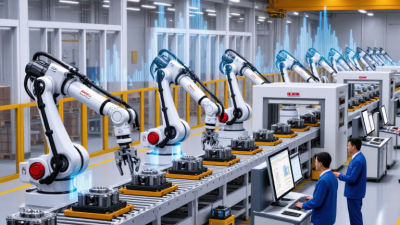
Industrial robot automation brings together mechanical arms, sensors, motion controls, software, and purpose-built tools. A six-axis robot can weld a vehicle frame, while a compact arm sorts small components beside a worker. Cameras help systems locate parts, but lighting, dust, and reflective surfaces can still disrupt vision. Small details matter. Cable routing and gripper changes can affect uptime as much as the robot itself.

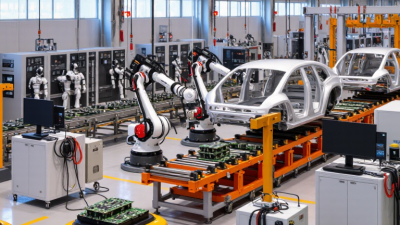
Applications vary across industries and regions. Automotive plants use robots for welding, painting, and repeatable material handling. Food processors may automate packing, where washdown needs and gentle product contact shape equipment choices. Warehouses use mobile robots to move totes between picking zones, though narrow aisles and uneven floors can complicate deployment. A cell that performs well in a demonstration may behave differently during a busy shift. That gap deserves attention.

Global buyers should assess the full automation cell, not just the arm’s payload or reach. Check cycle time with real parts, maintenance access, operator training, spare-part availability, and integration with existing controls. Safety features need to suit the task and the people working nearby. Ask for a pilot using actual production conditions. It may reveal awkward handoffs or frequent jams. Automation can improve consistency, but it rarely fixes unclear processes on its own.

Global Market Scale: 553,052 Industrial Robots Installed in 2022 (IFR)

Worldwide, 553,052 industrial robots were installed in 2022, a 5% increase from 2021, according to the International Federation of Robotics (IFR), World Robotics 2023. This figure measures new installations, not all robots operating in factories. IFR also reported approximately 3.9 million industrial robots in operation at year-end, up 12%. That is a substantial installed base. Yet automation remains uneven across industries and regions.

Asia accounted for 73% of new installations, Europe 15%, and the Americas 10%, IFR reported. These differences matter to global buyers because integration skills, spare parts, and maintenance support vary by location. A welding cell in a high-volume plant needs different uptime planning than a small packaging line. Buyers should compare payload, cycle time, safety integration, service response, and commissioning requirements—not installation totals alone. Numbers can mislead. A quote may exclude grippers, guarding, programming, or production downtime during setup. The 2022 rise also followed pandemic-era disruptions, so one year is not a reliable long-term growth forecast. Ask for measured cycle times from comparable processes and documented local service coverage. The headline is impressive, but it is not a purchasing forecast.

How Buyers Assess Robot Payload, Reach, Safety, Integration, and Cost

Top 10 Robotic Automation Companies for Global Buyers

How Buyers Assess Robot Payload, Reach, Safety, Integration, and Cost

A robot’s advertised payload is only a starting point. Buyers should include the gripper, cables, and workpiece when calculating the real load. A small extra tool can reduce speed or strain the arm. Reach matters just as much: map the full work envelope around fixtures, conveyors, and people. Measure the actual cell, not an idealized drawing.

Safety needs practical review. Check stopping distance, access points, and how workers will clear jams. Then assess integration: controller compatibility, machine signals, programming skills, and support for commissioning.

The International Federation of Robotics’ World Robotics 2024 report recorded 541,302 industrial robot installations worldwide in 2023, with 4.28 million robots operating globally. That scale makes parts availability and service response worth checking, not assuming. Still, no report can predict every site’s downtime.

Compare total installed cost, not just the robot’s purchase price. Include tooling, guarding, integration, training, maintenance, and production interruptions during installation. Ask suppliers to test a representative cycle with your heaviest part and tightest approach.

Record cycle time and repeatability under those conditions. It is easy to overvalue a fast demonstration. A slower, stable cell may deliver better output across a full shift. Some estimates will be imperfect; verify them with a pilot and actual operating data.

Ten Leading Robotic Automation Companies: Products and Industry Focus

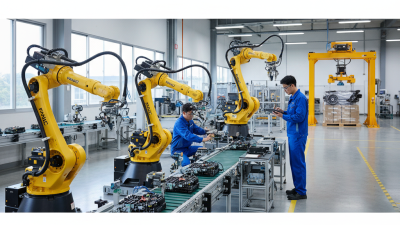
A useful comparison of ten robotic automation suppliers starts with their product mix. Some focus on articulated arms for welding, painting, and palletizing; others specialize in SCARA or delta robots for fast assembly and packaging. Collaborative robots suit flexible work cells, while autonomous mobile robots move totes across warehouses. Vision systems, grippers, safety controls, and integration software also shape what each supplier can deliver. A robot alone rarely completes the task.

Industry focus varies. Automotive plants need repeatable welding and heavy payloads; electronics lines demand precision and compact cells. Food and consumer-goods facilities often prioritize washdown-ready equipment and rapid changeovers. Logistics operations value dependable navigation and fleet coordination. The International Federation of Robotics reported 541,302 industrial robot installations worldwide in 2023, with a global operating stock of about 4.28 million. That scale signals broad adoption, but it does not prove that one product fits every site. The figures are from IFR’s World Robotics 2024 report.

Tips: Match payload, reach, cycle time, and environmental rating to the actual task. Ask suppliers for a pilot using your parts, operators, and shift pattern. Check integration and maintenance needs, too. The comparison can be messy. That is worth admitting. A polished demonstration may not reflect a dusty floor, awkward handoffs, or frequent product changes.

Supplier Benchmarking: Compare Capabilities with IFR’s 151-Robot Density (2022)

Top 10 Robotic Automation Companies for Global Buyers

IFR reported a global average of 151 industrial robots per 10,000 manufacturing employees in 2022. Robot density offers useful context for comparing automation plans, but it is not a supplier score. A buyer should check whether a proposed system suits the factory’s product mix, staffing, and operating conditions. More robots do not automatically mean better results.

Compare suppliers against the same production task. Check payload, reach, cycle time, changeover needs, and integration support. Ask for uptime records and references from factories with similar products. Review training, maintenance, spare parts, and local service coverage. Request the assumptions behind any return-on-investment estimate, including shifts and downtime. Numbers can look tidy. Real factories are messier, and a benchmark cannot reveal every site-specific issue.

Tips: Treat 151 as context, not a target. Ask suppliers to test your own parts against clear acceptance criteria. Watch how systems recover from faults, not just how they perform during an ideal-speed demonstration. Keep operators involved in validation.