Accordian Closable

What Are the Top Types of Robotic Systems?

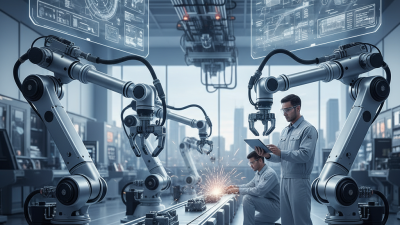
Robotic systems now work in factories, hospitals, farms, warehouses, and homes. They are designed to sense their surroundings, carry out tasks, and respond to instructions with varying levels of autonomy. The familiar industrial robot arm is only one example. A mobile warehouse robot may roll between shelves, while a surgical robot helps a trained clinician control instruments with precision. Different roles. Different risks.

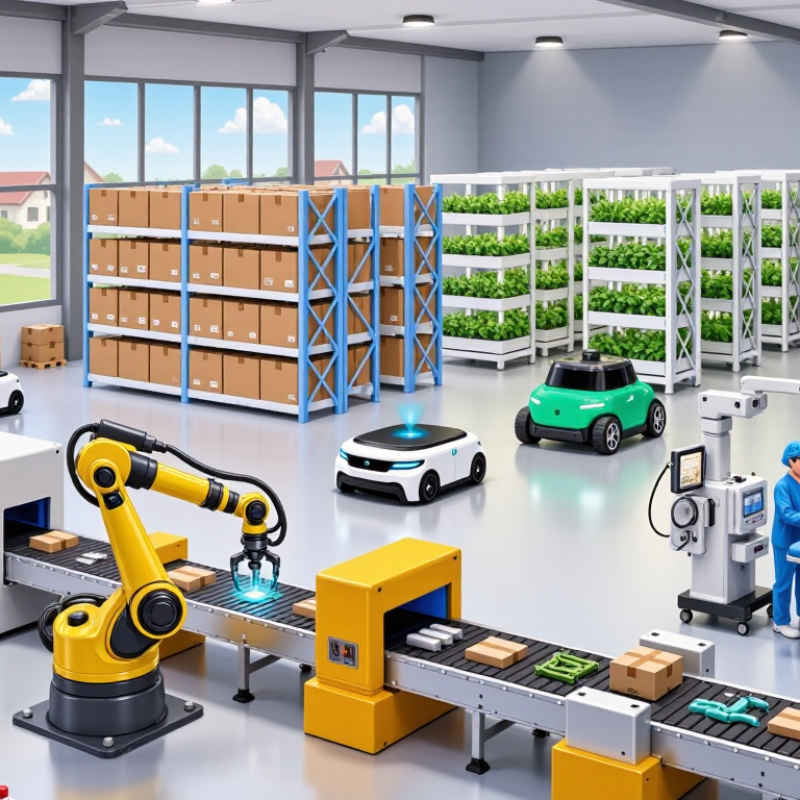
Common types include industrial robots, collaborative robots, mobile robots, medical robots, agricultural robots, and service robots. Each category has distinct strengths. Industrial arms can repeat precise movements on assembly lines. Collaborative robots are built to share workspaces with people, though they still require careful setup and risk assessment. Autonomous mobile robots can transport goods, but obstacles, changing layouts, and battery limits affect their performance. These examples show why a robot’s label alone tells only part of the story.

Choosing or evaluating a system means looking beyond its name. Consider the task, sensors, payload, operating environment, safety features, maintenance needs, and human oversight. A machine that performs well in a clean laboratory may behave differently on a dusty farm or a crowded factory floor. That gap matters. Categories can also overlap: a mobile platform may use a robotic arm, for instance. The distinctions are useful, but not always tidy. This guide introduces the top types of robotic systems, explains where they are commonly used, and notes practical trade-offs readers should consider.
What Are the Top Types of Robotic Systems?

How Robotic Systems Are Classified

Robotic systems are commonly classified by how they move, how they are controlled, and the work they perform. This framework is more useful than a single list of robot types. One machine can fit several categories. A fixed industrial arm may be articulated by joint design, stationary by mobility, and automated by control level. A mobile platform, by contrast, may travel on wheels or tracks and navigate using sensors, maps, or remote commands. That distinction matters.

Classifications also describe interaction and task. Some systems repeat tightly defined motions in a guarded work cell; others share space with people and adjust to changing conditions. Medical, agricultural, and warehouse robots are often grouped by application, though their mechanical layouts can differ greatly. Engineers may also distinguish robots by degrees of freedom, payload, reach, and feedback method. These details help match a system to a real job, such as lifting a 12-kilogram tote or inspecting a warm pipe in a narrow corridor. They also reveal limits. Category labels can oversimplify: a robot may be autonomous during navigation but require human approval for a delicate action. Even familiar terms vary across technical settings, so classification should state the feature being measured, not imply a ranking.

Industrial Robotic Systems and Their Applications

What Are the Top Types of Robotic Systems?

Industrial Robotic Systems and Their Applications

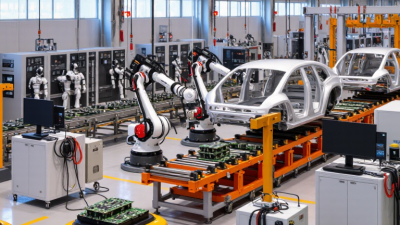
Industrial robots handle repetitive, precise, or physically demanding tasks on factory floors. Articulated robots use rotating joints to reach around equipment, making them useful for welding, painting, and machine tending. A six-axis arm can reach awkward angles, but it needs careful setup and a clearly defined work area. Cartesian robots move along straight axes. They often serve pick-and-place tasks, packaging lines, and large-format assembly.

SCARA robots are built for fast horizontal movement, such as placing small components on circuit boards. Delta robots use linked arms to sort lightweight products at high speed. Collaborative robots can work near people on some tasks, such as screwdriving or inspection, when risk assessments and safeguards suit the application. No robot fits every line. A poorly matched system may sit idle, even if its specifications look impressive.

Tips: Match the robot’s reach, payload, and speed to the actual task. Watch a full production cycle before choosing. Include grippers, safety measures, and maintenance access in your estimate; these details are easy to overlook. Test with real parts, not just ideal samples. Some variation is normal.

Service Robots in Healthcare and Everyday Life

Service robots support people in hospitals, clinics, and homes. In healthcare, mobile units can carry sealed supplies between departments, reducing routine trips for staff. Rehabilitation systems may guide repeated movements while clinicians monitor progress and adjust exercises. Telepresence robots can help patients speak with care teams when an in-person visit is difficult. They assist; they do not replace clinical judgment or human contact.

At home, robotic cleaners handle routine floor care, while mobility and reminder devices can support some older adults. In public spaces, service robots may deliver items or answer simple questions. Their value depends on the task, the environment, and whether people can use them comfortably. A narrow hallway, poor lighting, or confusing controls can turn a useful machine into an obstacle. That limitation is easy to overlook.

Tips: Match a robot to one clear need, then test it in the space where it will operate. Check its emergency stop, cleaning routine, and privacy settings. Ask staff or users what feels awkward; their feedback may reveal problems a specification sheet misses. Small details matter. Robot performance can also vary, so keep a human available for exceptions.

Mobile and Autonomous Robots Across Different Environments

Mobile and Autonomous Robots Across Different Environments

Mobile robots move through spaces that were built for people, not machines. In warehouses, they carry shelves or parcels along marked routes, adjusting when a worker or pallet blocks the way. In hospitals, compact delivery robots can bring supplies down long corridors. Outdoors, uneven ground, rain, glare, and weak signals make navigation harder. The floor is busy.

The International Federation of Robotics’ World Robotics 2024 report recorded about 205,000 professional service robots sold in 2023, a 30% increase from 2022. Transportation and logistics were the largest application area. That growth reflects a practical need: moving goods repeatedly, often over long shifts. Yet the figure covers professional service robots broadly, not only autonomous mobile robots, so it should not be read as a precise count of one system type.

Different environments demand different trade-offs. A warehouse robot may rely on mapped routes and clear safety zones; a farm machine must handle changing soil, dust, and plant rows. Sensors can detect nearby obstacles, but detection does not guarantee a sensible response. Human oversight still matters, especially when layouts change or data is incomplete. One awkward corner can expose a weakness that looked invisible in a controlled trial. That is worth remembering.

What Are the Top Types of Robotic Systems? - Mobile and Autonomous Robots Across Different Environments

Robotic System Type Typical Environment Mobility and Navigation Common Applications Key Advantages Important Considerations
Wheeled Autonomous Mobile Robots (AMRs) Warehouses, factories, hospitals, and other indoor facilities Move on wheels and typically use onboard sensors and mapping to plan routes around obstacles. Transporting materials, moving supplies, and supporting picking or delivery workflows Efficient on smooth, level floors; can often adjust routes when people or obstacles are present. Floor thresholds, stairs, loose surfaces, and steep slopes can limit operation. Performance depends on sensor coverage and facility conditions.
Automated Guided Vehicles (AGVs) Factories, distribution centers, and controlled indoor routes Follow defined paths using guidance such as floor markers, reflectors, wires, or mapped routes. Moving pallets, components, and other loads between fixed work areas Well suited to repeatable material-transfer tasks with predictable routes. Route changes and unexpected obstacles may require additional planning or infrastructure, depending on the guidance system.
Tracked Ground Robots Rough terrain, construction areas, disaster sites, and some outdoor settings Use continuous tracks to travel over uneven ground and loose material. Inspection, search and rescue support, remote observation, and hazardous-site operations Can provide traction on surfaces where small wheeled platforms may struggle. May be slower or less energy-efficient on smooth floors; tracks can disturb delicate surfaces and require maintenance.
Legged Robots Uneven terrain, stairways, and environments with gaps or obstacles Walk using articulated legs; movement capabilities vary by design and control system. Inspection, research, mapping, and access to locations difficult for wheeled robots Can negotiate some terrain features that prevent wheeled or tracked movement. Balance and foot placement require complex control. Energy use, payload capacity, and operating time vary by platform.
Unmanned Aerial Vehicles (UAVs) Indoor or outdoor airspace, depending on aircraft design and operating rules Fly using onboard flight control; navigation may combine satellite positioning, cameras, inertial sensors, or other sensors. Aerial surveying, infrastructure inspection, photography, and environmental monitoring Can access elevated or hard-to-reach areas and cover large areas quickly. Flight time is limited by energy supply and payload. Weather, obstacles, communications, and airspace rules affect operation.
Unmanned Surface Vehicles (USVs) Lakes, rivers, harbors, and coastal waters Travel on the water surface using onboard or remote navigation systems. Water-quality sampling, hydrographic surveys, and surface inspection Can collect data over water without requiring an onboard crew for every mission. Waves, currents, weather, communications range, and launch or recovery logistics can affect performance.
Autonomous Underwater Vehicles (AUVs) Underwater environments, from coastal areas to deeper water Navigate underwater using systems such as inertial sensors, sonar, and depth measurements; satellite positioning is unavailable underwater. Seafloor mapping, scientific surveys, and subsea inspection Can conduct planned underwater missions without a continuous tether to a surface vessel. Limited communications underwater, finite onboard energy, and challenging localization can constrain mission duration and control.
Tethered Remotely Operated Vehicles (ROVs) Underwater worksites and subsea infrastructure Controlled by an operator, commonly through a tether that supplies communications and may provide power. Close visual inspection, maintenance support, and intervention tasks underwater Supports real-time operator control and can carry cameras or task-specific tools. The tether can limit range and maneuverability and may become difficult to manage around obstacles.

Note: Autonomy varies by system and task. Many robots combine autonomous functions with remote supervision or operator control.

Collaborative and Humanoid Robots in Human-Centered Workplaces

Collaborative robots are designed to work near people, often handling repetitive or physically tiring tasks. Picture a cobot holding a component steady while a technician tightens fasteners, or moving trays between workstations. Sensors, speed limits, and clear task boundaries matter; proximity alone does not make a setup safe. The International Federation of Robotics reported 4,281,585 industrial robots in operation worldwide in 2023, with 541,302 installed that year. These figures show the scale of industrial automation, not how many robots work directly alongside people.

Humanoid robots aim to use human-like shapes and movement to operate in spaces built for people, such as aisles, stairs, and workbenches. That could reduce the need to redesign a workplace, but dexterous movement and reliable handling remain difficult. A robot that can walk across a floor may still struggle to pick up a slippery package consistently. The IFR’s figures do not establish that humanoids are ready for routine workplace use. Important distinction.

A practical assessment starts with the task, not the robot’s appearance. Can it handle a varied workload, stop predictably, and let workers intervene without confusion? Teams should test these details in real conditions, including crowded shifts and awkward handoffs. Productivity is only one measure; fatigue, training time, and worker confidence deserve attention too. Even then, results can be uneven. Human-centered automation works best when people help shape the workflow, rather than simply adjusting to a machine.