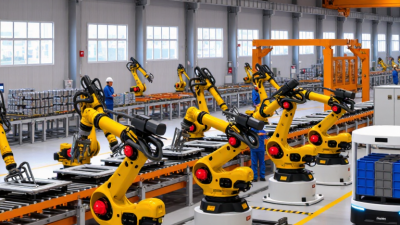
How to Choose the Right Automation Machine for Your Business
Choosing the right automation machine is not simply a matter of buying the fastest equipment. It means matching a machine to real production needs, staff skills, available floor space, and future plans. A small packaging line may need flexible changeovers more than maximum speed. A busy workshop may value dependable cycle times and accessible maintenance. The details matter. A machine that looks impressive in a showroom can struggle beside an uneven production schedule or an outdated conveyor.
Technology entrepreneur Bill Gates offered a useful principle: “Automation applied to an efficient operation will magnify the efficiency; automation applied to an inefficient operation will magnify the inefficiency.” His observation is a practical starting point for evaluating automation. Before comparing models, businesses should map the task, identify bottlenecks, and define measurable goals. Then they can assess capacity, integration, operator training, safety features, service support, and total cost of ownership. Small details matter. A sensor’s location, a supplier’s response time, or a difficult cleaning routine can affect daily output.
This guide explores how to compare machine types, calculate likely returns, and ask suppliers focused questions. It also considers what specifications cannot show. A polished quote may leave out setup delays or maintenance demands. Even a careful choice can need revision after real production begins. That is worth admitting. The best automation machine is not always the most advanced; it is the one that solves a clearly defined problem and fits the people who will use it.

Define Your Business Goals and Production Requirements
Start with the work you need the machine to do, not its feature list. Set a clear target, such as reducing a 20-second packing cycle to 15 seconds or handling 500 units per shift. Record current output, downtime, defect rates, product variation, and changeover time. Include practical limits: floor space, available power, staffing, and how often the product design changes. A target without a baseline is hard to test.
The International Federation of Robotics’ World Robotics 2024 report recorded 541,302 industrial robot installations worldwide in 2023. That figure shows automation’s broad reach, not that every business needs a robot. Match the machine to your volume and process: repetitive, stable tasks may suit dedicated equipment, while frequent product changes may call for flexible automation. Estimate total operating costs, including integration, training, maintenance, and downtime. The estimate may be wrong; validate it with a production trial before committing.
Tips: Map one shift from start to finish. Mark bottlenecks and manual handoffs. Ask operators what causes delays. Test with real parts, not ideal samples, and check whether the machine can meet your target during a busy shift.
How to Choose the Right Automation Machine for Your Business - Define Your Business Goals and Production Requirements
Illustrative planning scenarios for discrete-product manufacturing. Required hourly output assumes 250 production days per year, one 8-hour shift per day, and 85% operating availability (1,700 productive hours annually). Actual machine capacity depends on the product, process, and operating conditions.
| Annual Demand Goal |
Required Good Output per Productive Hour |
Typical Production Need |
Automation to Evaluate |
Staffing Consideration |
Key Decision Check |
| 10,000 units |
About 6 units/hour |
Low-volume production; frequent product changes may be important. |
Manual workstation with selected automated tools, or a basic semi-automatic machine. |
An operator may load, run, and inspect the process. |
Compare purchase cost with labor time saved and setup effort. |
| 50,000 units |
About 29 units/hour |
Steady production with a moderate number of changeovers. |
Semi-automatic equipment with repeatable feeding, positioning, or inspection. |
One operator may tend the machine; confirm workload during loading and changeovers. |
Check cycle time, changeover time, and reject rate using representative parts. |
| 250,000 units |
About 147 units/hour |
Higher, repeatable volume where bottlenecks can constrain output. |
Dedicated automated machine or a linked cell with automatic transfer. |
Operators may oversee multiple processes; maintenance coverage becomes more important. |
Verify upstream and downstream capacity, uptime, safety, and maintenance needs. |
| 1,000,000 units |
About 588 units/hour |
High-volume production with stable product specifications and demand. |
Integrated automated line or multiple synchronized machines, depending on process steps. |
Plan for line tending, quality checks, changeovers, and technical support. |
Model total cost of ownership, line balance, downtime recovery, and spare-parts availability. |
| 5,000,000 units |
About 2,941 units/hour |
Very high-volume production; continuous or multi-shift operation may be required. |
Purpose-built high-speed line, parallel equipment, or continuous-process automation where suitable. |
Dedicated operations and maintenance roles may be needed across shifts. |
Confirm demand forecasts, available floor space, utilities, safety systems, and line redundancy. |
Before selecting equipment, document the required product mix, quality tolerances, target shift pattern, changeover frequency, available floor space, and expected demand growth. Validate quoted output with a production trial and include setup, inspection, planned maintenance, and material handling in capacity estimates.
Identify the Automation Machine Types That Fit Your Operations
Choosing an automation machine starts with the work, not the technology. Map each task: cycle time, product variety, changeover frequency, payload, and available floor space. A fixed transfer line suits stable, high-volume production, such as moving identical housings between drilling and inspection stations. It can deliver repeatable output, but product changes may require costly retooling. For frequent design changes, programmable CNC equipment or a flexible robotic cell may be a better fit.
The International Federation of Robotics reported 4.28 million industrial robots in operation worldwide in 2023, a 10% annual increase (World Robotics 2024). That figure shows adoption, not suitability for every plant. A robot arm can handle repetitive pick-and-place work; a collaborative robot may suit a shared workstation with lighter loads and variable tasks. Automated guided vehicles or autonomous mobile robots can move bins between stations, but aisle width and traffic patterns matter. Measure the actual route.
Run a pilot on one operation. Track cycle time, downtime, scrap, and changeover minutes before expanding. A machine that looks efficient in a demonstration may struggle with dusty parts, awkward fixtures, or inconsistent incoming materials. I would not assume the first estimate is right; measure the bottleneck again after installation. That detail matters.
Compare Capacity, Compatibility, and Technical Specifications
Choosing an automation machine starts with actual workload, not the largest number in a brochure. Record average and peak units per hour, operating hours per shift, and seasonal surges. Compare required output with rated capacity, allowing room for jams, cleaning, and product changes. A line expected to produce 900 cartons per hour may need a higher rated speed to meet that target consistently. Do not size only for an unusually busy week.
Compatibility is just as practical. Check product dimensions, weight, material, packaging, and how items arrive and leave the machine. A unit may handle a rigid container reliably but struggle with a soft pouch or uneven spacing. Confirm interfaces with existing conveyors, sensors, software, and data systems. Ask for a trial using your own materials. Small variations matter.
Technical specifications reveal whether the fit will last. Review cycle time, accuracy, changeover duration, power demand, air pressure, footprint, and maintenance access. Compare continuous-duty ratings with your real shift pattern, and check what routine service requires. Ask how performance is measured; “up to” rates may assume ideal conditions. A site assessment helps, though it can still miss an awkward corner or an operator’s daily workaround. No estimate is perfect. Leave space for safe access and future adjustments, not just the machine itself.
Assess Total Costs, Safety Standards, and Supplier Support
Choose an automation machine by its lifetime cost, not its purchase price. Include integration, tooling, training, energy, maintenance, spare parts, and downtime in your estimate. A cheaper machine may require costly changeovers. The International Federation of Robotics’ World Robotics 2024 report recorded 541,302 industrial robot installations worldwide in 2023. That signals growing adoption, not proof that a robot suits your process. Map the machine’s expected output against real production schedules and product variations.
Safety and supplier support deserve equal scrutiny. Request a documented risk assessment, then inspect guarding, interlocks, emergency stops, and maintenance access. Ask which applicable standards cover the equipment, including ISO 12100 and relevant robot-safety standards. Get service response times, commissioning scope, training, and spare-part lead times in writing. Ask for references from businesses with similar workloads. One detail is easy to miss: who troubleshoots the machine after installation? I would also question optimistic changeover estimates; they can distort the business case.
Tips: Compare total cost over the same ownership period. Check a sample part on the proposed machine. Ask how quickly a common replacement part can arrive. Leave room in the budget for integration surprises.
Test and Validate the Machine Before Full-Scale Deployment
How to Choose the Right Automation Machine for Your Business
Test and Validate the Machine Before Full-Scale Deployment
A machine can look flawless during a supplier demonstration and still struggle with your actual parts. Test it using representative materials, product sizes, and operating conditions. Include awkward edge cases, such as a slightly warped component or a changeover during a busy shift. Run the test at your target speed, not just a comfortable pace. Run it hard.
The International Federation of Robotics reported 541,302 industrial robots installed worldwide in 2023, in its World Robotics 2024 report.
That scale of adoption makes careful validation even more important: your process, staffing, and maintenance needs remain specific to your business.
Before the trial, agree on measurable pass criteria: cycle time, good-part rate, changeover time, and recovery after a fault. Record results across several shifts, and ask operators to note jams, awkward reaches, and unclear alerts.
Measure the misses. Check whether routine cleaning and tool changes can be done without specialist help. A short pilot may not reveal every failure; that limitation should be stated, not hidden.
Extend testing when product variation or demand peaks are missing from the sample. Keep the raw logs, including downtime and rejected parts, so the investment decision rests on observed performance rather than a polished demonstration.