Accordian Closable

7 Best Robotic Welding Cell Suppliers for Global Buyers?

Choosing a robotic welding cell is not simply a matter of comparing prices. Global buyers must examine weld quality, cycle time, integration support, operator training, and long-term service. A cell may look impressive under showroom lighting, yet struggle with reflective steel, changing joint gaps, or limited factory space. These details often decide whether automation delivers value.

Rodney Brooks, a respected robotics researcher and former MIT professor, has said, “Robots are tools, not magic.” That warning fits welding automation well. A reliable robotic welding cell still needs accurate fixtures, stable material preparation, qualified programming, and disciplined maintenance. The robot moves precisely, but it cannot correct every upstream mistake. Sometimes, the weakest link is not the robot.

This guide reviews seven robotic welding cell suppliers serving international buyers. It considers their automation experience, welding technology, system customization, safety approach, software capability, and after-sales resources. We also look at practical issues, such as spare-part availability, remote troubleshooting, installation assistance, and training for local teams. These factors matter when a production line operates thousands of miles from the supplier.

The best supplier depends on the application. A large automotive plant needs different support than a smaller fabricator producing frames or agricultural equipment. Some buyers may prefer a complete turnkey cell. Others may need a flexible system that can evolve gradually. No supplier is perfect. Careful comparison remains necessary.
7 Best Robotic Welding Cell Suppliers for Global Buyers?

What Is a Robotic Welding Cell?

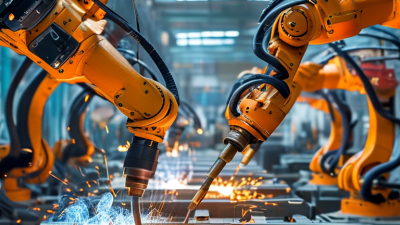
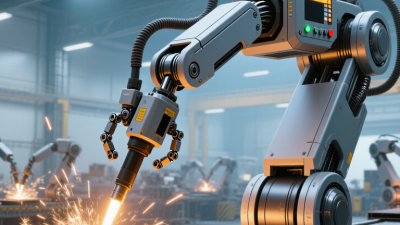
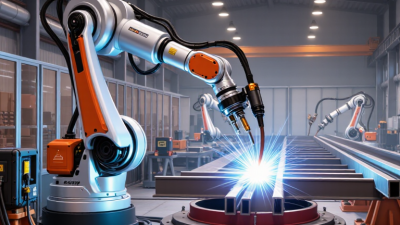
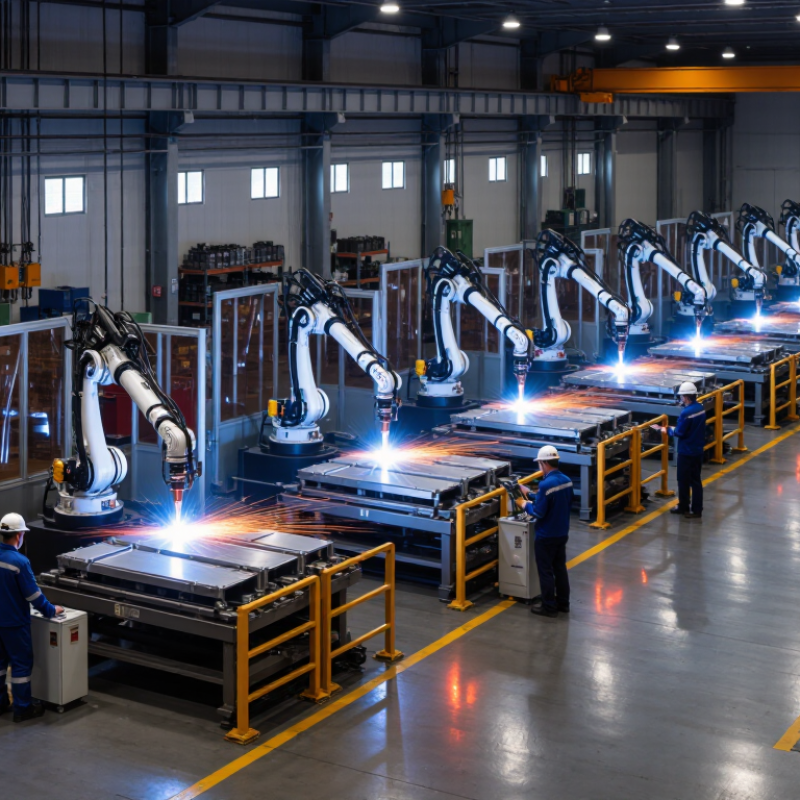
A robotic welding cell is a controlled production area where a robot performs repeatable welding operations. It is not just a robot. The cell usually includes a welding power source, torch, wire feeder, controller, fixtures, positioner, sensors, guarding, and fume extraction. The robot follows programmed paths while the positioner turns the workpiece into a better welding angle. This improves access, consistency, and operator safety when the application is properly engineered.

The International Federation of Robotics reported 541,302 industrial robots were installed worldwide in 2023, showing continued automation growth across manufacturing. Welding cells are especially useful for repeated joints, long production runs, and components with stable dimensions. However, automation cannot correct poor joint design or inaccurate fixtures. A common mistake is confusing repeatability with accuracy. They are not the same.

For global buyers, cell evaluation should cover payload, reach, torch clearance, weld cycle time, fixture changeover, and local service support. In practical assessments, fixture stiffness often matters more than advertised robot speed. Small alignment errors can create porosity, spatter, or incomplete fusion. ISO 10218 safety requirements also make risk assessment, guarding, emergency stops, and access control essential. The data may look convincing. Factory trials still reveal weaknesses. According to IFR’s World Robotics 2024 report, robot adoption varies sharply by country, so training and spare-parts access deserve equal attention.

How to Evaluate Robotic Welding Cell Suppliers

When comparing seven robotic welding cell suppliers, do not start with catalog price. Start with your weld.

Ask each supplier to run a sample test using your actual steel grade, joint design, wire, and cycle target. Watch the arc, not just the presentation. Check bead width, penetration, spatter, and fixture repeatability. Request recorded cycle data from loading to unloading. A polished demonstration may hide manual adjustments.

Evaluate the supplier’s engineering depth. Can its team design fixtures for distortion control and quick changeovers? Does it provide offline programming, simulation files, electrical drawings, risk assessments, and maintenance instructions? These documents reveal working discipline. Ask which welding processes they have delivered in similar production environments. Then speak with two active customers, preferably operators and maintenance staff, not only managers. Their comments often expose weak training or slow spare-part support. Regional service coverage also matters, especially when a stopped cell affects several shifts.

Review the total ownership cost over five years. Include integration, consumables, software updates, preventive maintenance, robot calibration, and operator training. Confirm response times in writing. Ask how the cell behaves when sensors fail or part tolerances drift. That gap matters. Suppliers sometimes overpromise uptime because factory conditions are cleaner than real workshops. Dust, heat, mixed operators, and imperfect parts will test every design. Leave room for doubt, and ask what the supplier would redesign after its first installation.

Seven Leading Suppliers for Global Buyers

Global buyers often compare seven leading supplier profiles for robotic welding cells: integrated automation manufacturers, welding equipment specialists, custom cell integrators, collaborative robot providers, heavy-fabrication automation firms, turnkey engineering companies, and regional service distributors. Each serves a different production reality. Integrated manufacturers suit repeatable volumes and standardized processes. Welding specialists help with arc stability, torch selection, shielding gas, and parameter control. Custom integrators are valuable when floor space, fixtures, or part shapes create complications.

Collaborative robot providers can support smaller workshops, although their reach and payload may limit heavy assemblies. Heavy-fabrication suppliers handle thick steel, long welds, and large positioners. Turnkey engineering companies connect robots, safety systems, extraction, inspection, and operator training. Regional distributors may offer faster maintenance and spare parts, which matters when a production line stops at 2 a.m. Ask for cycle-time evidence, sample welds, training plans, software access, and service response times. Request references from factories with similar materials and batch sizes.

Tips: Check the complete workflow, not only the robot. Measure loading time, fixture changes, rework, energy use, and operator access. Confirm whether the quote includes programming, guarding, installation, validation, and future expansion. A low purchase price can hide expensive integration work. I have seen technically impressive cells underperform because fixtures were treated as an afterthought. That mistake is easy to repeat. Also review local electrical requirements, import documentation, warranty limits, and technician availability before signing. Expect some uncertainty. Production trials reveal more than polished demonstrations.

Key Differences in Systems, Services, and Pricing

When global buyers compare seven robotic welding cell suppliers, the system design often matters more than the robot itself. Check payload, working reach, torch access, fixture changeover, and weld power compatibility. A compact cell may suit repeated brackets, while large frames need wider travel and stronger positioning equipment. Ask for cycle-time tests using your actual steel thickness and joint design. Catalog figures can be optimistic.

Service separates capable suppliers from simple equipment sellers. Reliable suppliers provide offline programming, operator training, safety documentation, spare-parts planning, and remote diagnostics. Local technicians can reduce downtime, especially during commissioning. Confirm response times in writing. Also ask who supports software updates after installation. A polished demonstration is useful, but it does not prove stable production.

Pricing usually includes several layers: the robot, welding package, positioner, enclosure, fixtures, sensors, installation, freight, and training. Some quotes exclude integration or future software licenses. That creates unpleasant surprises. I have seen a lower initial price become more expensive after custom tooling and delayed commissioning were added. Buyers should compare total ownership cost, not only the equipment invoice. Energy use, consumables, maintenance intervals, and spare-part availability deserve equal attention. A realistic supplier should explain assumptions, show test welds, and admit where performance may vary. That honesty is not weakness. It is evidence of engineering discipline.

7 Best Robotic Welding Cell Suppliers for Global Buyers: Key Differences in Systems, Services, and Pricing

This chart presents indicative market benchmarks for seven anonymized supplier profiles. Prices represent typical turnkey robotic welding cell packages in USD thousands, while lead time and service response show common industry ranges for global buyers.

Lower-cost systems generally offer shorter configurations and fewer customization options. Higher-priced solutions typically include advanced positioners, multi-station layouts, offline programming, safety integration, operator training, and stronger international service coverage. Actual pricing and delivery times vary according to robot payload, welding process, fixture complexity, certification requirements, and production volume.

How to Select the Right Supplier for Your Project

7 Best Robotic Welding Cell Suppliers for Global Buyers?
How to Select the Right Supplier for Your Project

Selecting a robotic welding cell supplier requires more than comparing equipment prices. The International Federation of Robotics reported 541,302 industrial robot installations worldwide in 2023. This growth increases supplier choice, but also creates evaluation risks. Ask each supplier for documented cycle-time trials using your actual steel grade, joint design, fixture, and welding wire. A showroom demonstration proves little.

Check engineering depth and after-sales capability. The supplier should explain robot reach, torch access, fixture repeatability, fume extraction, safety circuits, and operator training. Request evidence of compliance with ISO 10218 and applicable local machinery requirements. Service response matters. A cell stopped for three days can erase a low purchase price. Confirm spare-parts availability, remote diagnostics, software ownership, and technician coverage near your plant.

Look closely at weld inspection records. Require sample parts, dimensional reports, and repeatability data from production-like tests. The supplier should also provide electrical drawings, risk assessments, maintenance schedules, and clear acceptance criteria. Global buyers should compare total cost over five years, including integration, consumables, downtime, and upgrades. No scorecard is perfect. I have seen technically strong proposals fail because operators disliked the interface. That detail is easy to miss. Visit an operating installation if possible, and speak privately with its maintenance team before signing.

7 Best Robotic Welding Cell Suppliers for Global Buyers? - How to Select the Right Supplier for Your Project

Supplier Type Typical Project Scope Recommended Part Size Common Welding Processes Typical Robot Payload Production Volume Key Certifications to Verify Best Fit Main Selection Check
Turnkey System Integrator Complete cell design, robot programming, positioners, safety systems, welding equipment, installation, and operator training. Small to large fabricated assemblies, usually within a customized work envelope. MIG/MAG, FCAW, TIG, resistance welding, and process combinations. 6–500 kg, depending on robot and positioner configuration. Medium to high; suitable for repeatable production. ISO 9001, ISO 3834, local machinery safety compliance, and documented risk assessment. Buyers needing one accountable partner for a complete project. Request a complete scope-of-supply list, cycle-time study, layout, and acceptance-test procedure.
Regional Robotic Welding Integrator Standardized or semi-custom cells with local engineering, installation, maintenance, and spare-parts support. Small to medium components and assemblies with stable geometries. MIG/MAG and flux-cored arc welding are most common. 6–50 kg for common production cells. Low to medium, with repeatable batch production. ISO 9001, electrical safety documentation, and applicable regional conformity marking. Buyers prioritizing local response time and manageable project complexity. Confirm local service coverage, technician response time, and availability of critical consumables.
Collaborative Robot Cell Specialist Compact, flexible cells designed for shorter setup times, manual loading, and frequent product changeovers. Small and medium parts, generally below heavy-fabrication loads. Primarily MIG/MAG; selected applications may support TIG or other processes. Typically 3–16 kg, subject to reach, torch, and tooling requirements. Low to medium; best where flexibility is more important than maximum speed. ISO 10218 and ISO/TS 15066 risk requirements, ISO 9001, and documented safeguarding validation. Small manufacturers, job shops, and operations with changing product mix. Validate welding speed, arc stability, operator access, and collaborative-mode limitations.
Heavy-Fabrication Cell Specialist High-capacity systems with large positioners, long tracks, custom fixtures, and heavy-duty material handling. Large frames, structural assemblies, construction equipment parts, and pressure-related fabrications. FCAW, SAW, high-deposition MIG/MAG, and tandem-wire processes where applicable. 50–500 kg or more, based on the positioner and handling system. Medium to high for large repeatable assemblies. ISO 3834, applicable structural welding standards, welding procedure qualification, and safety compliance. Heavy-equipment, structural-steel, and large-component manufacturers. Check positioner accuracy, floor loading, weld deposition rate, distortion control, and fixture rigidity.
High-Volume Production Integrator Multi-station automation, automated loading, part tracking, in-process inspection, and production-data integration. Small to medium parts with stable designs and high repeatability. MIG/MAG, resistance welding, laser welding, and other high-throughput processes as qualified. 6–50 kg, with specialized handling equipment for larger parts. High to very high, normally operated in multiple shifts. ISO 9001, ISO 3834, machine safety validation, traceability controls, and customer-specific quality standards. Automotive, appliance, and other high-volume manufacturers. Demand verified cycle-time data, OEE assumptions, changeover time, and production-capacity evidence.
Custom Fixture and Flexible Automation Specialist Modular fixtures, quick-change tooling, multiple part programs, and semi-automated loading arrangements. Mixed-size parts and products with frequent design or model changes. MIG/MAG, TIG, and process-specific welding based on material and joint design. 6–100 kg, depending on fixture and positioner design. Low to medium batch production with frequent changeovers. ISO 9001, welding procedure documentation, fixture validation, and applicable machinery safety requirements. Contract manufacturers and buyers with many product variants. Evaluate fixture repeatability, changeover time, programming method, and future product expandability.
Retrofit and Modernization Specialist Upgrades existing robots, controllers, welding power sources, fixtures, safety systems, and production software. Existing production lines and cells with suitable mechanical structures. Usually retains the existing welding process while improving control, monitoring, or productivity. Based on the existing robot, positioner, and payload capability. Low to high, depending on the original system and upgrade scope. ISO 9001, electrical safety documentation, updated risk assessment, and software/version-control records. Factories seeking lower capital cost, reduced downtime, and extended equipment life. Confirm compatibility, obsolete-part risks, downtime duration, backup strategy, and post-upgrade warranty.
Buyer Evaluation Note: The specifications above are typical planning ranges for each supplier type rather than claims about any individual company. Before purchase, compare validated cycle-time results, sample weld quality, safety documentation, service coverage, spare-parts availability, training scope, warranty terms, and total cost of ownership.